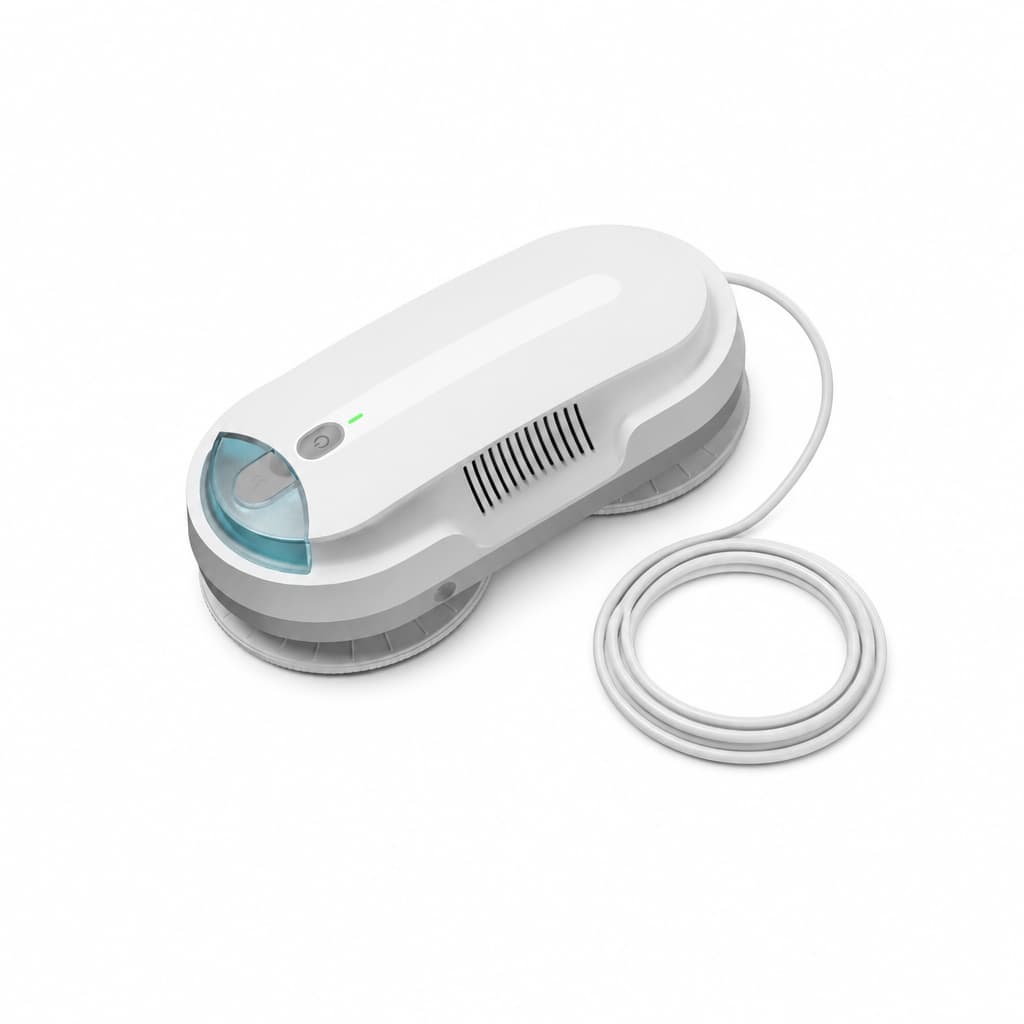
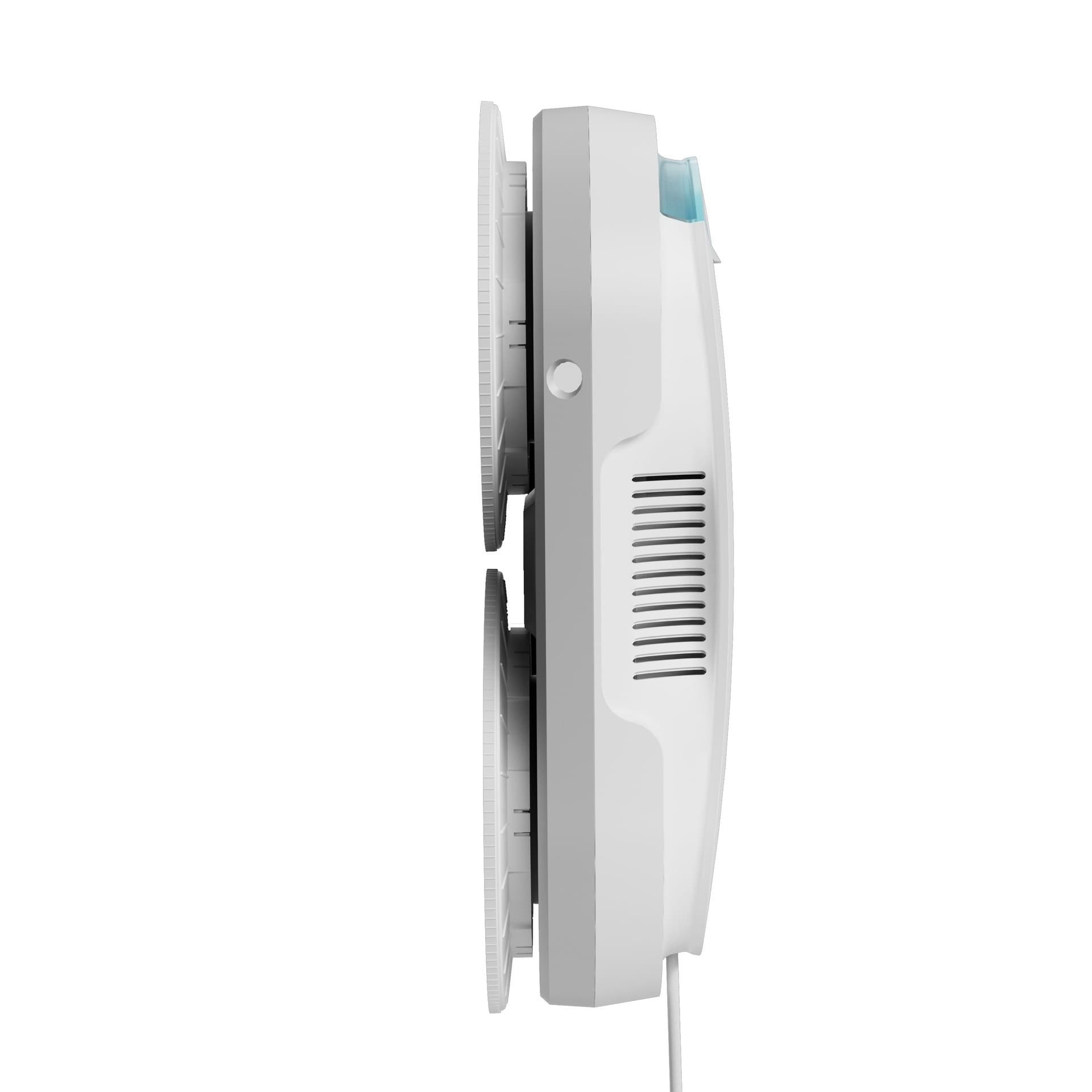
ST-X1 Smart Dual-Spray Window Cleaning Robot – Specifications at a Glance
| Colour Options | White / Black |
| Plug Options | EU / UK / US / JP / KR |
| Input Voltage | AC 100–240 V |
| Product Name | Smart Dual-Spray Window Cleaning Robot |
| Model / SKU | ST-X1 |
| Rated Voltage | 24 V |
| Rated Power | 72 W |
| Suction Range | 2200–3200 Pa, variable frequency |
| Motor | BLDC brushless fan |
| Cleaning Modes | 3 (fully automatic / manual / point-to-point) |
| Cleaning Path | Bionic smart path planning, each pane cleaned twice |
| Water Tank Capacity | 65 mL, external visible tank |
| Water Spray | Dual-direction large-hole spray, two spray levels (A / B), manual or automatic |
| Border Detection | Smart edge detection, frameless window support |
| Control Method | 2.4G remote control (app optional) |
| Safety Rope | 5 m, 150 kg load-bearing capacity |
| Power-Off Protection | 20 minutes |
| Anti-Fall Protection | High-altitude anti-fall protection |
| Motherboard Protection | 3-layer waterproof paint on the motherboard |
| Air Duct | Independent air duct 3.0 with moisture separation |
| Wiping System | Double-disc twisting wiping with bidirectional rotation jet |
| Mop Material | Microfiber |
| Noise Level | 65 dB |
| Battery Capacity | 500 mAh |
| Cleaning Speed | About 3.5 min/m² |
| Size | 269 × 137 × 70 mm |
| Weight | 1.05 kg |
| Applications | Glass, tiles, wooden doors, mirrors, marble |
| In the Box | Safety rope, adapter, power cord, remote control, microfiber cleaning cloth, water-filling bottle, instruction manual |
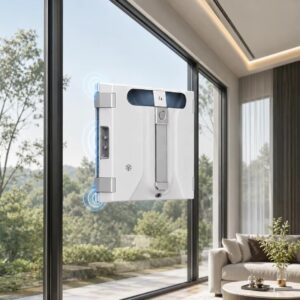
The ST-X1 is an automatic window cleaning robot that holds on with 2200–3200 Pa variable frequency suction, wets the glass through a dual-direction water spray from a 65 mL external visible tank, and finishes every pane twice with bionic smart path planning. A BLDC brushless fan keeps the noise level at 65 dB, a 5 m safety rope rated to 150 kg and 20 minutes of power-off protection keep the robot attached to the glass, and the whole machine weighs 1.05 kg at 269 × 137 × 70 mm.
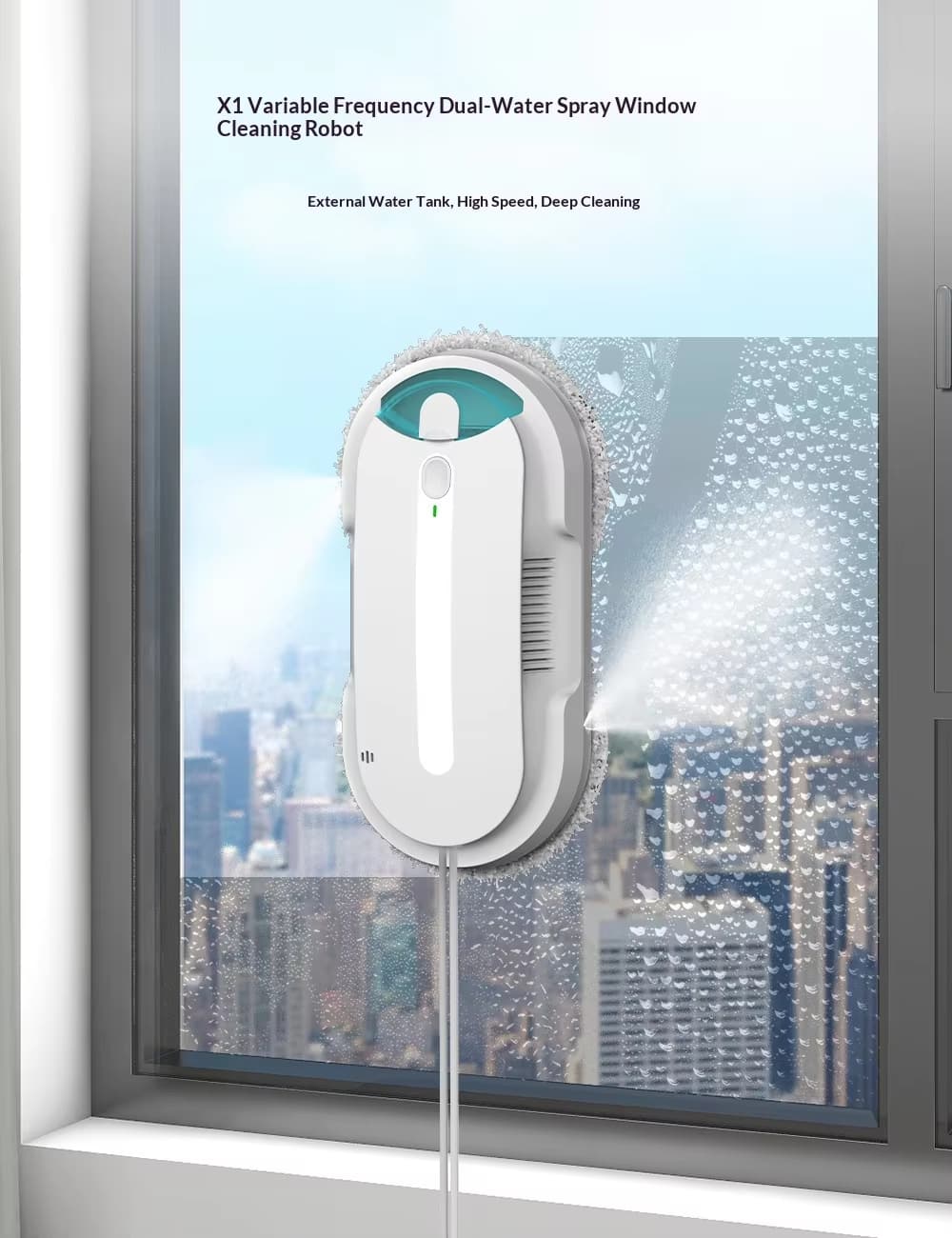
One Window Cleaning Robot for Glass, Tiles, Wooden Doors, Mirrors and Marble
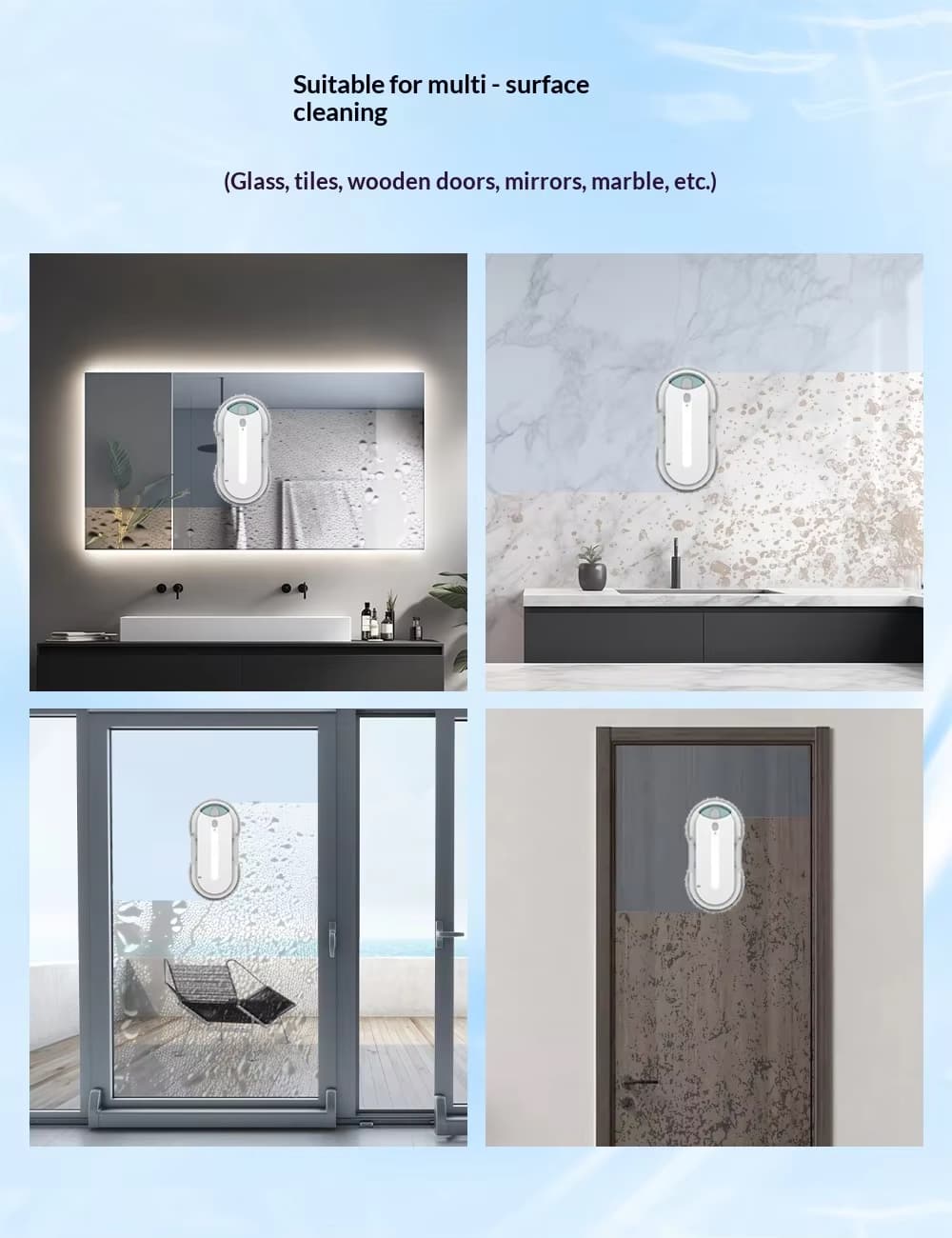
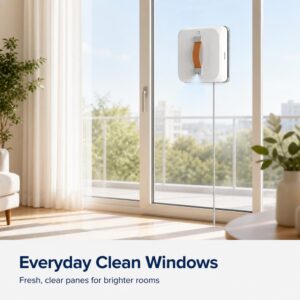
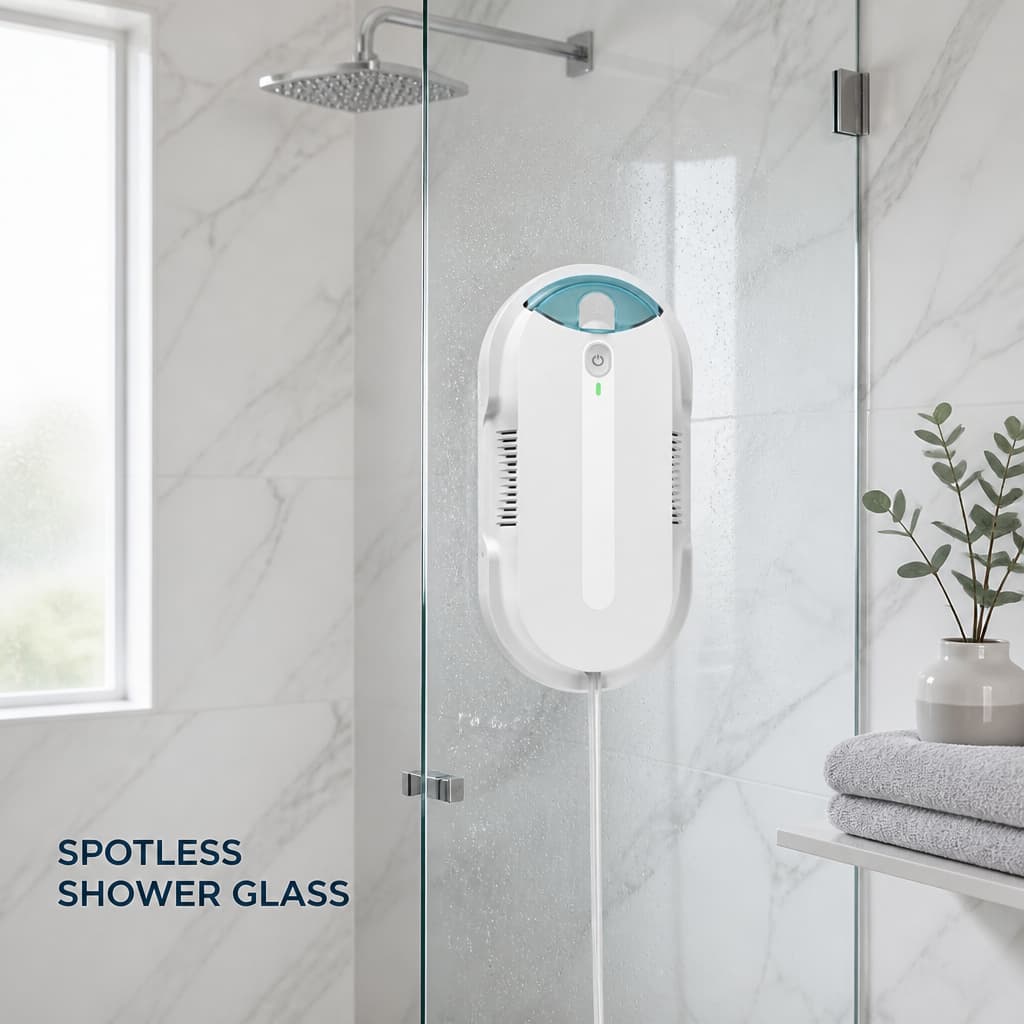
Most cleaners of this kind are only tested on one plain casement pane. The ST-X1 is set up for the smooth, hard surfaces a building actually has: interior and exterior glass, glass doors and balcony panels, wall and floor tiles, bathroom and wardrobe mirrors, marble surfaces and painted or varnished wooden doors. Suction decides whether a window cleaning robot can hold on to those surfaces at all, which is why this one adjusts its pull automatically instead of running at one fixed level.
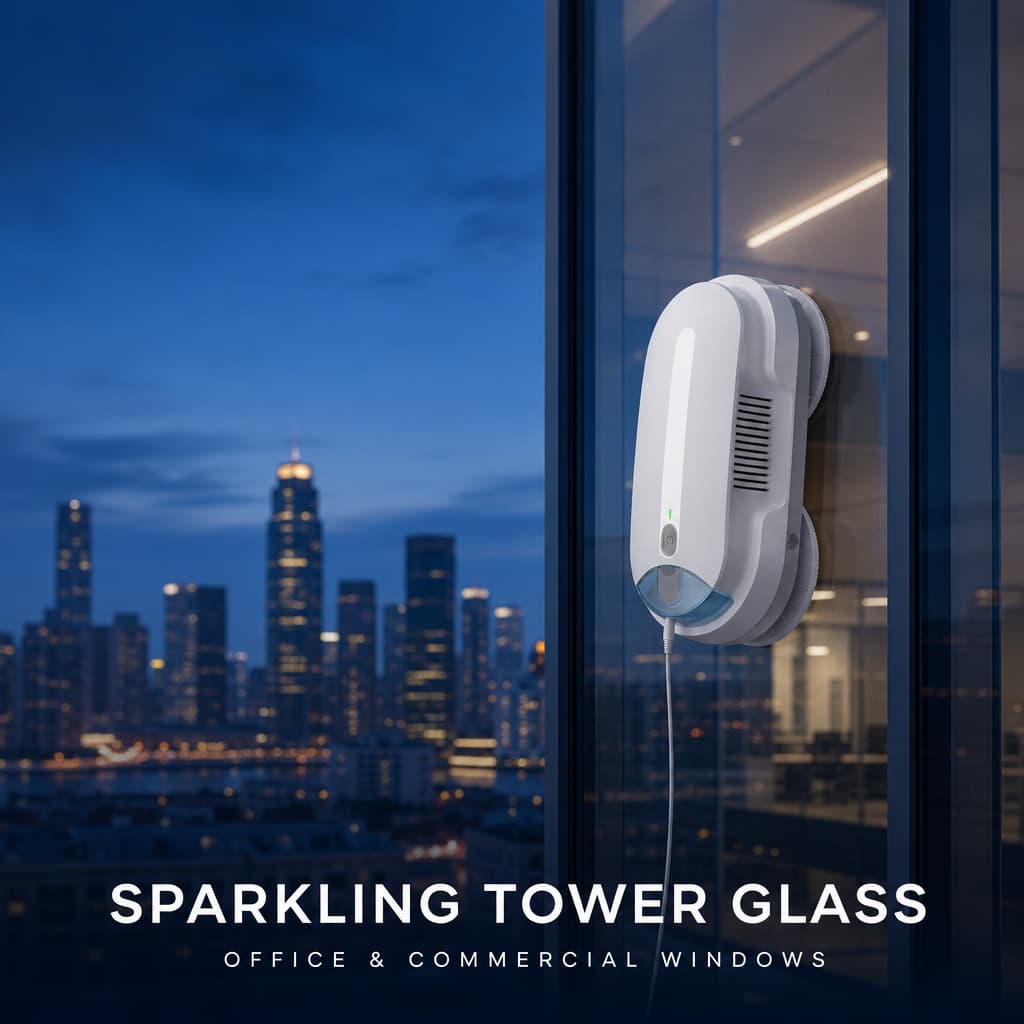
That breadth is what makes the machine worth owning rather than borrowing. A household uses the same window cleaning robot on the shower screen, the hallway mirror and the balcony door; a hotel or a showroom uses it across the glazing and the tiling in one shift. As a cleaning robot for windows it is bought once and then used everywhere in the building. Nothing in the working process changes between those surfaces — the robot holds by vacuum, wipes with a microfiber cloth and returns the same finish on each one.
2200–3200 Pa Variable Frequency Suction Keeps the Window Cleaning Robot on the Glass
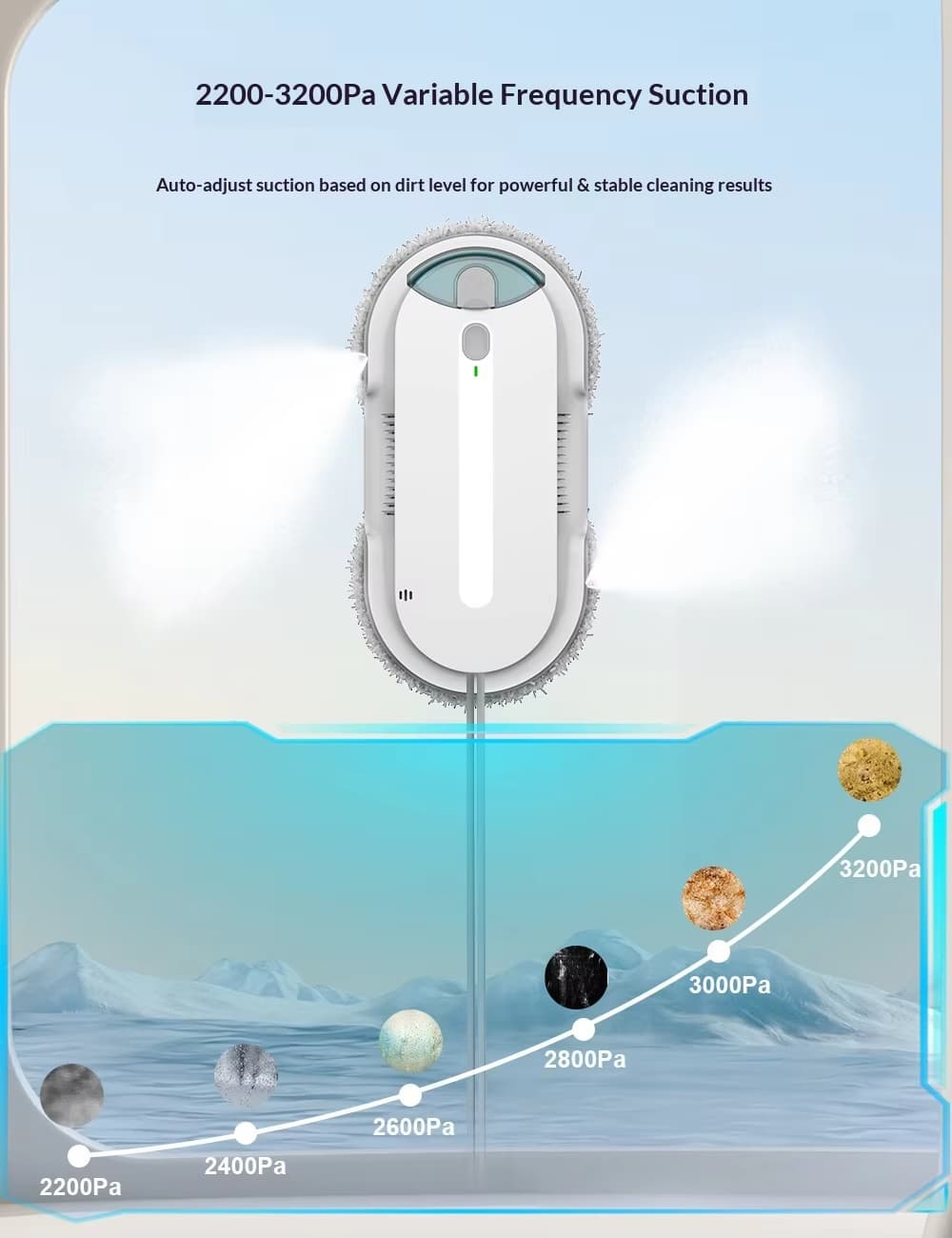
Suction is the force that holds a window cleaning robot against the pane, and on the ST-X1 it is variable frequency rather than fixed: the robot runs between 2200 and 3200 Pa and raises the pull as the dirt level rises. Two things depend on that control. The machine has to carry its own weight while working vertically, and the pressure has to stay even across the whole pane instead of thinning out in the middle of a large window.
Because the suction is regulated, this window cleaning robot holds firmly on smooth glass and on frameless panels without pressing hard enough to mark the surface. A BLDC brushless fan generates the vacuum with no motor brushes to wear down, and double-disc twisting wiping with a bidirectional rotation jet keeps the cloth moving over the glass while the fan holds the body in place. That controllability is what a cleaning robot for windows needs to hold the same finish at the top of a pane as at the bottom.
Dual-Direction Water Spray from a 65 mL External Visible Tank
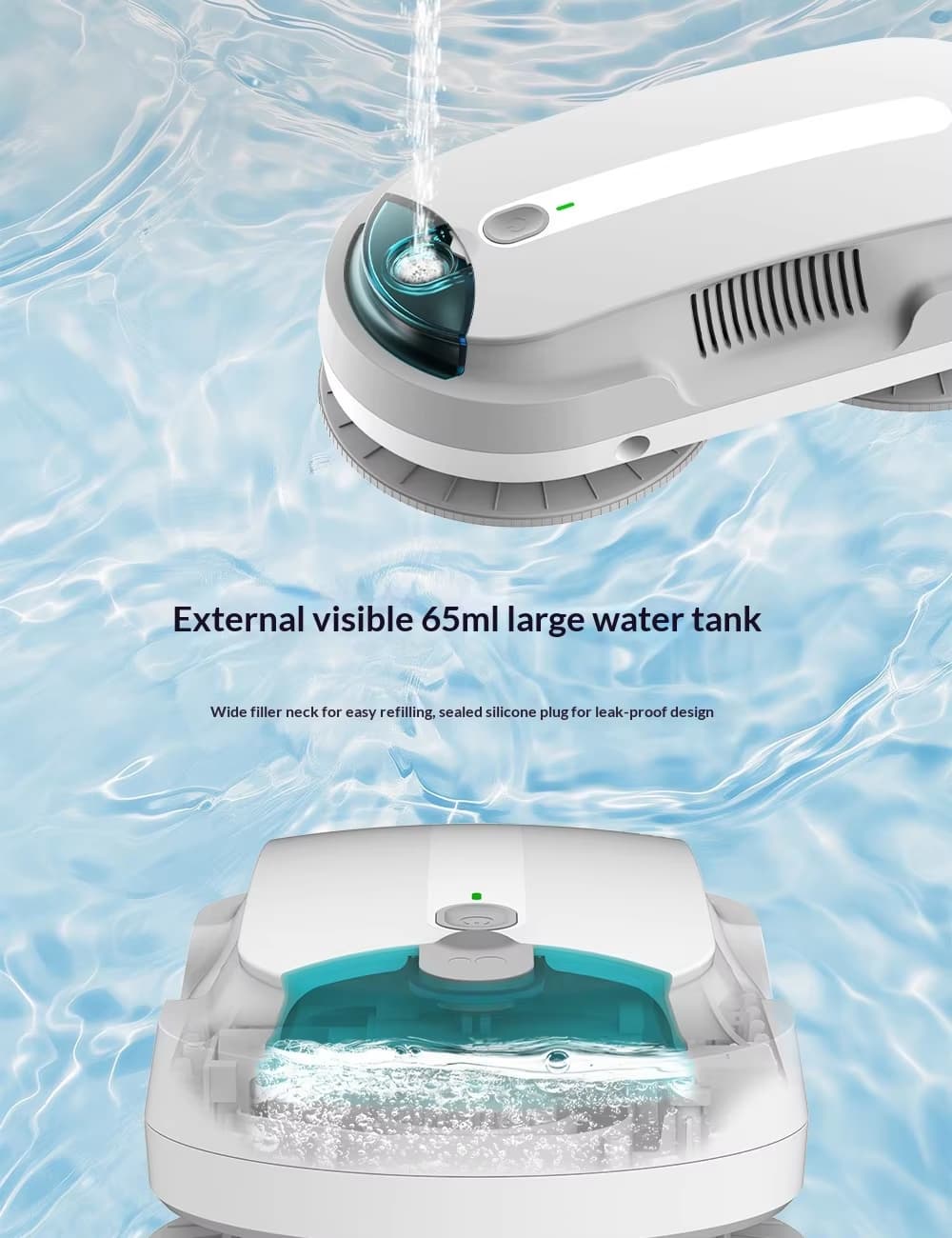
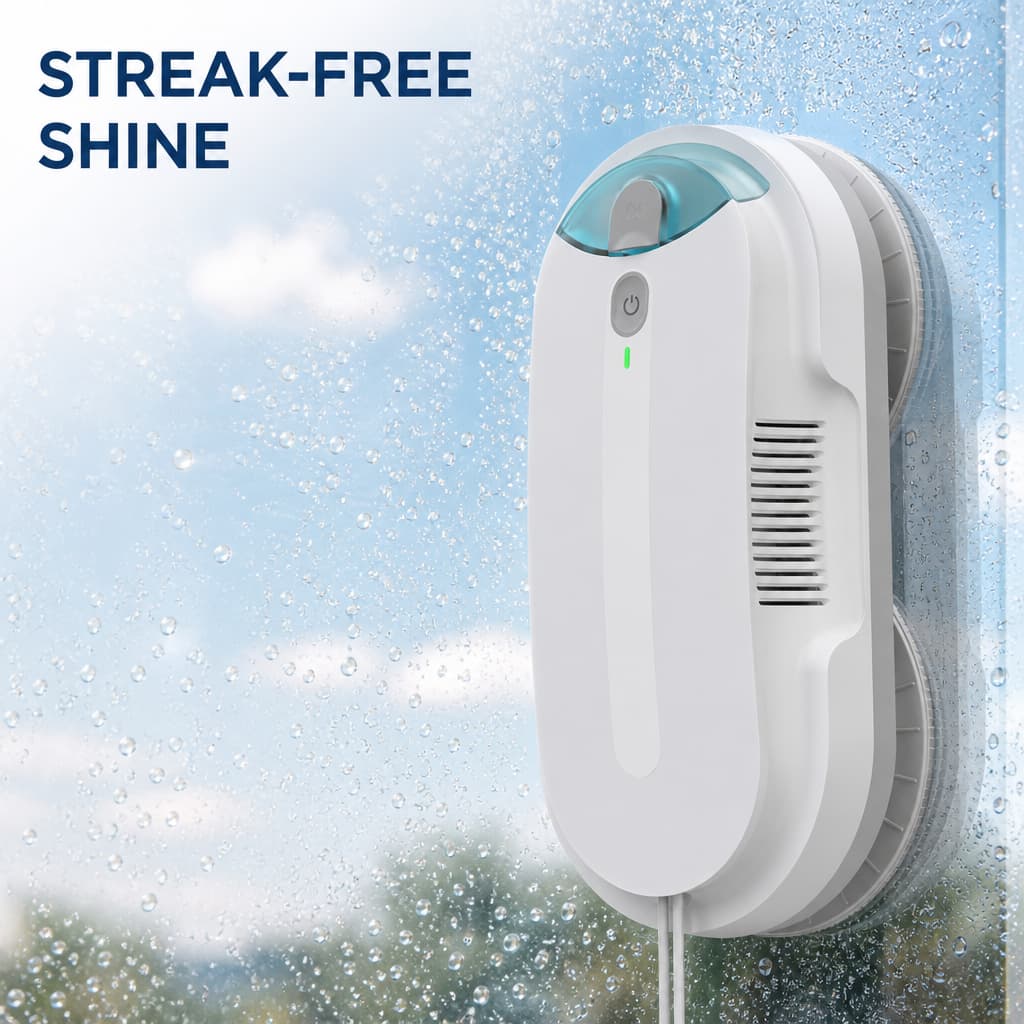
The water tank on this window cleaning robot sits outside the body and stays visible, so the level can be checked at a glance: 65 mL, filled through a wide filler neck and closed with a sealed silicone plug for a leak-proof design. Water leaves the tank through a dual-direction spray with large holes rather than a fine mist, and that is what makes the wiping a true wet wipe — the glass is wetted ahead of the cloth, the dirt is softened, and the microfiber lifts it instead of pushing dry particles across the surface.
A visible external tank changes how the machine is used as much as how it performs. There is no lid to open and no level to guess, refilling takes a moment, and the water carried on board is exactly the water left in the tank. On a run of large panes that is the difference between a window cleaning robot that finishes the glass and one that starts smearing once the tank runs dry.
Two Adjustable Spray Levels (A and B) for Light Dust or Heavy Soiling
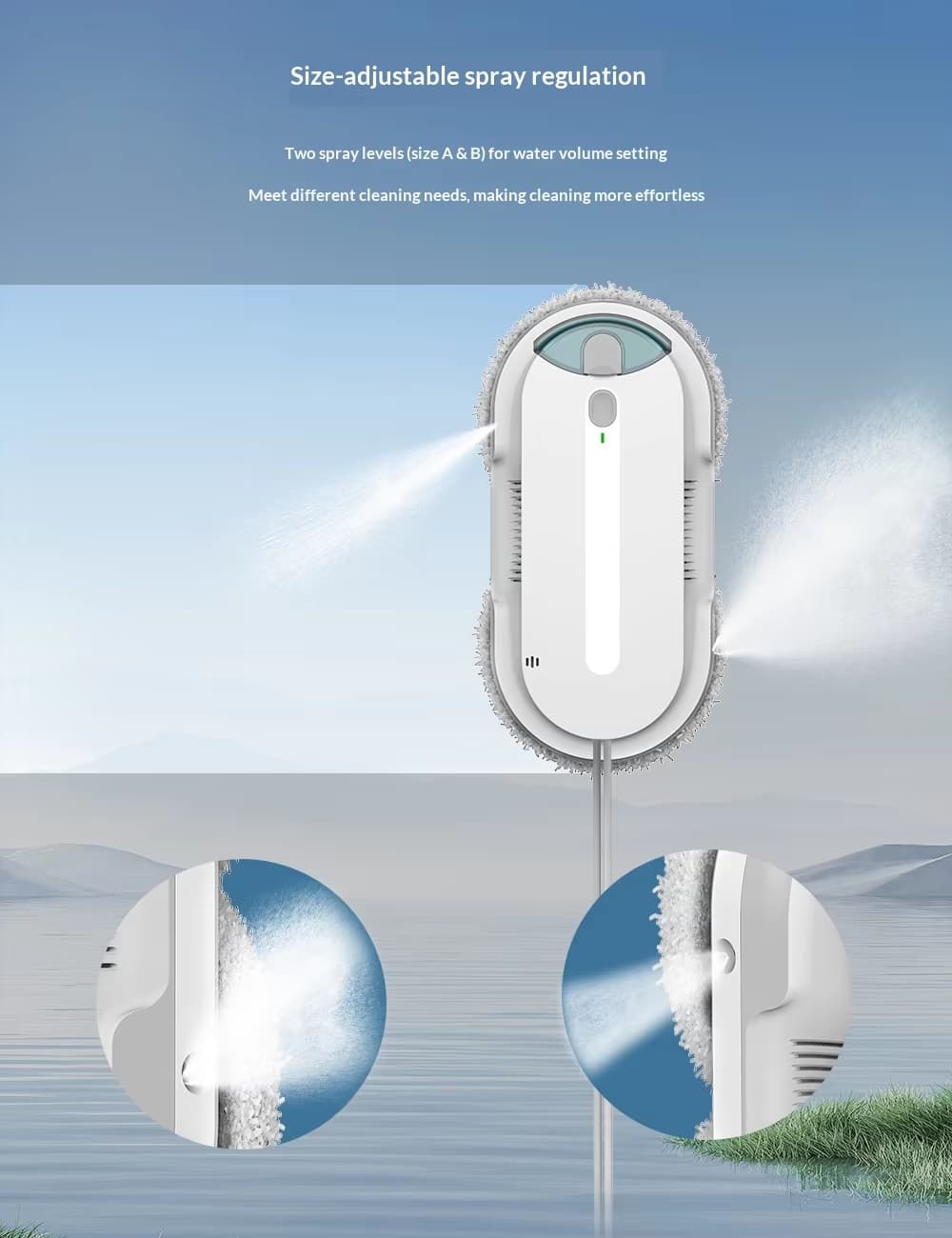
Spray volume is size-adjustable in two levels, A and B, and the spray works manually or automatically. Level A wets lightly, which suits everyday dust on an interior pane or a bathroom mirror. Level B delivers more water for exterior glass carrying rain film, traffic grime or dried-on marks. Matching the spray level to the dirt is what keeps the machine from flooding a small pane or running dry on a large one.
Two levels on one window cleaning robot cover both ends of the job: the light pass a household wants every week, and the heavier wetting that exterior glazing needs after weather. It also means the same robot can be handed to a user who only wants a quick automatic cycle and to one who prefers to choose the amount of water by hand.
Frameless Window Smart Edge Detection with Variable-Speed Suction
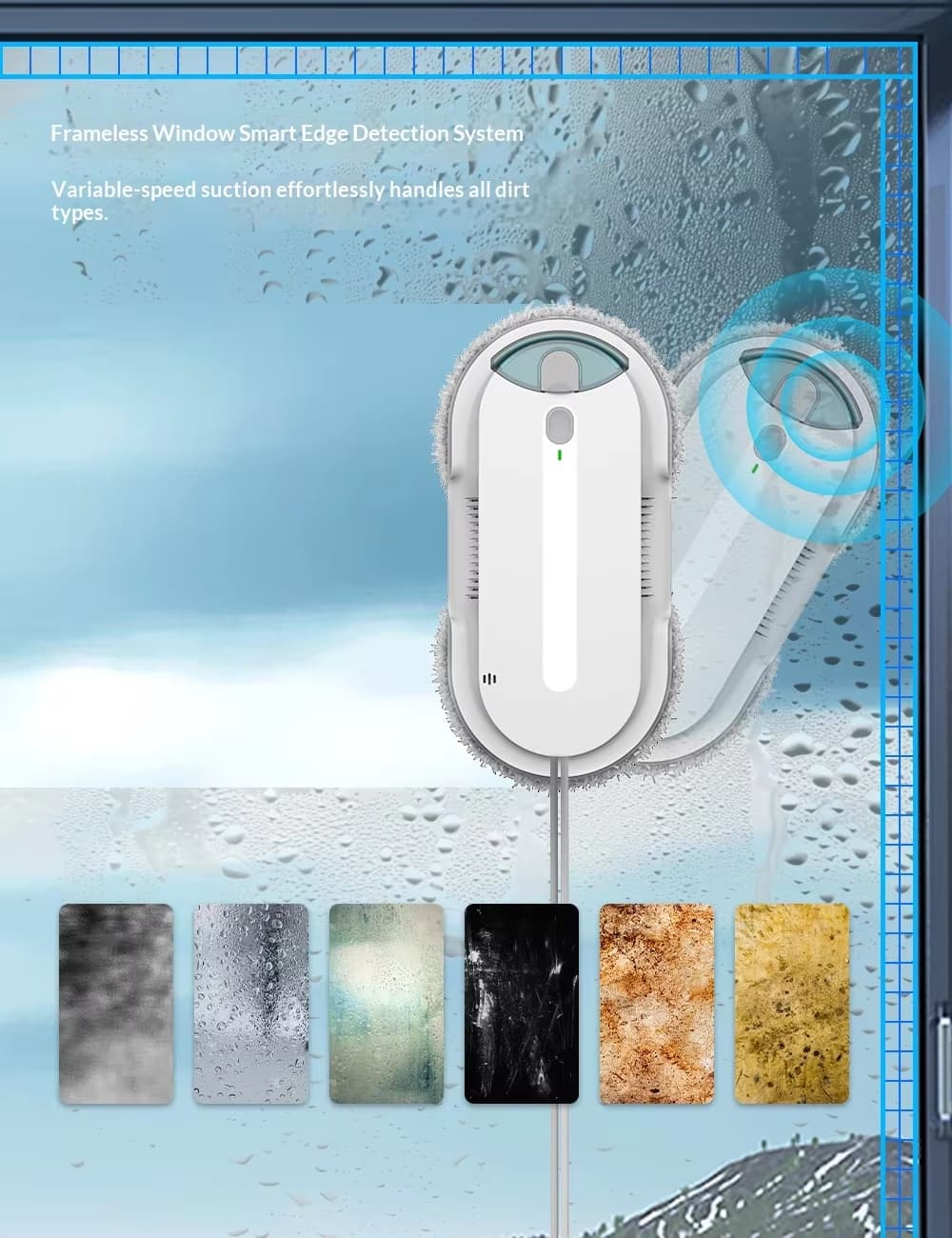
Frameless glass has no rebate for a robot to stop against, so the border of the pane has to be read rather than felt. The ST-X1 uses smart edge detection: as the body approaches the edge the robot recognises the boundary and turns before the cloth runs off the surface, while variable-speed suction keeps the hold steady as the machine works through different dirt types.
That is what allows the same window cleaning robot to run on a fixed window, a frameless glass balcony panel and a glass door without extra hardware. Edge detection is also the first of the machine’s safety systems, and it is paired with high-altitude anti-fall protection for work above head height, where there is no frame to catch the body if the vacuum is interrupted.
Bionic Smart Path Planning: Every Pane Cleaned Twice at 65 dB
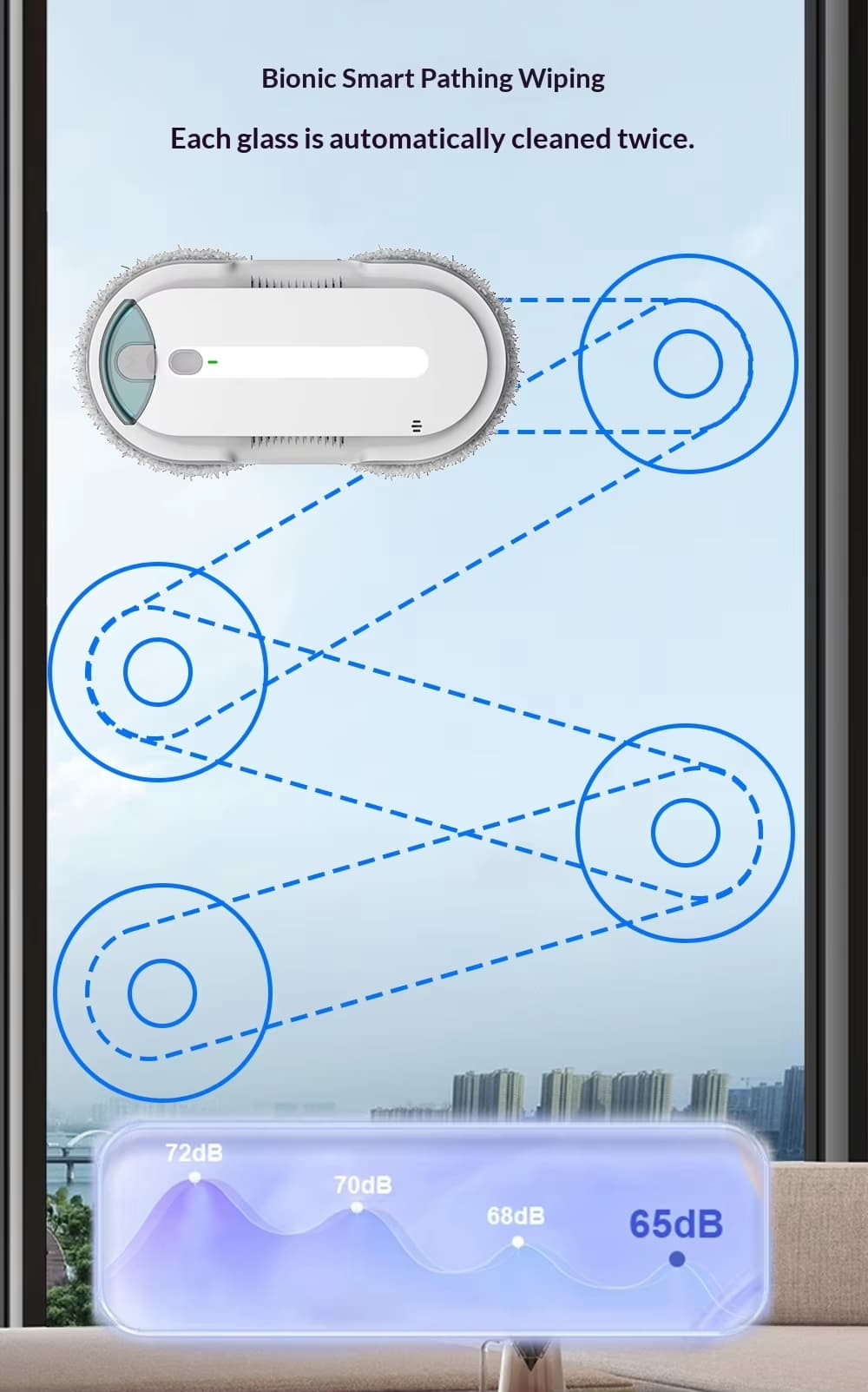
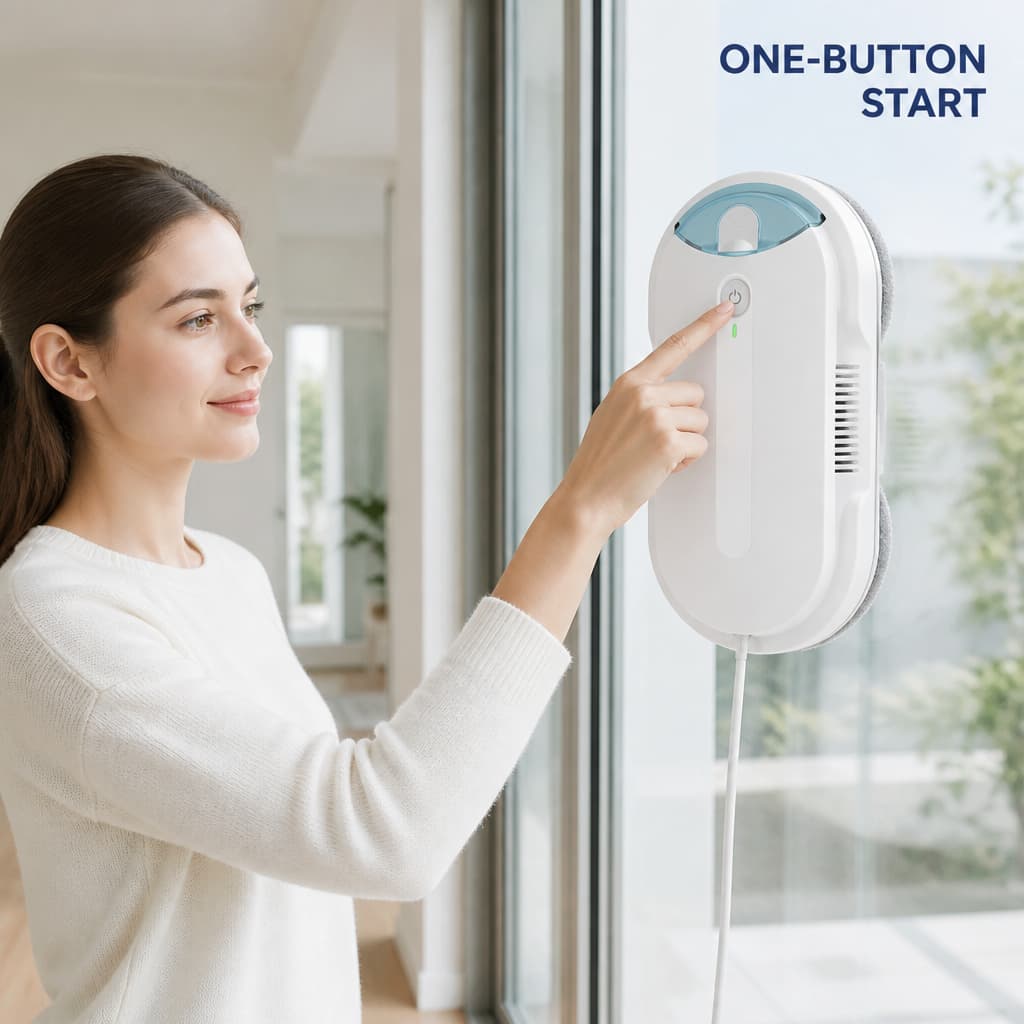
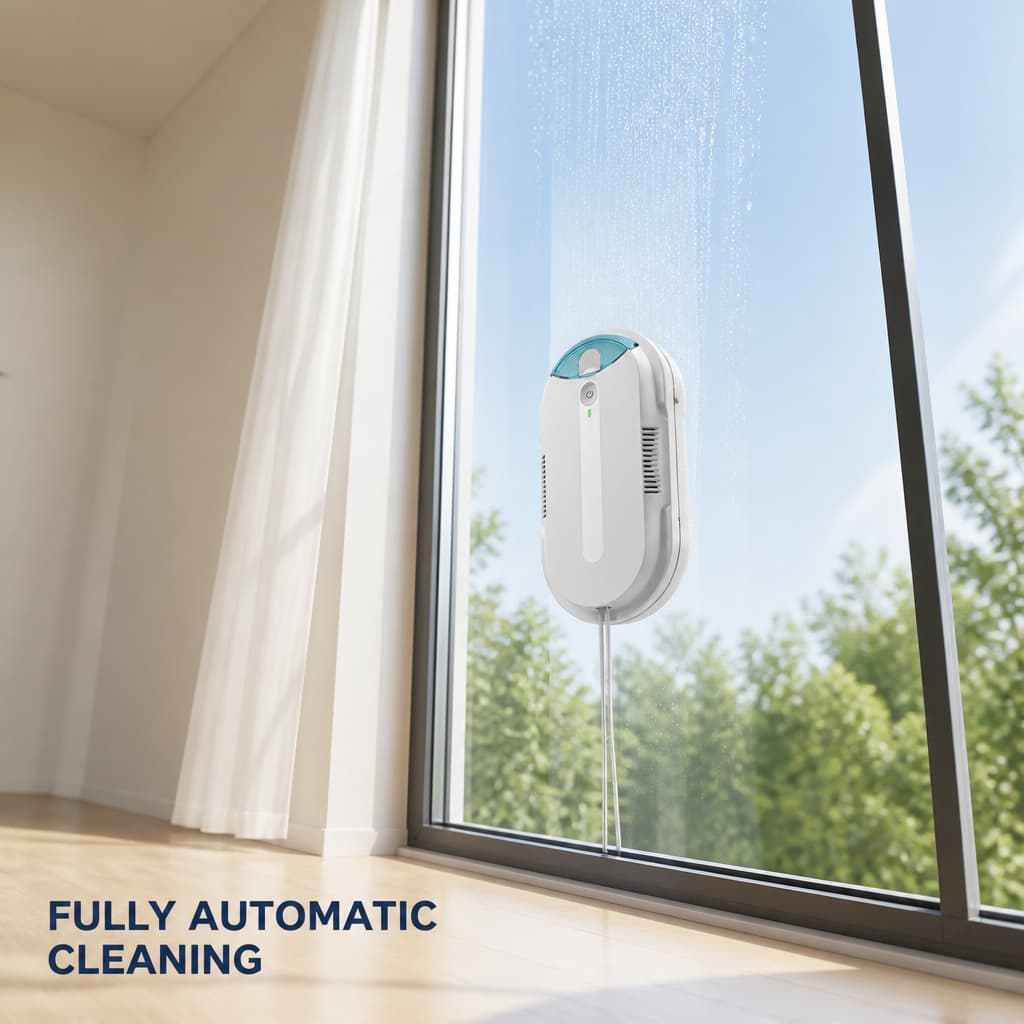
Bionic smart path planning cleans each pane twice in one cycle, so the second pass crosses the first and no band of glass is left untouched. One click starts the cycle and the robot runs the pattern on its own, which is the whole reason to own an automatic window cleaner rather than a squeegee.
Noise stays at 65 dB with the BLDC brushless fan. That is quiet enough to leave the machine running in a living room, an office or a hotel room while people work, talk or rest, and it is what makes unattended cleaning realistic. On a window cleaning robot that is expected to run often, the low noise level matters as much as the cleaning pattern itself.
Multi-Security Protection System: 20-Minute Power-Off Protection and a 150 kg Safety Rope
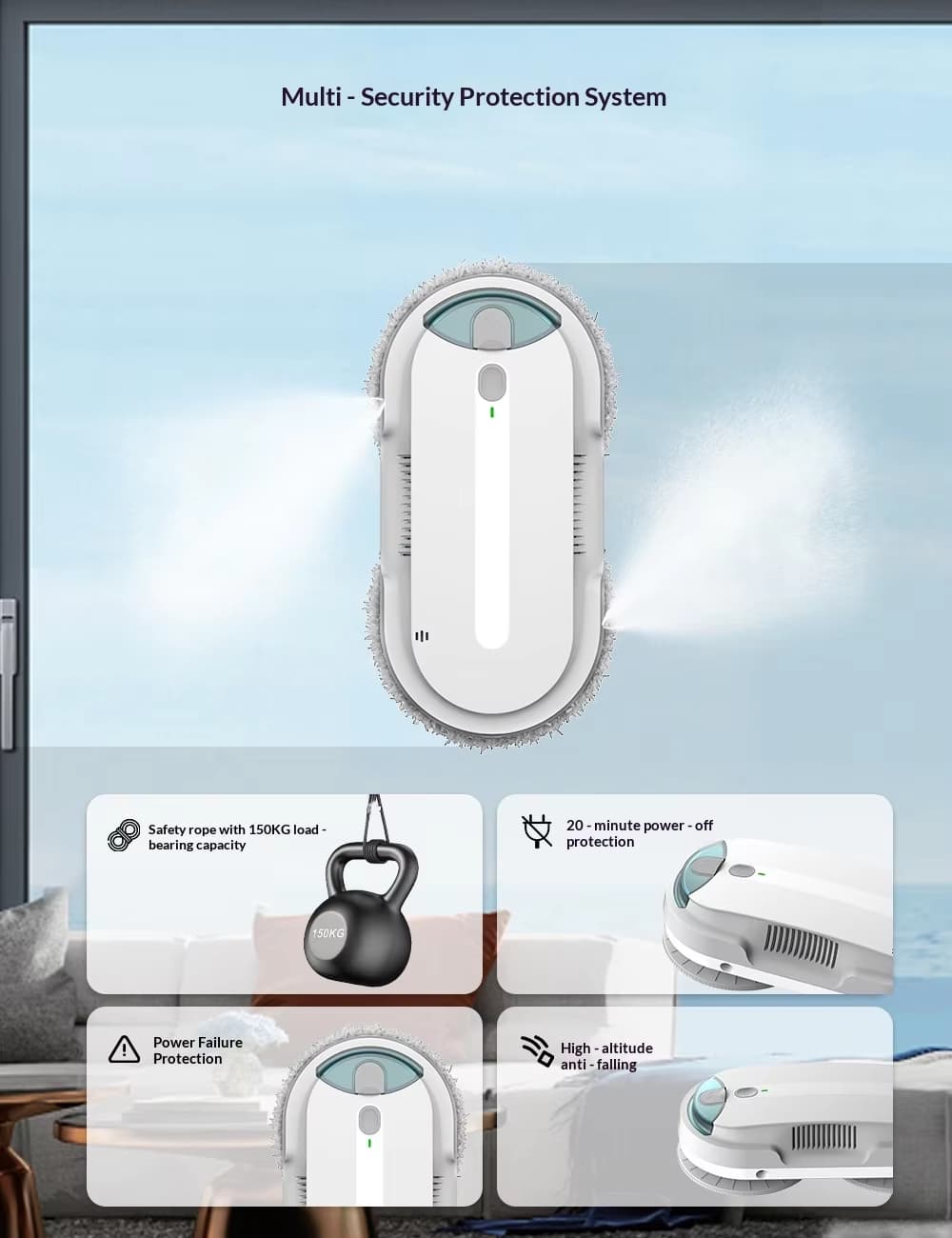
Three systems protect the robot while it is on the glass. The safety rope has a 150 kg load-bearing capacity and acts as the mechanical line. Power-off protection keeps the machine on the pane for 20 minutes after a power failure. High-altitude anti-fall protection covers the moment the robot works above head height on upper-floor glazing.
Together they form the safety case for leaving a window cleaning robot to finish a full cycle on glass that cannot be reached from the floor. The 500 mAh battery on board is what holds the robot in place when the power drops, and the rope remains the fallback behind it — so the machine does not depend on a single system to stay attached to a high pane.
Independent Air Duct 3.0 and a 3-Layer Waterproof Motherboard
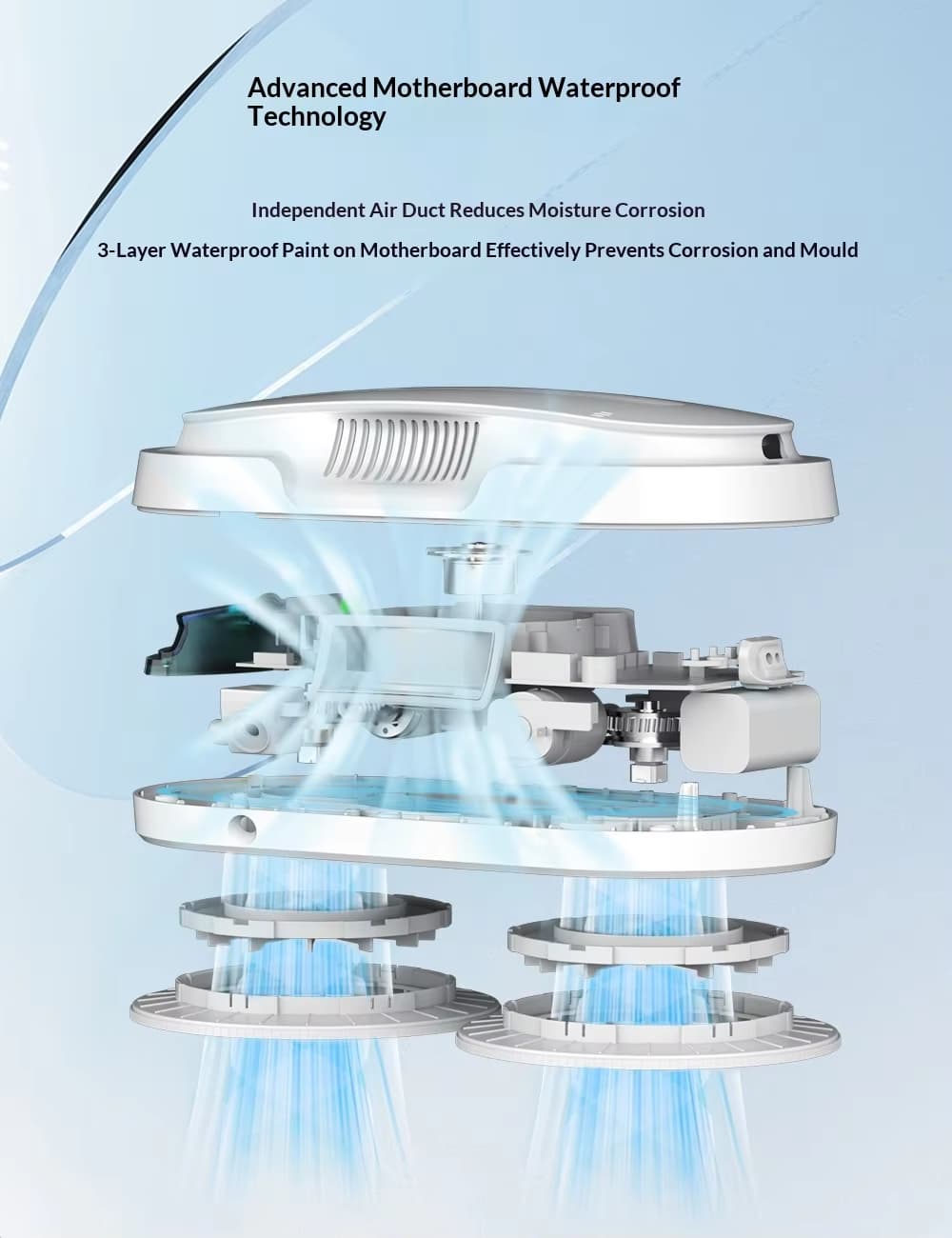
Moisture is what usually ends the working life of a wet-cleaning robot, so the ST-X1 separates water from air inside the body with an independent air duct 3.0, and the motherboard carries a 3-layer waterproof coating. Moisture separation with effective dust protection keeps water away from the electronics, and the coating prevents corrosion and mould from building up on the board.
On a window cleaning robot that wets the glass on every pass, that is a durability feature rather than a decoration: suction and wiping performance stay where they started instead of fading after a season of daily use. It also reduces the maintenance the machine asks for, because the parts most exposed to water are the ones being protected.
2.4G Remote Control with One-Click Start and Optional App Control
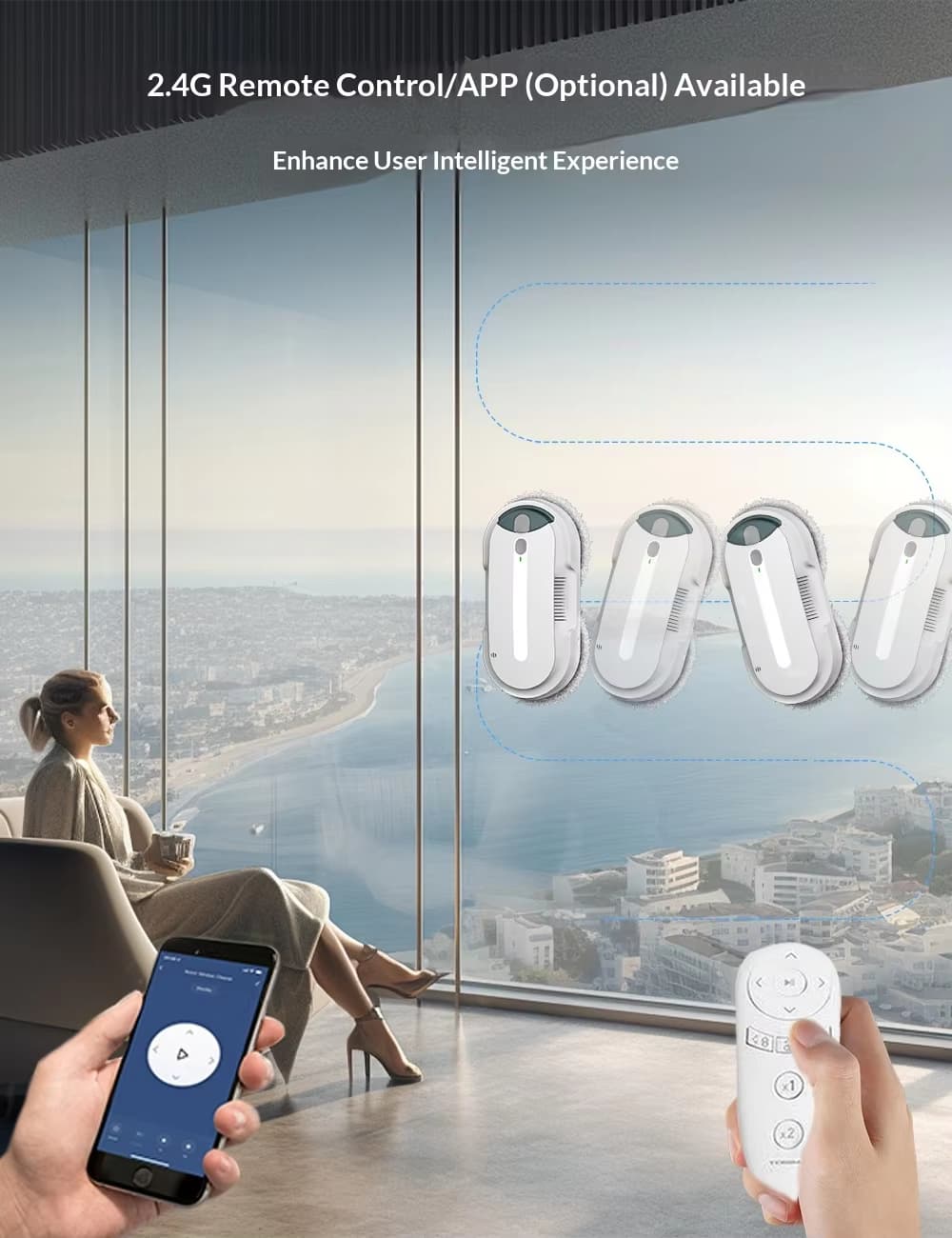
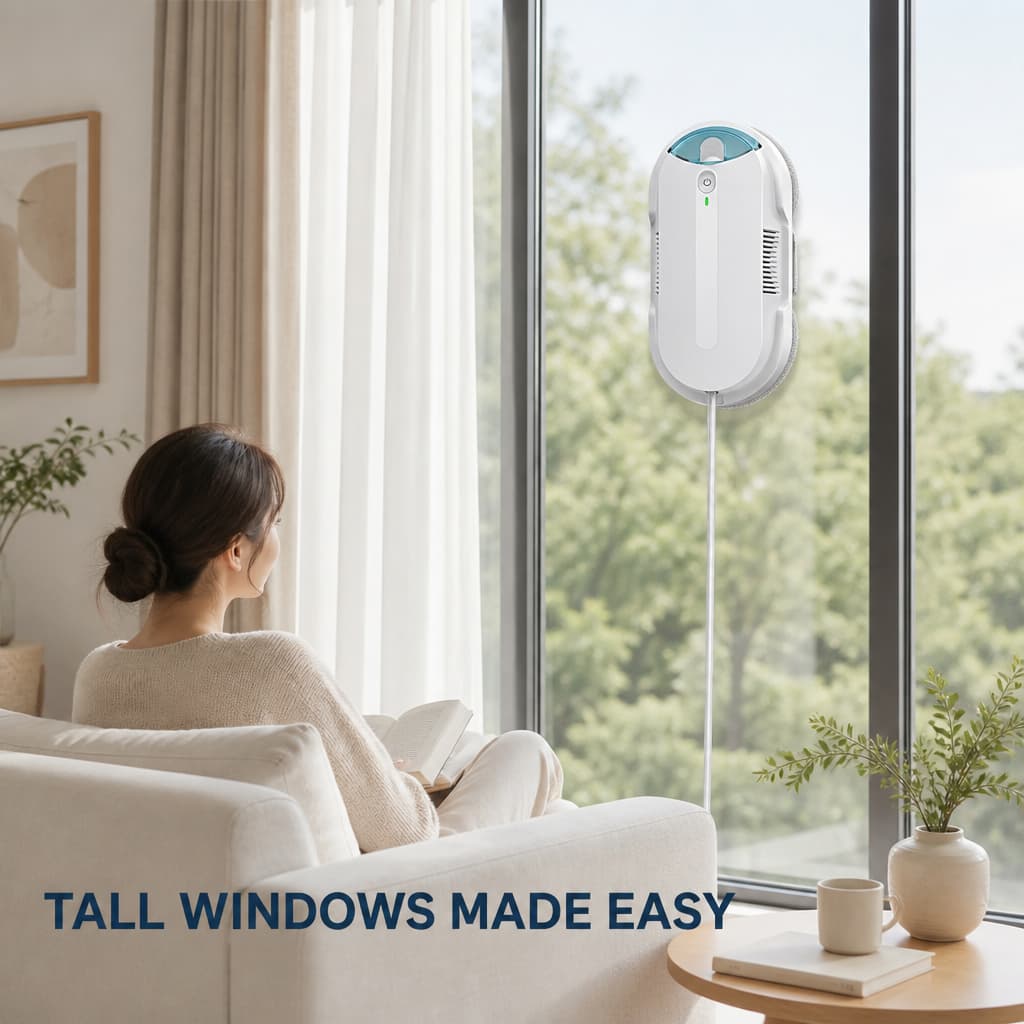
The ST-X1 ships with a 2.4G remote control, and app control is available as an option. One click starts a cleaning cycle, and the remote lets the working mode and the spray be changed without walking to the glass — useful on floor-to-ceiling glazing, tall windows and glass doors that sit behind furniture or a hallway.
A second route through the optional app suits users who prefer to keep the controls on a phone. Either way the same window cleaning robot runs the same pattern, so a household can start the machine from a chair, and a facilities team can start it and walk away while the pane is being cleaned.
Compact 1.05 kg Window Cleaning Robot at 269 × 137 × 70 mm
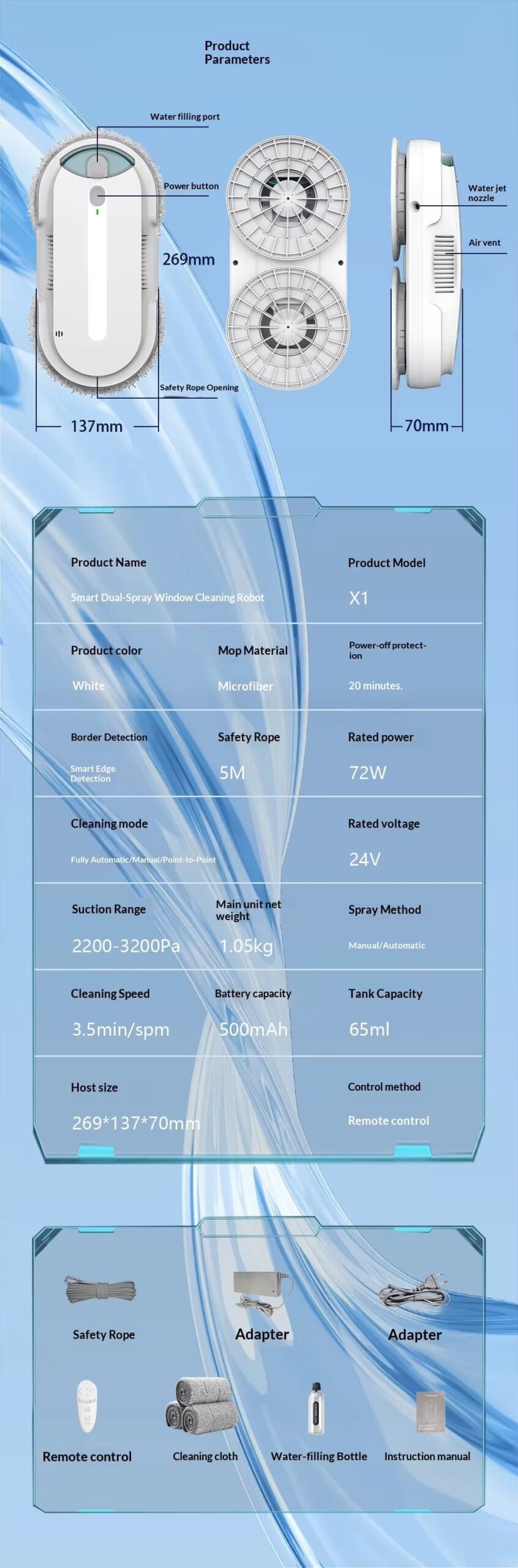
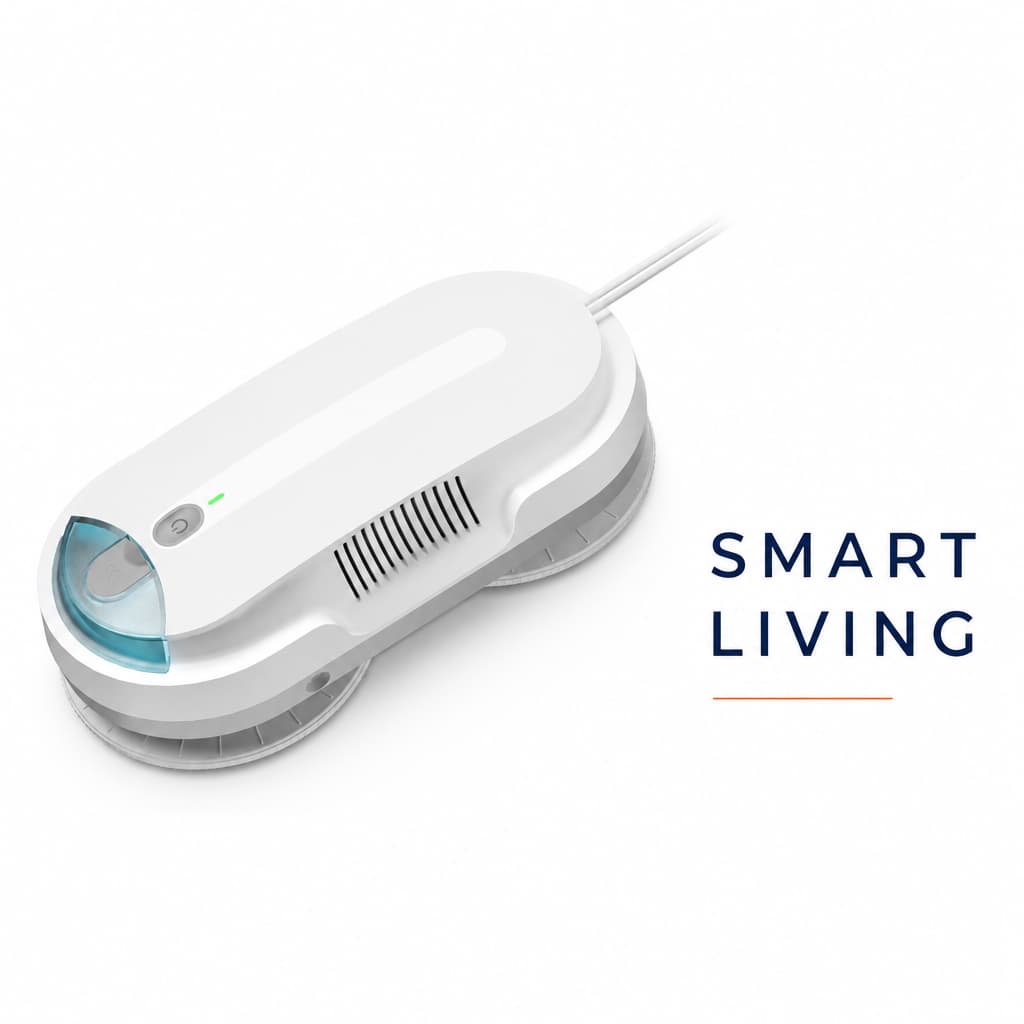
At 269 × 137 × 70 mm and 1.05 kg the ST-X1 is light enough to lift onto a window frame with one hand and slim enough to store on a shelf or in a service cupboard. Rated power is 72 W at a rated voltage of 24 V, running from an AC 100–240 V input, so one unit covers different power systems without a second adapter. For a cleaning robot for windows that is used in more than one market, that single input range keeps the order simple.
Every unit ships with the safety rope, adapter, power cord, remote control, microfiber cleaning cloth, water-filling bottle and instruction manual, so the machine is ready to work out of the box. Colour options are white or black and plug options are EU / UK / US / JP / KR, which lets the same window cleaning robot suit a white interior, a dark one, or a mixed order for several markets.
Frequently Asked Questions About the ST-X1
What is the ST-X1 smart dual-spray window cleaning robot, and which surfaces can it clean?
The ST-X1 is an automatic window cleaning robot for smooth, hard surfaces: interior and exterior glass, glass doors, tiles, wooden doors, mirrors and marble. It holds on with 2200–3200 Pa variable frequency suction, wets the glass with a dual-direction spray from a 65 mL external visible tank, and cleans every pane twice with bionic smart path planning.
How does 2200–3200 Pa variable frequency suction work?
Suction is the force holding a window cleaning robot against the pane. Instead of running at one fixed level, the ST-X1 raises its pull from 2200 to 3200 Pa as the dirt level rises, so it holds firmly on smooth glass and on frameless panels without pressing hard enough to mark the surface, and the pressure stays even across a large window rather than dropping off in the middle.
What does the dual-direction water spray do, and how much water does the tank hold?
The external tank holds 65 mL and stays visible, so the level can be checked at a glance; it is filled through a wide filler neck and sealed with a silicone plug for a leak-proof design. The dual-direction spray pushes water through large holes rather than a fine mist, so the pane is wetted ahead of the cloth and the microfiber lifts the softened dirt instead of pushing dry particles across the glass.
What are the two spray levels, and which one should I use?
Spray volume is adjustable in two levels, A and B, and the spray can be set to manual or automatic. Level A gives light wetting for everyday dust on interior panes and mirrors. Level B delivers more water for exterior glass carrying rain film, traffic grime or dried-on marks. Matching the level to the dirt keeps the machine from flooding a small pane or running dry on a large one.
What are the three cleaning modes on the ST-X1?
The robot works in three modes: fully automatic, manual and point-to-point. Fully automatic runs the bionic path pattern with one click, manual lets the user steer the robot, and point-to-point concentrates the cleaning on a chosen spot. Cleaning speed is about 3.5 minutes per square metre.
What happens if the power is cut while the robot is on the glass?
Power-off protection holds the ST-X1 on the pane for 20 minutes after a power failure, supported by the 500 mAh battery on board. The 5 m safety rope, rated to a 150 kg load-bearing capacity, works as the mechanical line behind it, and high-altitude anti-fall protection covers work above head height.
How does smart edge detection keep the robot on frameless glass?
Frameless glass has no rebate to stop against, so the robot reads the border of the pane: as the body approaches the edge, smart edge detection recognises the boundary and turns the machine before the cloth runs off the surface. Variable-speed suction keeps the hold steady while the robot works through different dirt types.
How big is the ST-X1, and how loud is it?
The body measures 269 × 137 × 70 mm and weighs 1.05 kg, with a rated power of 72 W at a rated voltage of 24 V and an AC 100–240 V input. The BLDC brushless fan keeps the noise level at 65 dB, quiet enough to run in a living room, an office or a hotel room while people work or rest.
What is included in the box, and how do I control the robot?
Each unit ships with the safety rope, adapter, power cord, remote control, microfiber cleaning cloth, water-filling bottle and instruction manual. Control runs through the 2.4G remote with one-click start, and app control is available as an option. Colour options are white or black, with EU / UK / US / JP / KR plug types.