Wholesale Smart Window Cleaning Robots | Factory Direct OEM & Bulk Supply
As a trusted manufacturer & supplier, we deliver wholesale smart window cleaning robots for global B2B buyers including distributors, property management firms, commercial cleaning service providers and engineering contractors.
Our automated window‑cleaning robots greatly reduce high‑altitude manual operation risks for high‑rise buildings, cutting labour costs while delivering consistent high‑quality cleaning performance. We support flexible bulk orders, OEM & private‑label customization, strict quality control and worldwide shipping to help you expand your product portfolio and win more commercial projects. Contact our team to get your tailored wholesale quotation.
View Our Window‑Cleaning Robots


The short answer for wholesale buyers
- MOQ is not one number. Sample orders, ready-to-ship stock, logo OEM and full ODM each sit at a different threshold — the S9 dual-spray model carries a low 200-unit MOQ for stock wholesale.
- There are two ways to buy. Stock bulk from ready inventory for speed and market testing, or private-label OEM/ODM in three levels: branding, packaging, then functional specification.
- Suction is a safety specification, not a marketing figure. The range runs from 3,000 Pa to 6,000 Pa; towers and curtain walls need the top of it, villas and shopfronts do not.
- Anti-fall redundancy is what a tender turns on. Look for a UPS hold that keeps the pump running through a power cut, or a triple anti-drop mechanism, plus a load-bearing safety rope.
- Certification is a pre-order decision. CE, FCC and RoHS plus lithium-battery transport documents — confirmed against the exact model, not the range as a whole.
- Test a sample before the container. One unit on your own glass answers questions that no specification sheet covers.
Why Manual High-Rise Window Cleaning No Longer Works for Commercial Operators
Manual exterior glass cleaning is now the single largest cost and liability item in high-rise facility maintenance. Crews need rope access or suspended platforms, every deployment carries fall and wind risk, and insurers increasingly price that risk into the contract. Finish quality also varies by operator and by weather — streaked glass on a hotel facade or a retail front is a brand problem, not a housekeeping detail. For distributors and commercial cleaning contractors, those three pressures — labour cost, safety liability and inconsistent finish — are why robotic window cleaners have moved from a novelty to standard equipment.
For a distributor or a cleaning contractor, the decision is not whether the robots work — it is how many units a route needs and what the specification has to survive. That is a procurement question with a written answer, and we set out the whole framework in our wholesale sourcing guide.

How the Robot Actually Works
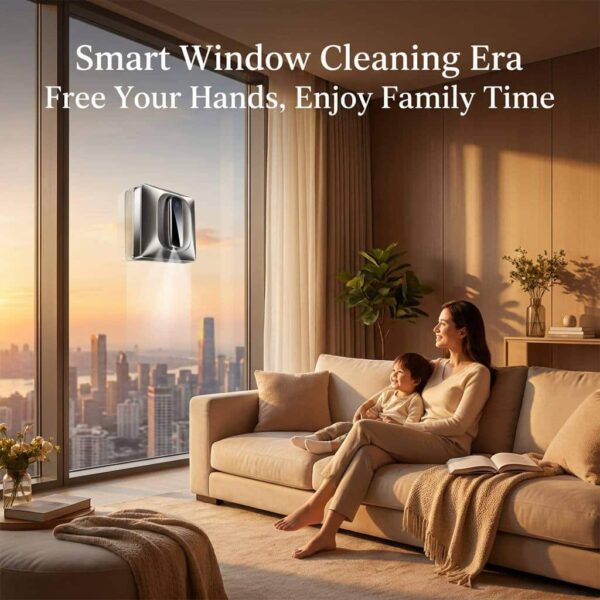
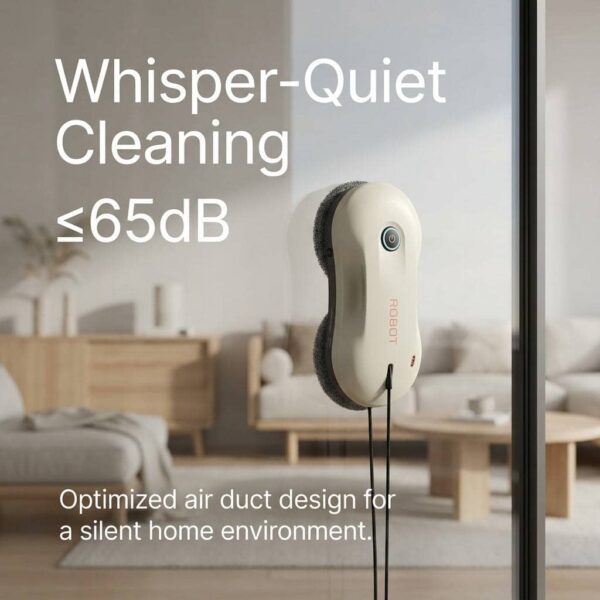
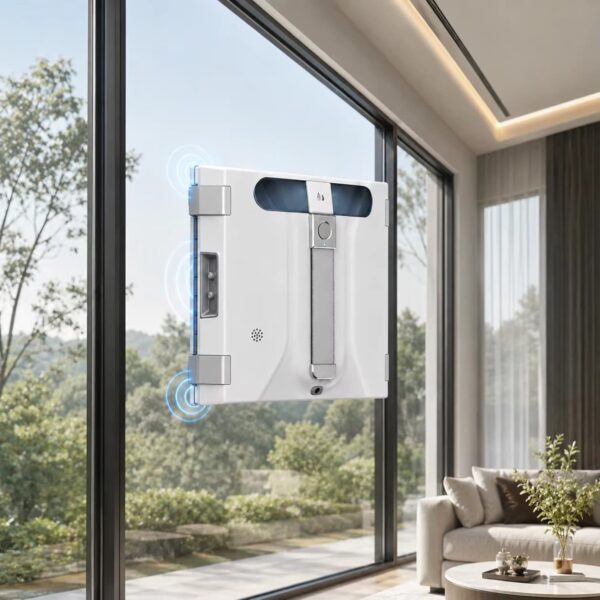
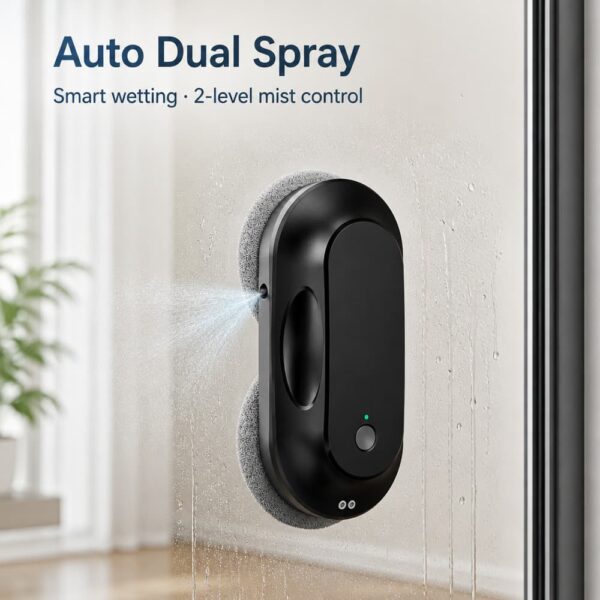
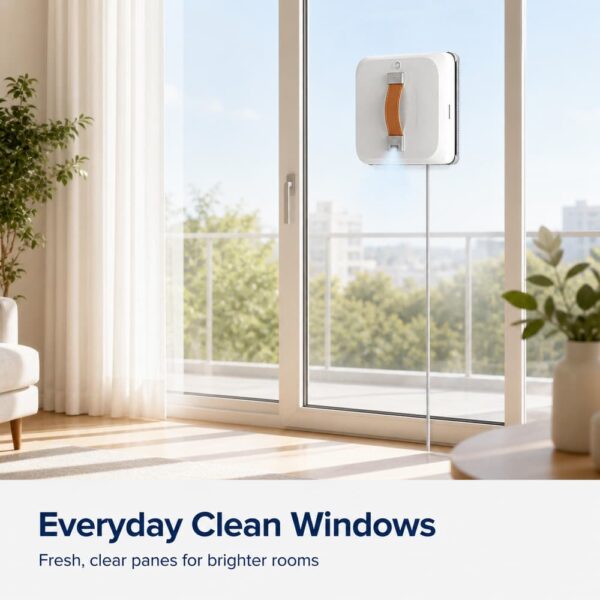
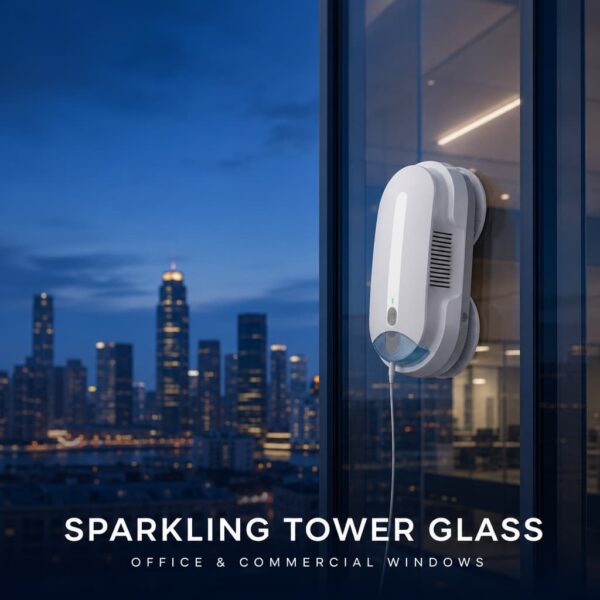
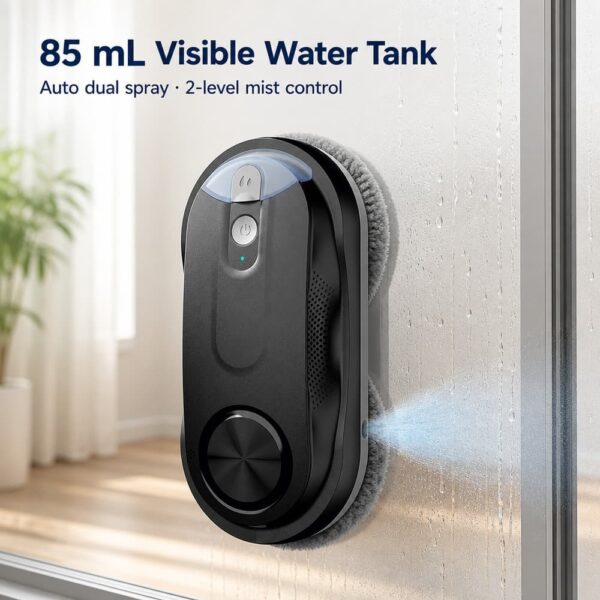
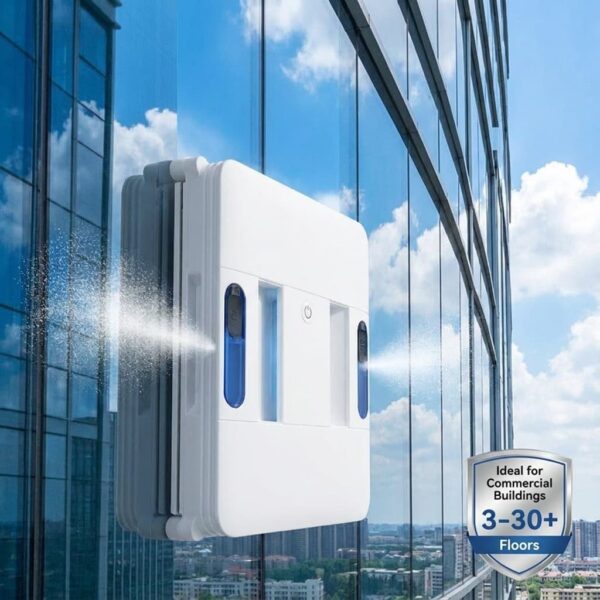
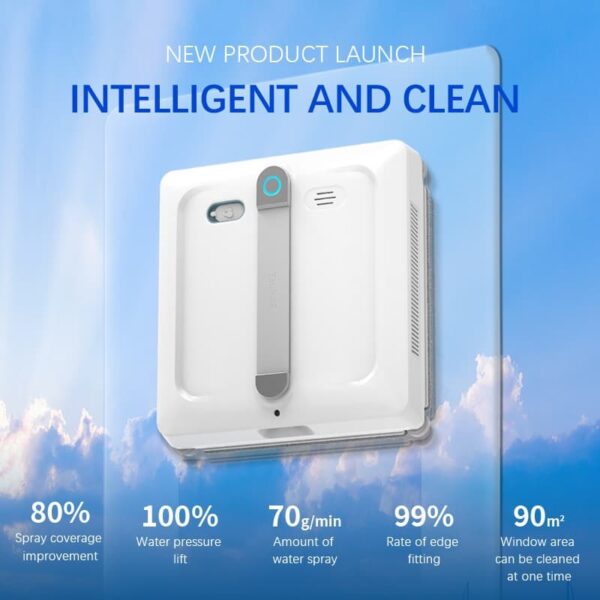
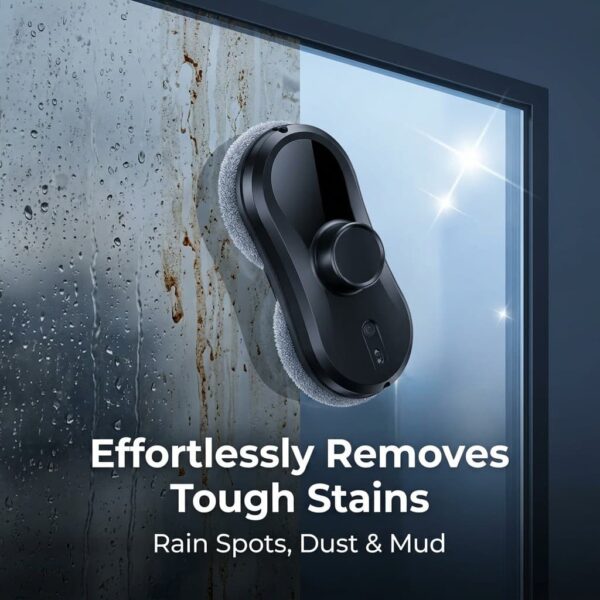
The robot locks onto vertical glass with vacuum suction — no rigging, no rope access — then follows an AI-planned route that maps window borders and obstacles instead of repeating a fixed zigzag. An atomised spray system loosens dust, water spots and grease before dual microfibre pads wipe and polish. One unattended cycle replaces the ladder, the rope access and the second pass. It handles framed, frameless, narrow and triangular glass, plus curtain walls, sunrooms and shopfronts.
Multi-Surface Compatibility: Curtain Walls, Skylights and Narrow Frames


MOQ, Volume Pricing & OEM / ODM Options
Window cleaning robots are ordered two ways: as ready-to-ship stock, or as a private-label programme. Each carries a different minimum order, lead time and upfront cost, and each customisation level adds its own engineering and re-certification work. Decide which one you are buying before you send the enquiry, because it determines the whole schedule.
Branding
Logo application and labels, plus a custom body colour. The cheapest route to a unit that looks different from the listing next to it, and it needs no tooling.
- Logo printed on the unit
- Custom labels and body colour
- No tooling or re-testing required
Packaging & documentation
Retail-ready cartons, inserts and manuals in your market’s language. This is the level most private-label brands start at, and it delivers the fastest gain in perceived value.
- Custom retail carton and inserts
- Localised user manual
- Supports a higher retail price point
Functional customisation
Changes to the machine itself: cable and plug type, tank configuration, body colour spec and control-panel layout, re-tested against your destination market’s standards.
- Plug, voltage and cable type
- Tank and control-panel layout
- Requires sampling and re-certification
On the minimum order: MOQ varies by model and by how deep the customisation goes, rather than being one figure for the range. The S9 dual-spray model is held for ready-to-ship wholesale at a low 200-unit MOQ, which makes it the natural first order when you are testing a market. We also support mixed-model orders for qualified wholesale and OEM buyers, so you can build a portfolio across several price points without meeting a separate minimum on every sku. Send us your target market and expected annual volume and we will confirm the structure — and the volume band your mix qualifies for — in writing.
Anti-Fall Safety & Certification
On a window-cleaning robot the safety specification is not an accessory — it is the first thing a client’s insurer and safety reviewer ask about, and the most common reason a commercial tender passes or fails. Certification is the second, because it decides which markets you can list in at all.
UPS hold through a power cut
A backup supply that keeps the vacuum pump running if site power is lost mid-cycle, so the robot keeps holding the glass instead of releasing it.
Triple anti-drop mechanism
Redundant hold: real-time suction monitoring, an emergency lock, and a load-bearing safety rope rated to carry the unit if every active system fails.
CE, FCC and RoHS
CE for the EU and EEA, FCC for the United States, and RoHS compliance on hazardous-substance restrictions — our commercial models publish CE certification.
Lithium battery shipping documents
Transport test summaries and classification documents are a separate requirement on top of product certification, and must be passed to your freight forwarder.
Important: we publish the certificate set on a per-model basis, not for the range as a whole, because it differs between models and configurations. Confirm the documents against the exact model you are ordering — not a sibling unit with a different body, suction rating or battery — and write the anti-fall specification and the defect-rate thresholds into the purchase agreement rather than relying on a brochure.
How to Place a Wholesale Order
Four steps from the first message to a confirmed purchase order — and the two documents that stop a shipment going wrong.
Send your brief
Target market, the glass types and building heights you serve, the model or tier you are considering, your expected annual volume, and the customisation level you want.
Get the quotation and MOQ
We review the mix and confirm in writing the unit price, the minimum order for your configuration, the landed-cost components and the production schedule.
Test a sample
Order a sample unit and check suction performance, spray coverage and build quality on your own glass — and confirm the certification documents for that exact model.
Confirm and produce
Once artwork is approved and the deposit is settled, production is scheduled against the agreed delivery date, with batch records kept for every run.
Sourcing guides for this category
What You Get When You Buy From the Factory
Every unit is safety- and performance-tested before it leaves the line, and we keep batch records so a problem can be traced back to a production run instead of argued about. For a wholesale buyer the real risk is not one faulty unit — it is a container of them, so batch consistency is where we work hardest. OEM and private label are handled in-house: your logo, your colour, your packaging. Tell us your market and volume, and we will tell you honestly which models fit — including the ones we would not recommend.
About Us
Frequently Asked Questions — Wholesale Smart Window Cleaning Robots
How do you actually compare these window cleaning robots?
Four lines on each product page do the separating: suction, spray system, pane geometry and the anti-fall method. Suction runs from 3,000 Pa up to 6,000 Pa depending on the model, and it is what holds the robot to the glass against wind load on upper floors. Spray is dual-spray, 4-way ultrasonic or none at all — the wider the spray, the more of the pane is pre-wetted before the pads pass, which is the difference between lifting water spots and smearing them across the glass. Geometry decides the body: a square ultra-thin unit suits tight framing, while the G8 kit carries a triangular head and a telescopic pole for A-frame and awkward panes. Anti-fall is either a UPS hold through a power cut or a triple anti-drop mechanism. Those four lines tell you which model fits the glass you actually have.
Why does the suction rating matter more the higher the window is?
The robot holds on with vacuum, so the number that decides whether it stays put is measured in pascals, not watts. At ground level a 3,000 Pa unit is working against its own weight; at the 30th floor it is also working against wind load on the glass, which rises with height and with gusting. That is why the range tops out at 6,000 Pa, and why several models pair high suction with a UPS hold that keeps the pump running through a power cut. For low-rise villas and shopfronts 3,000 Pa is enough; for curtain walls and towers, buy the top of the range. Check the minimum pane size as well — a very small pane gives the suction less glass to hold on to.
Does the spray system change the cleaning result?
Yes, and more than most buyers expect. A dry pass drags dust across the glass and leaves the fine grey film that shows up in low sun; the spray is what turns that into something the microfibre pads can lift and the squeegee can push off. Dual-spray models wet two lines as the robot travels, 4-way ultrasonic spray covers the pane from four directions and suits mineral-heavy water and coated glass, and pad-only models are for maintenance passes over glass that is already clean. If you are quoting commercial work, price the spray version from the start — a second visit to re-clean streaked glass costs more than the upgrade.
What is the minimum order quantity, and can I mix models in one order?
The minimum depends on the model and on how much customisation you need, rather than being one figure for the whole range. The S9 dual-spray model is held for ready-to-ship wholesale at a low 200-unit MOQ, which makes it the natural first order for testing a market. We also support mixed-model orders for qualified wholesale and OEM buyers, so you can build a portfolio across several price points without meeting a separate minimum on every sku. Send us your target market and expected annual volume and we will confirm the structure in writing.
What lead time should I plan for a wholesale order?
Lead time depends on your configuration and order volume, so treat any single figure with suspicion. Stock orders dispatch from inventory in days. Logo OEM runs are scheduled once artwork is approved and the deposit is settled, because artwork preparation, carton printing and manual production sit between approval and assembly. Deeper ODM projects add a sampling round and a certification review before production begins. All three stages can slip during a peak manufacturing season or a certification backlog, so build contingency into your launch plan and ask for the schedule in writing against your exact configuration before you commit to a fixed date.
What certification and safety documentation should I expect?
For the main export markets expect CE for the EU and EEA, FCC for the United States, and RoHS compliance on hazardous-substance restrictions. Because these are lithium-ion powered devices, battery transport documentation — transport test summaries and classification documents — is a separate requirement on top of product certification and has to be passed to your freight forwarder. Window robots also carry a safety element that ordinary small appliances do not: the anti-fall system and its safety rope are frequently a customer safety-review and insurance condition, so confirm the redundancy specification against the exact model you are buying rather than the range as a whole.
Can I order a sample before committing to a bulk order?
Yes — sample orders are available so you can validate suction performance, spray coverage, waterproofing and build quality on your own glass before a bulk commitment. Use the sample to confirm the things a data sheet cannot tell you: whether the suction seal actually holds on the glass and frame geometry you sell into, how the unit behaves when the tank is half empty, and how the spray reaches the corners. It is the cheapest step in the whole sourcing process.
What upkeep do these robots need between jobs?
Four things, and they take minutes: wash the microfibre pads after every working day, because a pad loaded with grit scratches coated glass; empty and rinse the water tank and let it dry before refilling, or the spray nozzles start to leave spotting; wipe the suction seal, the drive tracks and the drop-detection sensors with a damp cloth so the vacuum stays sealed and the safety cut-off behaves predictably; and charge the battery to storage level rather than to full. Keep the remote, the app login and the telescopic pole with the case so a job can be finished without a second trip. If suction weakens, the usual cause is a contaminated seal or a partly blocked nozzle, not a failing pump.
What are the most common ways these robots get damaged?
Five repeat offenders: running the unit dry over dusty glass, which grinds grit into the pads and the suction seal; leaving a powered-off unit stuck to a pane, when nothing is holding the vacuum; using an abrasive or strongly acidic cleaner on coated, low-e or tinted glass instead of the spray system and water; ignoring a slowing spray until the nozzle clogs solid; and storing the pack flat and empty for months, which shortens lithium life faster than any other habit. A unit that gets clean pads, a rinsed tank and a charged pack will outlast one that is run hard and put away wet.