When was the last time you gave your windows a proper deep clean? Not just a quick wipe on the inside, but both sides, every hard‑to‑reach corner, zero leftover streaks?
After talking to dozens of homeowners over the years, most admit they put this chore off for months at a time. And I totally get why.
Window cleaning is easily one of the most hated household jobs. You drag out a wobbly ladder, lean far out over the edge, fight wind and smudges, and finish only to notice streaks stretching across the glass. For anyone living in a high‑rise apartment, it’s not just inconvenient — it’s genuinely dangerous.
What most shoppers still don’t realise is that smart window cleaner robot technology has matured dramatically over the last few years.
I still remember testing one of the very first consumer models back in 2019. Halfway across the glass it lost suction and slipped, giving me quite a scare. I wrote the whole category off as a gimmick back then. Today’s 2026 versions are nothing like those early‑generation failures. They navigate tricky corners, spray water automatically and often deliver cleaner glass than you could get scrubbing by hand.
Having spent close to a decade testing dozens of units in real‑world homes, I’m breaking down everything you actually need to know. No paid marketing pitches, no biased affiliate recommendations, just honest, field‑tested smart window cleaning robots reviews and buying advice.
Keep reading until the end, because I’m sharing six practical buying rules to help you separate reliable devices from poor‑quality junk.
What Exactly Is a Smart Window‑Cleaning Robot?
Think of it like a robot vacuum built for vertical glass surfaces. Instead of rolling around your carpet, it locks onto your window and cleans while you relax indoors. These are robots to clean windows so you don’t have to put yourself at risk or spend hours on a ladder.
Every well‑built window‑cleaning robot follows a simple, effective three‑stage cleaning workflow:
Step 1: Secure Suction Hold
Nearly all modern consumer‑grade robots rely on powerful vacuum suction, ranging from 3000Pa up to 5800Pa. This creates a tight negative‑pressure seal against your glass. Built‑in pressure sensors constantly adjust motor power, so the unit stays firmly attached, even on damp, slippery glass. A small number of dual‑sided cleaning models use magnetic attachment instead, but vacuum suction remains the most trusted, mainstream solution.
Step 2: Intelligent Path Navigation
Edge detection sensors and obstacle‑avoidance technology allow the robot to map out your window frame, dodge barriers and plot out full‑coverage cleaning routes, usually in Z‑shaped or S‑shaped patterns. The newest 2026 upgrades add precise corner recognition, fixing one of the oldest, most frustrating flaws of round‑bodied robots: those stubborn, uncleaned 90‑degree corners.
Step 3: Professional‑Level Glass Cleaning
An atomised water spray dissolves dust, dirt and grime. High‑density micro‑fibre pads then wipe and scrape the glass at the same time. This copies the human spray‑wipe‑scrape motion, but delivers far more consistent results. No streaks, no missed patches, and no sore arms after you finish.
For a full spec‑by‑spec breakdown of generational upgrades and industry market data, check our deep technical analysis:
Smart Window Cleaning Robot in 2026: Tech Upgrades, Buying Guide & Future Trends
4 Advantages That Make Window‑Cleaning Robots Better Than Manual Washing
I’ve heard plenty of scepticism from homeowners: do robot window cleaners work better than a person with a squeegee? It’s a fair concern. Based on my hands‑on testing and thousands of real‑user reviews, here is how these machines stack up:
-
No More Ladder‑Fall Safety Risks
Safety is the single biggest advantage. Every year, serious injuries happen to people washing outside high‑level windows. Modern window robots come with multiple safety protections: heavy‑duty safety ropes rated above 150 kg, live suction monitoring, emergency stop functions, power‑fail anti‑drop protection, and non‑slip tracks. Even if your home loses power mid‑clean, the robot will stay attached to the glass. For high‑rise residents, that peace of mind alone makes the investment worthwhile.
-
Reaches Corners Human Cleaners Often Miss
Human cleaners get tired, skip small spots and leave streaks when their arms begin to ache. New square‑shaped robot designs fix the well‑known weakness of round‑bodied robots, which always left corner sections untouched. Precision edge sensors let the robot run right alongside window frames, delivering complete corner‑to‑corner coverage. Combined with atomised spraying and high‑frequency wiping, these machines leave far fewer water marks than manual cleaning.
-
20 Minutes Versus 2‑3 Hours Of Hard Labour
Washing all the windows around your home manually can easily take two to three hours of tiring ladder work. A window‑cleaning robot can finish one large glass panel in just 10‑20 minutes. Hit start once, set it on the glass, and carry on with your day. Your windows can be fully cleaned before your morning coffee cools down.
-
Cleans Surfaces Far Beyond Standard Windows
Top‑quality robots are multi‑purpose tools, not one‑trick gadgets. Shower glass panels, wall tiles, interior mirrors, large balcony doors, office partition glass and even storefront curtain walls can all be cleaned. One single device, dozens of uses, helps you get better long‑term value for money.
If you are a distributor, property manager or commercial buyer looking for bulk procurement and OEM custom solutions, review our B2B wholesale sourcing guide.
Key 2026 Upgrades You Should Look For (Avoid Outdated Models)
This product category evolves extremely quickly. If you are shopping for new smart window cleaning robots this year, prioritise these four features. Skip any model missing them:
- Built‑in automatic water spray: Older models required you to spray water onto glass beforehand. Newer units include internal water tanks that release a fine, even mist, removing the need to pause cleaning repeatedly.
- Slim, compact body design: Thinner robots fit narrow window gaps and unusual‑shaped glass panels bulkier older machines cannot reach. This feature is especially helpful if you have small bathroom windows.
- Dual control: Mobile APP + physical remote: Adjust cleaning modes, track progress and schedule future cleans directly from your smartphone, delivering genuine smart‑home functionality.
- Adaptive dirt‑sensing technology: The robot detects how dirty your glass is, then automatically adjusts wiping speed and water volume. Light dust gets a quick clean, while stubborn grime receives extra attention.
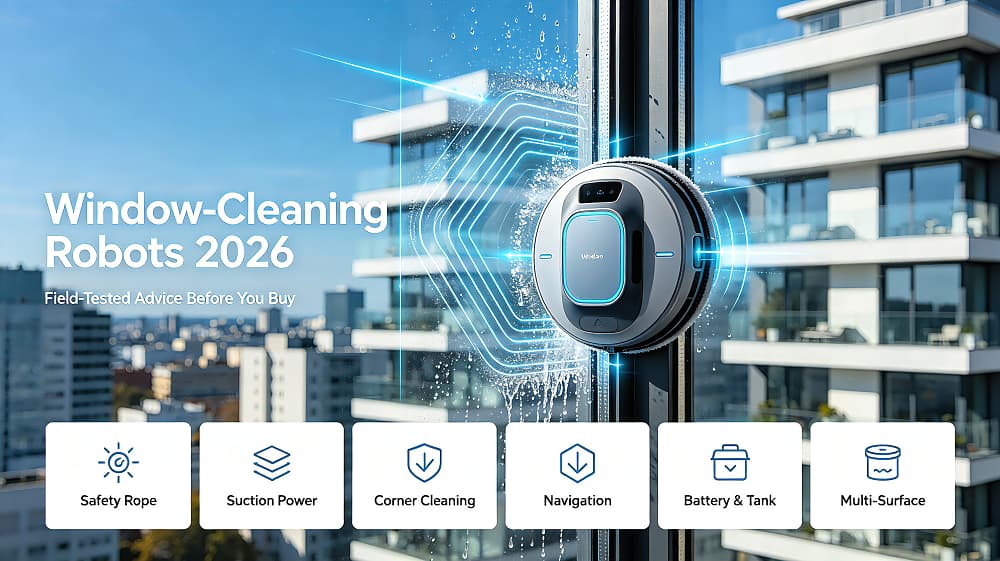
6 Non‑Negotiable Buying Criteria (Ignore Flashy Marketing)
Hundreds of brands sell window‑cleaning robots, and many market low‑quality units with fancy packaging. After years evaluating products in‑person, these are the six metrics I use to pick the best smart window cleaning robots for most homes:
| Criteria | What to Look For | Why It Matters |
|---|---|---|
| Safety (Absolutely essential) | Power‑off anti‑fall system, live suction monitoring, 150 kg+ rated safety rope | A robot falling from a 20‑storey window risks breaking apart and causing dangerous falling debris |
| Suction Power | 3000Pa minimum for regular homes; 4000Pa+ for high‑rises & extra‑large glass | Weak suction creates slipping risks, which can scratch glass or lead to falls |
| Corner Cleaning Performance | Square‑shaped main body + precision edge‑sensing | Round‑bodied robots consistently leave 90‑degree corners uncleaned |
| Navigation System | Smart path‑planning software + obstacle recognition | Stops wasted repeated cleaning cycles, jamming, and hard collisions against window frames |
| Battery & Water‑Tank Capacity | Battery lasts through all household windows in one session, large atomised water tank | Needing to recharge or refill water mid‑clean ruins the hands‑free benefit |
| Multi‑Surface Compatibility | Indoor & outdoor use, works on framed and frameless glass, suitable for tiles | More compatible surfaces mean better long‑term value from your purchase |
Window cleaning robot price ranges from under $150 for basic entry models to over $600 for premium AI‑powered units with self‑cleaning stations. For most homes, a mid‑range model with 5600Pa suction and AI navigation hits the sweet spot between performance and value.
Common User Mistakes & How To Prevent Frustrating Issues
After sorting through thousands of customer reviews, almost 90% of complaints boil down to just two problems: streaky glass and robot jamming. Luckily both are easy to avoid:
- Skip regular tap water. Mineral deposits inside tap water will leave hard‑to‑remove streaks and limescale. Use distilled water or a dedicated glass‑cleaning solution.
- Rinse your micro‑fibre cleaning pads often. Caked‑on dirt smears across glass instead of lifting grime. Wash the pad after every 2‑3 full cleaning cycles.
- Inspect the safety rope and suction inlet before each job. Lint and small debris can block suction ports. A quick 10‑second check prevents bigger problems later.
- Pre‑wipe heavily soiled glass first. Thick layers of dust, bird droppings and heavy grime are unlikely to be fully removed on the robot’s first pass. Clear large debris manually, then let the robot complete the fine polishing clean.
Final Verdict: Should You Buy A Window‑Cleaning Robot In 2026?
People often ask me: what is the best window cleaning robot for 2026? There’s no one‑size‑fits‑all answer — it depends on your windows, your budget and your home. But having watched this category grow over many years, my real‑world conclusion is straightforward.
Yes, a window‑cleaning robot is well worth buying if you fall into any of these groups:
- Residents living in high‑rise apartment buildings
- Homeowners with large floor‑to‑ceiling windows
- Busy professionals who do not want to spend hours scrubbing glass
- Anyone uncomfortable working at height or climbing ladders
- Households that want consistently clean windows, without paying for recurring professional cleaners
The technology has matured significantly. Safety features are reliable, cleaning results often beat manual work, and prices have dropped into an affordable range for most families.
These robots are not perfect. Occasional maintenance will always be required, and extremely grimy glass benefits from a quick pre‑wipe. Even so, when you weigh up the risks of ladder cleaning or hundreds of dollars spent hiring cleaners every few months, these automated tools are a very sensible investment.
Your windows deserve to stay spotless. And you do not need to risk your safety just to keep them clean.
Ready to make window cleaning easier? Discover our smart window cleaning robot collection and find the right solution for your home or business.
Before You Leave
- Share your biggest window‑cleaning headache in the comment section, and I’ll reply with targeted buying advice.
- Bookmark this article for when you are ready to shop — the six‑point buying checklist alone could save you hundreds of dollars.
- Send this article over to a friend who still climbs ladders to wash exterior windows. They will thank you later.
For a complete industry‑wide overview covering both home and commercial use cases, head back to our main pillar guide:
Smart Window Cleaning Robots: The Complete 2026–2030 Guide for Home & Business
Key Takeaways
- ✅ Eliminates fall‑related safety hazards of manual high‑rise window cleaning
- ✅ Cleans hard‑to‑reach corners, delivers streak‑free glass, often cleaner than hand‑washing
- ✅ Fully unattended operation: 20‑minute robot clean replaces 2‑3 hours of manual labour
- ✅ Multi‑surface functionality: glass, mirrors and wall tiles, for more household uses
- ✅ 2026 robot technology is reliable and fully developed
More In‑Depth Guides
This guide is part of our full window cleaning robot content hub. Explore our other deep dives: