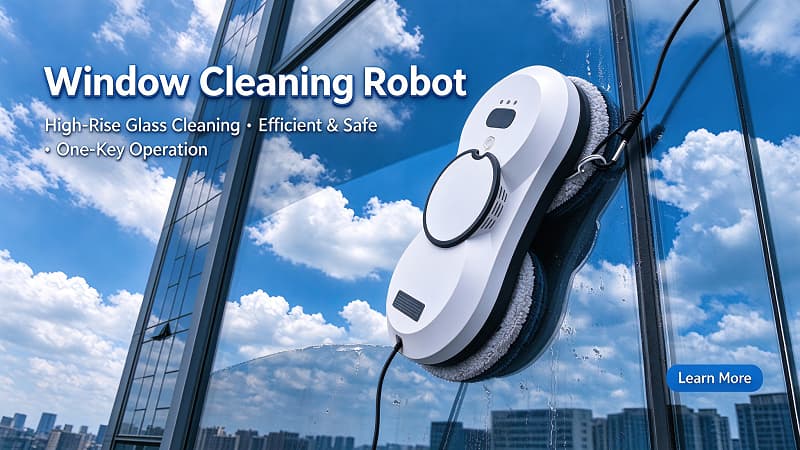
2026 Sourcing Guide: Wholesale Smart Window Cleaning Robots for Global Distributors
Your browser does not support the video tag. Inside the line: window cleaning robot assembly, suction calibration and pre-shipment QC
Smart Window Cleaning Robots — Built for Glass You Cannot Reach
Our smart window cleaning robot range takes on the one facility and household job nobody wants: windows you cannot reach safely. Every model holds with suction rated from 3,000 Pa to 6,000 Pa depending on the model, plans its own path, and keeps triple fall protection on — so it sprays, wipes and scrapes in a single pass on high-rise glass. No ladders, no risky outreach.
What every unit in the range gives you
Do robot window cleaners actually work? Yes — for regular maintenance. Heavily soiled glass still benefits from a quick pre-wipe.
Comparing the units themselves rather than reading about them? Suction, spray system, pane geometry and anti-fall design are published for every model on the smart window cleaning robot range page. For distributors, facility teams and commercial buyers, bulk quantities, OEM and private-label options and spare-part commitments are handled on the wholesale supply page.
Your browser does not support the video tag. Inside the line: window cleaning robot assembly, suction calibration and pre-shipment QC
By the Stonebotclean engineering team · Updated October 2026 · 8 min read Direct answer. Size a window cleaning robot
By the Stonebotclean engineering team · Updated October 2026 · 9 min read Direct answer. A window cleaning robot has
By the Stonebotclean engineering team · Updated October 2026 · 8 min read Direct answer. Four consumables cover the overwhelming
By the Stonebotclean engineering team · Updated October 2026 · 8 min read Direct answer. Suction is the force that
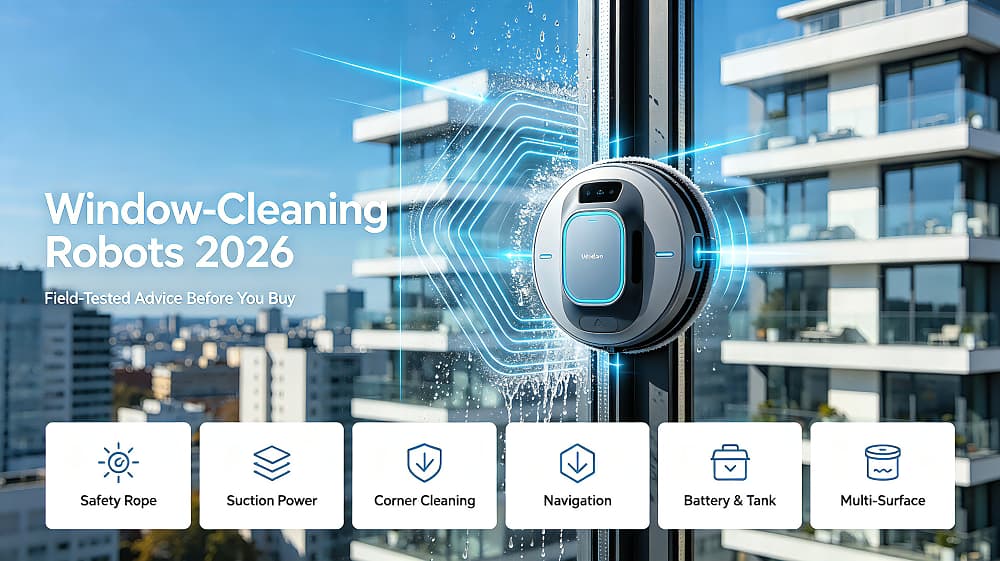
By Stonebot Research Team · 9 min read · Updated September 2026 When was the last time you gave your

After working with hundreds of global distributors, property management teams, and commercial cleaning contractors over the past three years, I’ve
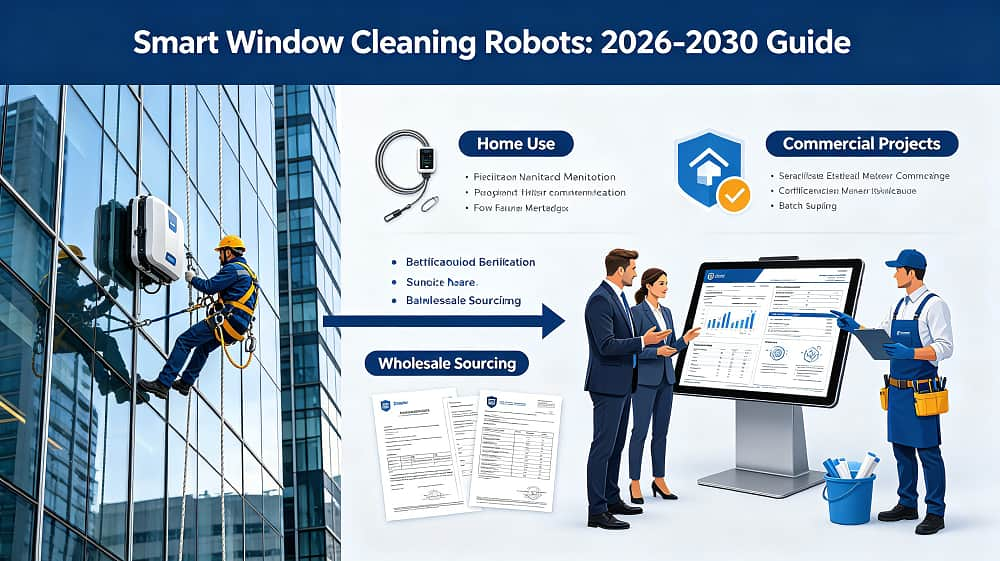
Written by the Stonebotclean sourcing team · Last updated: October 2026 · Reading time: about 18 minutes · For importers,
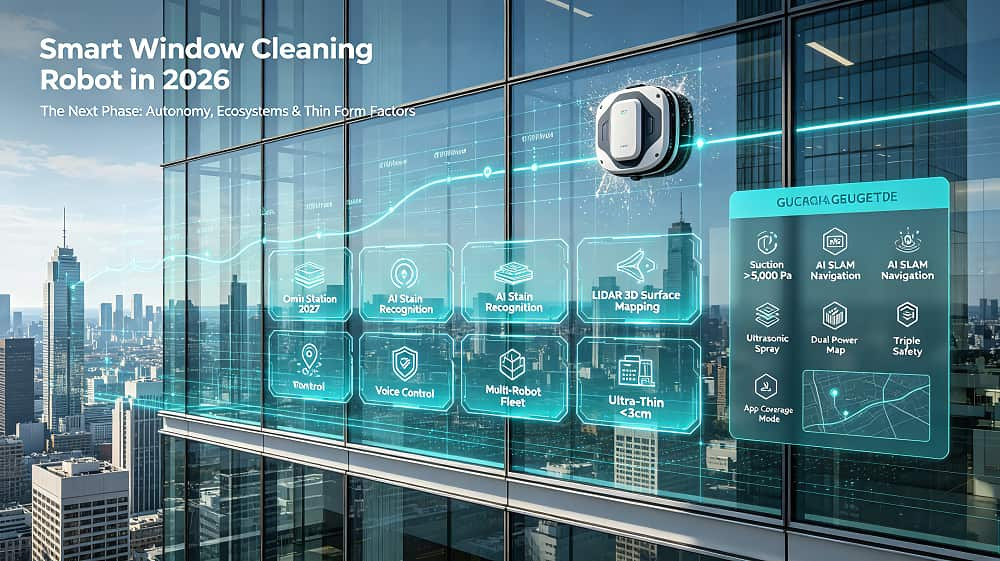
Three years ago, a window cleaning robot was basically a suction cup with a mop. It bumped into frames, left
The decision is about reach and frequency rather than power. A pole stops being practical past a certain height, above an obstruction, or on a facade with nothing to brace against. Rope access is efficient for a one-off deep clean, but it carries set-up time, certification and weather dependency on every visit, and that is what makes regular maintenance expensive. A robot wins where the glass is repeated and reachable - high-rise panels, balcony doors, sunrooms, shopfronts - because the same unit handles the routine cycle every few weeks without a crew, while the heavy clean stays a scheduled event. If your glass is cleaned once a year, hire the rope team. If it is cleaned monthly, the robot earns its place on frequency alone.
Check three things: the pane, what is above it, and what holds it. Small or heavily divided panes defeat a unit that needs a clear run, and frosted, patterned or heavily textured glass gives the suction a weaker seal than smooth float glass. Deep recesses, thick mullions and frames that stand proud of the glass stop the body sitting flat. Above the pane, an overhang, a deep reveal or a tight soffit can prevent the unit going on or coming off safely. And the surface around the pane matters too: the unit needs somewhere safe to be placed, started and lifted off. Unframed glass with nothing to catch a fall, or glass over a public walkway, needs a plan for exactly that before anything else.
Four things, and none of them is about the machine. Access to power, so the unit and its battery are charged where you actually work rather than carried up. A controlled drop zone, meaning the area below is managed for the duration. Water for the spray tank, or a decision about pre-wiping if the glass is heavily soiled - the machine handles regular maintenance, and a heavily soiled panel still benefits from a quick pre-wipe. And a written safety line: several models ship with a rope rated above 150 kg, and where that rope is anchored, who checks it and who is on the ground are decisions to take before the first run, not during it.
Run early. Glass in direct sun dries the water before the wipe pass reaches it, which is exactly how streaks appear on a job you have already done. On very hot days the glass is hot to the touch and the solution flashes off faster, so move the cycle to the morning or to a cloudy window in the day. Rain does not only stop the run, it resets the result: rain landing on glass you have just cleaned puts the panel back where it started and the cycle has to be repeated. And leave the glass dry before a hard freeze - water left sitting in a seal or a joint over winter is what damages the pane, not the cleaning.
Write down what you will be measured against, because clean is the argument you have later. A handover should list the panes or zones covered, roughly how long each takes - the published figure for a large panel is around twenty minutes - where power and water come from, which areas are excluded and why, what happens in bad weather, and who is called when a unit stops mid-panel. Photograph the glass before the first cycle so you have a baseline. That list is also the fastest way to quote the next building: pane count and cycle time are the two numbers that set a price, not floor area.
For commercial work, yes - and not because the machine needs watching in order to clean. Someone has to control the zone below, keep people out from under glass that can drop, and be there if the unit stops, loses hold or finishes with a panel half done. Several models run unattended through an app or a remote, which means the operator can be doing something else in the same building; it does not mean the building can be empty. Treat the rope or the safety attachment as the primary protection and the operator as the second one. A safety system nobody has checked that morning is not a safety system.