Upholstery & Fabric Cleaners | Compare Models by Heating & Suction
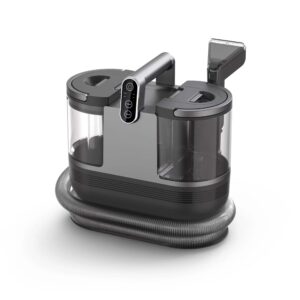
This collection features our upholstery and fabric cleaners – compact spot-cleaning machines that lift stains out of sofas, carpets, mattresses and car interior fabrics instead of spreading them across the surface. Every model in the range is listed here, from a 3.5 kg portable spray-extraction unit up to a 2000 W commercial hot-water machine.
Choosing between them comes down to three things. The cleaning method first: cold-water spray extraction for wool and colour-sensitive fabric, hot water at around 70°C for everyday soiling and grease, and steam up to 160°C for sanitising and odour. Suction second, because that is what pulls the dirty water back out of the pile rather than leaving it to dry inside the cushion. Tank layout third – a machine with separate clean and waste tanks will not push soil back into the fabric. Every listing publishes suction, heating, tank size and voltage, so the models can be compared line by line for a home, a cleaning company or a retail shelf.
Buying in volume, or putting your own brand on the machine? Bulk pricing, OEM/ODM and private-label terms are handled on the wholesale upholstery cleaning machine supply page. To see how these machines are built, what separates the heating systems layer by layer, and what to check before committing to a model, start with the upholstery cleaning machine buying guide.
Showing all 8 results
-
Upholstery & Fabric Cleaners | Compare Models by Heating & Suction
ST-LB-08A 160℃ High-Pressure Steam Cleaner | 15kPa Suction & Zero-Backflow Dual Tanks
Price range: $46.00 through $51.00 Add to cart -
Upholstery & Fabric Cleaners | Compare Models by Heating & Suction
STC-301AS Commercial Upholstery Cleaner with 16000 Pa Suction and 1700 W Heating
Price range: $56.00 through $65.60 Add to cart -
Upholstery & Fabric Cleaners | Compare Models by Heating & Suction
STC-506H Bagless Fabric Cleaning Machine with 16000 Pa and Dual-Temperature Cleaning
Price range: $56.00 through $65.00 Add to cart -
Upholstery & Fabric Cleaners | Compare Models by Heating & Suction
STC-987 Portable Spot Cleaner Machine with 4-in-1 Cold, Hot, Steam and Sterilize Modes
Price range: $51.50 through $58.00 Add to cart -
Upholstery & Fabric Cleaners | Compare Models by Heating & Suction
STC204 Fabric & Upholstery Spot Cleaner with 16000Pa Spray Extraction and 110°C Steam
Price range: $56.00 through $65.00 Add to cart -
Upholstery & Fabric Cleaners | Compare Models by Heating & Suction
STC204-PRO 4-in-1 Carpet and Sofa Cleaning Machine with 16000 Pa Suction and Steam
Price range: $58.00 through $67.60 Add to cart -
Upholstery & Fabric Cleaners | Compare Models by Heating & Suction
STC265 3-Mode Steam Fabric & Upholstery Spot Cleaner, 16kPa Suction
Price range: $47.00 through $60.00 Add to cart -
Upholstery & Fabric Cleaners | Compare Models by Heating & Suction
STC501‑DC Spray Extraction Upholstery Cleaner | 22KPa 400W Portable Fabric Spot Washer
Read more
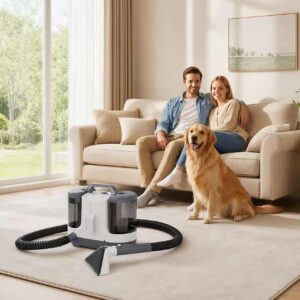

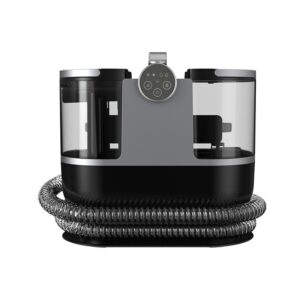
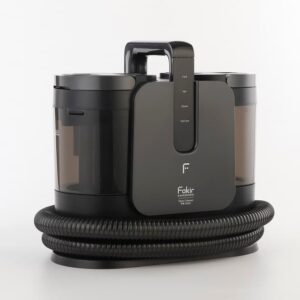
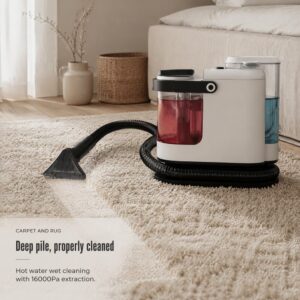


How to compare the models
Every product page publishes its own parameter set. When you are choosing between machines for a market or a service route, these six fields are what separate them — and what each field changes commercially. Read the figure from the product page, not from this table, because the product page is the page that carries the value for that specific model.
| Model | Method & heating | Suction | Tanks | Power & voltage | Best for |
|---|---|---|---|---|---|
| STC501-DC | Spray extraction, cold water | 22 kPa | 1.6 L clean / 1.5 L dirty | 400 W · 230 V | Car interiors, single cushions and stairs — the highest suction figure in the range, in the lightest body. |
| 3-in-1 Steam Fabric Cleaner | Cold water, hot water and steam | 20 kPa | 1300 ml / 1800 ml | 1000 W · 120 V / 220 V dual voltage | The one machine covering all three methods — the natural first SKU for a distributor testing the category. |
| STC265 | Cold water, hot water and 120 °C steam | 16 kPa | 1.0 L clean / 0.75 L dirty | 450 W suction + 1200 W boiler · 220–230 V | Compact spot and detail work — three modes, ~20 s preheat, in a 3.3–3.9 kg body. |
| ST-LB-08A | 160 °C steam plus extraction in one pass | 15 kPa | 1.6 L clean / 1.0 L dirty | 600 W motor + 1500 W heating · 220–240 V / 110–130 V | High-temperature sanitising, where the pitch to the end customer is odour and hygiene rather than visible soil alone. |
| STC301AS | Hot water wet & dry extraction | ≥12 kPa | 3.0 L clean / 1.5 L dirty | 2000 W heating (2400–2450 W total) · 100–240 V | Commercial contract work — the largest tanks in the range, built to hold recovery across hours of continuous use. |
One thing the table cannot tell you: a higher kPa figure is not automatically the better machine. The 22 kPa STC501-DC and the ≥12 kPa STC301AS are built for different duty cycles and different hose lengths, so compare like with like. And none of them removes the need for method discipline — steam that is safe on polyester can still ruin velvet pile and aniline leather finish. For the full decision path, read the upholstery cleaning machine buying guide; for MOQ, volume pricing and private-label options, see the bulk and OEM ordering page for this range.
Frequently Asked Questions About Upholstery & Fabric Cleaners
Which cleaning method suits which fabric and which stain?
Three methods, and the fabric decides which one you reach for. Cold-water spray extraction is the safest default on wool, wool blends and anything with a risk of colour bleed, because heat is what sets a stain and shrinks fibre. Hot water at around 70°C is the workhorse for general soiling on synthetics, cotton upholstery and polypropylene carpet, and it lifts grease that cold water leaves behind. Steam up to 160°C is for sanitising and odour - mattresses, pet bedding, car seats - where the job is killing what causes the smell rather than rinsing soil out. Test an inconspicuous patch first, and keep steam away from anything labelled dry clean only.
How much water should be left in the fabric, and how do you avoid overwetting?
The machine should leave the fabric damp to the touch, not wet enough to squeeze. Over-wetting is the single biggest cause of the complaint that follows a fabric clean: the sofa feels dry on top but smells musty a day later, or a ring appears around the patch you cleaned. Two habits prevent it. Finish every pass with dry strokes - spray off, suction on - so the head pulls water back out of the pile instead of pushing it deeper. And work one whole panel or cushion at a time rather than spot-treating a small area, because a damp patch surrounded by dry fabric dries at a different rate and leaves a visible tide line. Open doors and airflow across the room matter as much as the machine.
What does a dual tank with zero backflow actually change?
It keeps the waste water away from the clean water, and that is a hygiene difference rather than a marketing one. On a single-tank machine the dirty water you have just extracted sits in the same body as the water you are about to spray, so on a bad day some of it goes back into the fabric - which is how a cleaned sofa ends up smelling worse two days later. A dual tank separates the two, and zero-backflow valving stops the waste side creeping into the supply line when the machine is tilted or laid down between jobs. If you clean for other people rather than only at home, treat the separation as a requirement instead of a feature.
What maintenance does an upholstery cleaner need between jobs?
Empty and rinse the waste tank the same day - leaving dirty water in it is what turns a machine into a source of smell. Flush the clean tank and the spray line with fresh water at the end of a working week, so the nozzles do not scale up and start leaving streaks. On steam models, descale on the schedule in the manual, or the heating element loses pressure and the steam turns uneven. Wipe the suction inlet and check the hose and the head seals, because a worn seal drops suction exactly where you need it most. And clear hair and fibre out of the head after every carpet or stair job: matted fibre in the head is the most common cause of a machine that looks fine but no longer lifts water.
How do you stop a cleaned sofa or carpet from smelling musty or drying with a brown edge?
Both are drying faults, not cleaning faults. A musty smell means water was left in the fabric and in the padding underneath - run extra dry passes, then open the windows, put a fan on, and if the cushions lift off, stand them on edge so air reaches both faces. A brown or grey edge line is wicking: soil and any leftover detergent have been drawn to the drying boundary. Three fixes: do not over-wet in the first place, do not leave detergent residue behind (extract with clean water until the waste tank runs clear), and clean the full panel to a natural seam or edge rather than stopping in the middle of a cushion.
What are the most common ways people damage a fabric cleaner or the fabric?
Six repeat offenders. Leaving dirty water in the waste tank for days. Using a foaming or high-alkaline detergent in a machine built for low-foam extraction solution - foam travels into the suction path and can reach the motor. Putting steam on synthetics that cannot take it, or on anything labelled dry clean only. Dragging the head over zips, staples, buttons and piping instead of working around them, which tears the seal and scores the fabric. Storing the machine with water still in either tank. And skipping the descale on a steam unit until the heater is coated and the pressure is gone. Fabric-side damage almost always traces back to too much water, too much heat, or the wrong chemistry.
What is the minimum order quantity for wholesale orders, and can I mix models?
The minimum is not one number — it moves with the model and with how much customisation you ask for, so sample orders, ready-to-ship stock, logo-branded runs and full private-label programmes each sit at a different threshold. We also support mixed-model orders for qualified wholesale and OEM buyers, so you can build a portfolio across the range without meeting a separate minimum on every model. That matters commercially: it lets you test several price points in one shipment instead of tying up capital in a single SKU. Send us your destination market and expected annual volume and we will confirm the structure in writing.
What lead time should I plan for on a bulk upholstery cleaner order?
Lead time depends on your configuration and order volume, so treat any single figure with caution. Stock orders ship from the warehouse. OEM runs carrying your logo are scheduled after artwork approval and deposit received, because artwork setup, carton printing and manual preparation sit between approval and assembly. Deeper private-label projects add a sampling round and a certification review before production starts. Every customisation layer adds a stage that can slip independently, so build contingency into your launch plan and ask for the schedule in writing against your exact specification before committing to a fixed date.
What certifications do these machines ship with, and do they cover my market voltage?
For major export markets expect CE for the EU and EEA, FCC for the United States and RoHS for hazardous-substance limits — confirmed against the specific model and voltage variant you are importing, not against the range as a whole. Most of the range is rated 100–240 V, or built as paired 110–130 V / 220–240 V versions, so confirm which variant your certification file covers. Because these are heated machines with a wet suction path — and a pressurised steam circuit on steam models — the electrical-safety file has to cover the heating stage and not only the motor, and the duty cycle the certification was assessed against is part of what your buyer should be told.