

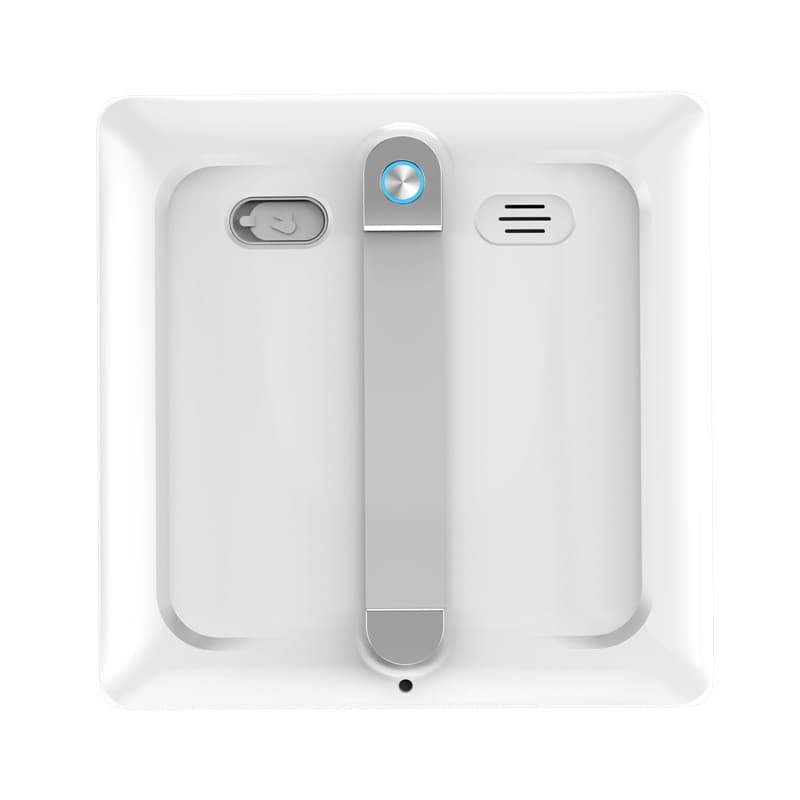

Automatic Window Cleaner with 9000 Pa Suction and Dual Roller Brush
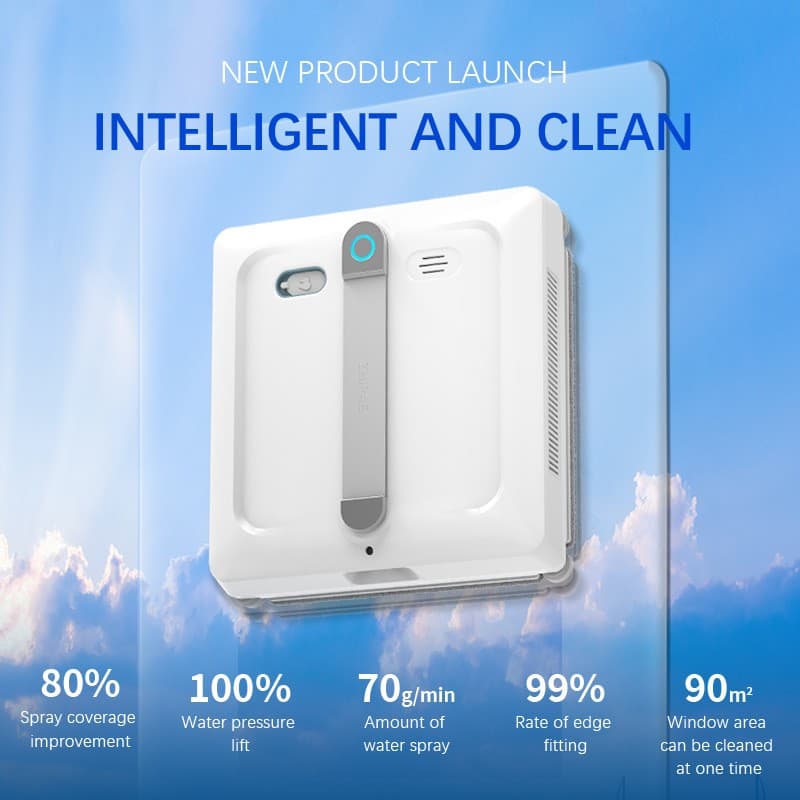
This automatic window cleaner presses two counter-rotating roller brushes against vertical glass, holds itself on the pane with 9000 Pa of suction and sprays water automatically from a 110 ml tank. One key starts the cycle; the machine plans its own path, reads the frame line with automatic edge detection and stays on the glass with a built-in UPS battery and a safety rope.
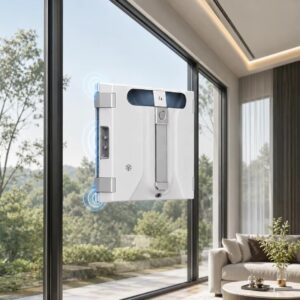
At 265 × 265 × 75 mm the body is slim enough to work floor-to-ceiling panes and window walls, and it cleans rimless glass, mirrors and smooth facades such as marble walls as well as ordinary windows. Six intelligent modes cover different window types and different levels of soiling, so the same window robot cleaner can take a lightly dusted bedroom pane and a rain-streaked office facade without changing accessories.
Key specifications
| Colour | White |
| Plug type | EU / UK / US / JP / KR (selected per order) |
| Voltage | AC 100–240 V, 50/60 Hz |
| SKU | W50D |
| Product name | Smart window cleaning robot |
| Unit size | 265 × 265 × 75 mm |
| Suction power | 9000 Pa |
| Suction motor | Brushless |
| Rated power | 90 W |
| Battery type | Li-ion 14.8V, 600 mAh |
| Working time (wireless) | 20 ± 5 min |
| Charging time | 3–4 hours |
| Water tank | 110 ml |
| Water spray | Automatic |
| Brush type | Dual roller brush |
| Cleaning modes | 6 intelligent modes |
| Cleaning speed | Approx. 3 min/m² |
| Noise level | < 65 dB |
| Edge detection | Automatic |
| Anti-fall system | Built-in UPS battery + safety rope |
| Control mode | Tuya Smart APP (optional) |
What Is an Automatic Window Cleaner?
Buyers arrive at this category through several names — automatic window cleaner, automatic window cleaning robot, window cleaning robots, robot glass cleaner, window cleaning machine, glass cleaning robot — and they are looking for the same thing: a unit that attaches to vertical glass, wets it, scrubs it and crosses the pane without anyone holding a pole. What separates one machine from another is suction, brush design, water delivery and the safety system. Those four are what this page documents, because they decide whether a unit survives a real facade contract or only an interior pane.
Dual Roller Brush: Rolling Contact Instead of a Flat Wipe
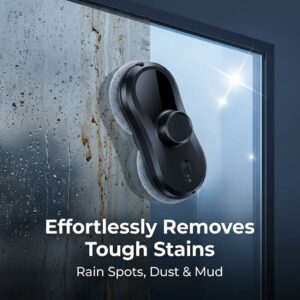
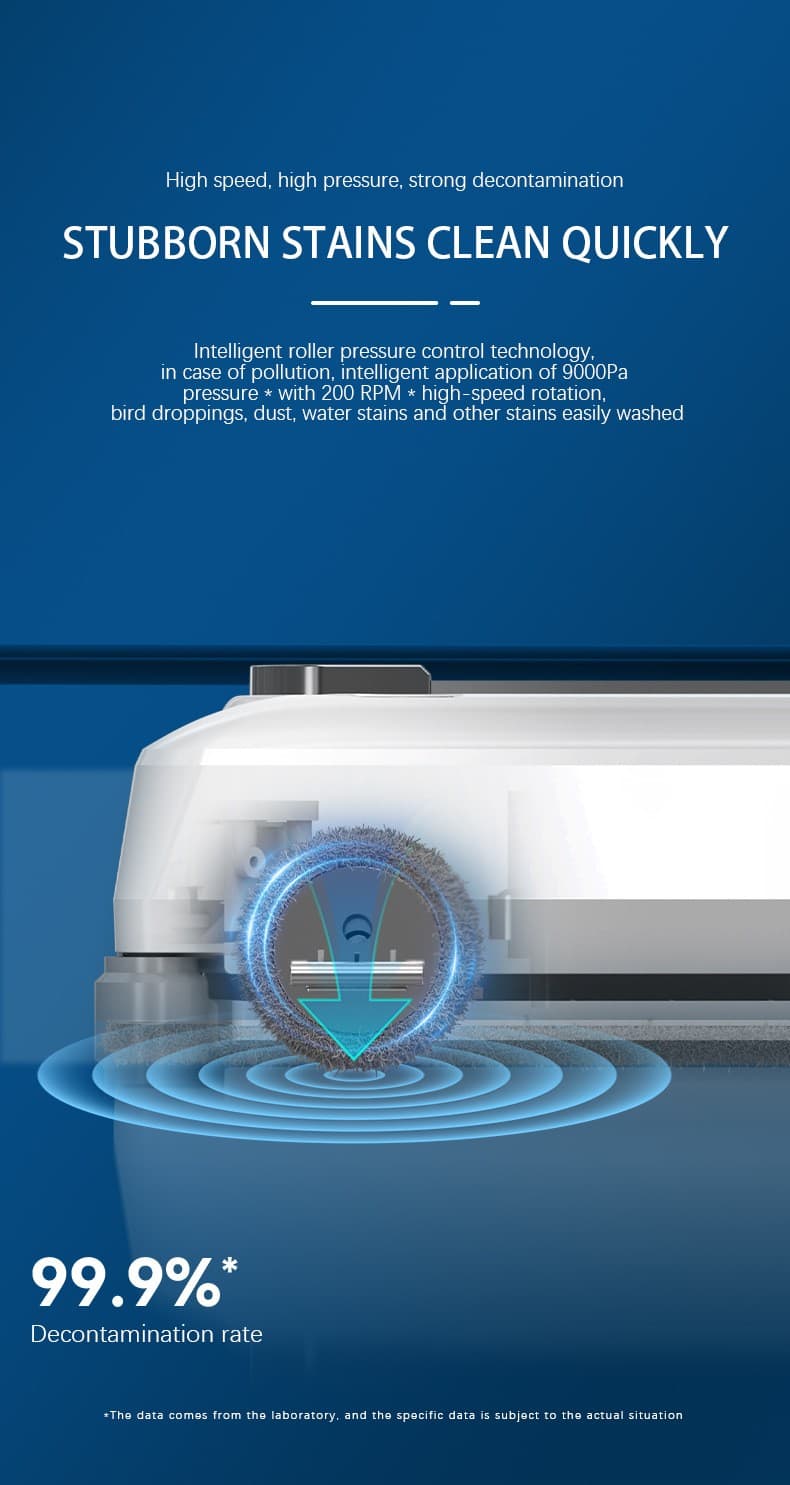
A roller brush rotates against the glass while the body pulls it along, so the bristles lift dust, dirt and water marks out of the surface instead of dragging a flat pad across it. Two brushes work in the same pass, which doubles the contact width, and the rolling action carries loosened dirt away from the glass rather than smearing it back on behind the head. That is why the unit is specified as a glass cleaning robot for exterior panes carrying traffic film and rain residue, not only for interior dust.
Brush pressure is controlled rather than fixed. Heavier soiling gets a heavier pass and lightly soiled glass gets a lighter one, so a pane that is only dusty is not scrubbed at the same intensity as one with bird droppings, and the brush does not have to be swapped between floors.
9000 Pa Suction and the Anti-Fall System
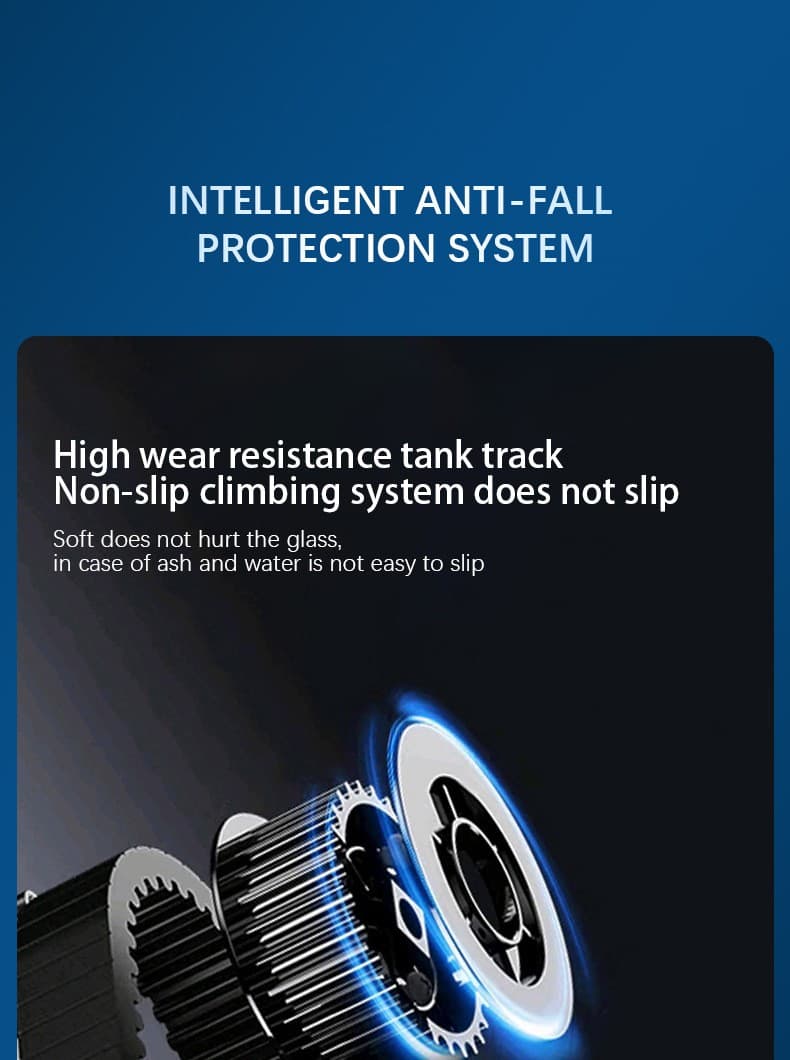
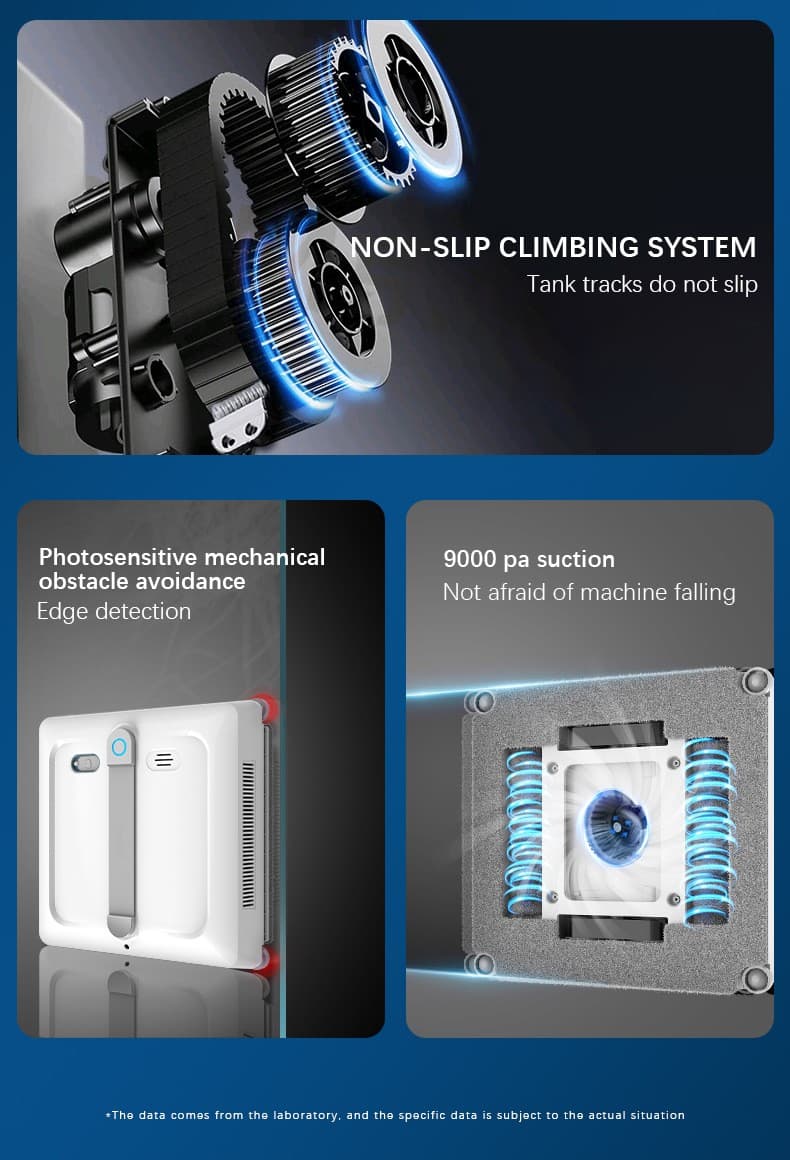
The brushless suction motor holds the body to the pane at 9000 Pa, and air pressure is compensated automatically as the machine travels, so adhesion stays constant when it crosses a joint, a seal or a slightly uneven surface. That compensation matters most on wet glass: water is the main slip risk on a vertical pane, and the suction path is designed to keep holding while the glass is still wet from the spray bar.
Two further layers sit behind the suction. A built-in UPS battery keeps the unit attached after mains power is lost and raises an alarm, and a safety rope anchors the body to an indoor fixture. The drive itself is a tank-style track rather than wheels, which spreads contact over a longer footprint and is the reason the unit climbs without slipping when the roller brushes are loaded with water.
110 ml Tank and Automatic Six-Nozzle Spray
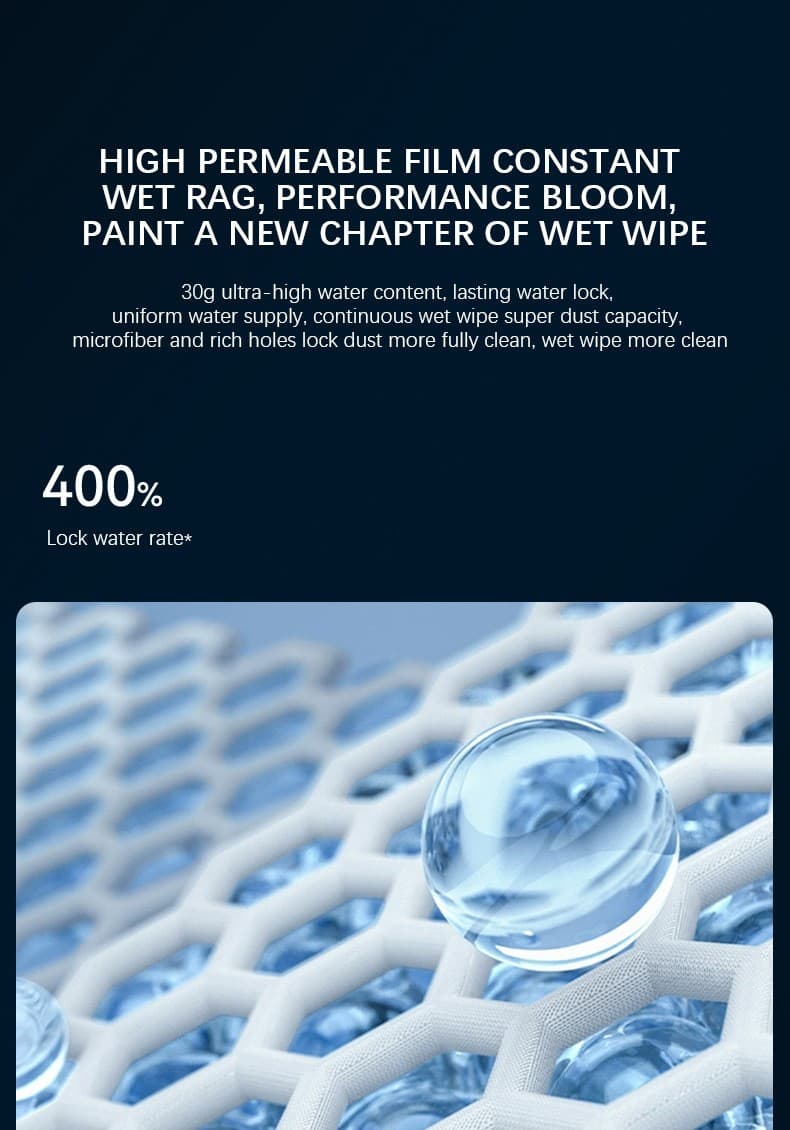
Water is delivered by a bilateral six-nozzle spray bar instead of a single jet. Six points widen the wetted band in front of the brushes and break the water into smaller droplets, so the roller meets damp glass along its whole width rather than a wet stripe down the middle. This is what makes a glass cleaning robot wet the pane evenly enough to lift road film in one pass instead of polishing dry dust into a smear.
The 110 ml tank is filled before the cycle and the spray then runs automatically — no trigger, no spray bottle, no second operator. Because the spray starts with the brush pass, the glass is wetted as the machine reaches it rather than ahead of it, so no water runs down the frame before the head arrives.

Six Intelligent Cleaning Modes
Six modes are provided for different window types and different cleaning difficulties, from a routine pass on interior glass to a heavier cycle for exterior panes with visible soiling. The mode is chosen before the cycle starts; path, spray, brush pressure and return then run automatically. That division is what makes one key automatic cleaning on a window cleaning robot usable at height, where the operator should be watching the rope and the frame rather than adjusting settings mid-pane.
Automatic Edge Detection and Obstacle Avoidance
Edge detection is automatic. The unit reads the frame line and turns before the glass ends, which is the case that matters most on frameless panes where there is no frame to feel for. A light-sensing mechanical system combines photoelectric induction with mechanical touch rebound, so the machine reacts both to an edge it can see and to an obstruction it physically meets — a window handle, a mullion, a partly open sash. When the pane is finished it returns to the start point.

Tuya Smart APP Control
Tuya Smart APP control is available as an option. When the module is fitted, the app sets the cleaning path, starts a cycle and reports working status, and a repeated schedule can be saved so the same route runs on the same day each week — the personalized cleaning schedule that facilities teams actually use, instead of starting every pane by hand. Units without the module run from the one-key control on the body.
Cleaning Speed, Runtime and Noise
Cleaning speed is approximately 3 min/m² and wireless working time is 20 ± 5 minutes per charge, with a recharge of 3 to 4 hours. Noise is held below 65 dB, so the unit can run during working hours in an occupied office or a hotel corridor rather than only at night when the floor is empty.
Rimless Glass, Mirrors and Smooth Facades
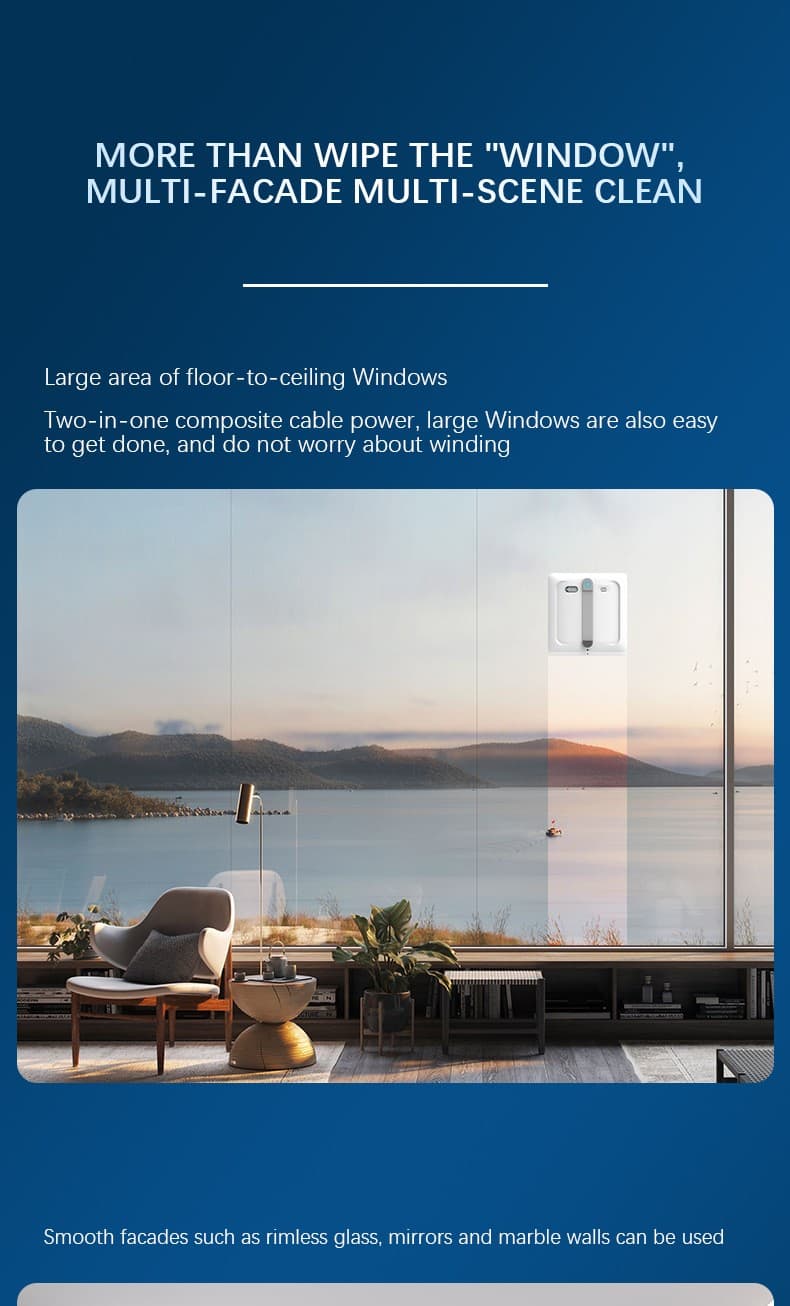
The brush and suction combination is not limited to framed residential windows. Rimless glass, mirrors and smooth facades such as marble walls can be worked with the same body, and floor-to-ceiling window walls are handled with the two-in-one composite cable, which keeps a long run tidy on a large pane instead of tangling at the corner.
High-Rise and Commercial Glazing
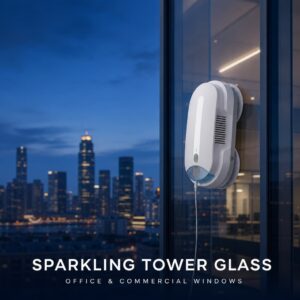
As a high rise window cleaning robot, the unit is aimed at the panes where rope access is slowest to set up: hotel window walls, office curtain walls, showroom glazing and residential towers. Because it holds at 9000 Pa, compensates air pressure automatically and carries its own backup battery and rope, a commercial window cleaning robot programme can begin on one floor and extend across a facade without changing hardware — which is what makes it practical in a big building where access equipment has to be booked by the day.

Frequently Asked Questions
What is an automatic window cleaner used for?
It cleans vertical glass without an operator holding a pole: exterior windows, floor-to-ceiling panes, window walls, mirrors and smooth facades such as marble walls. The unit attaches with 9000 Pa of suction, drives itself across the pane on a tank track, wets the glass with an automatic spray and scrubs it with two roller brushes.
How does the dual roller brush remove dirt from glass?
Both brushes rotate against the pane while the body pulls them along, so bristles lift dust, dirt and water marks out of the surface instead of dragging a flat pad over it. Brush pressure is controlled, so a heavily soiled pane gets a heavier pass than a lightly dusted one.
What keeps the robot from falling off the glass?
Three layers. Suction at 9000 Pa holds the body, with air pressure compensated automatically as it moves. A built-in UPS battery keeps it attached after mains power is lost and raises an alarm. A safety rope anchors the body to an indoor fixture. The tank-style track adds grip so the unit does not slip while the glass is wet.
How much water does it hold and how is it sprayed?
The tank holds 110 ml and the spray is automatic. A bilateral six-nozzle bar widens the wetted band in front of the brushes and breaks the water into smaller droplets, so both rollers meet damp glass rather than a wet stripe.
What are the six cleaning modes for?
They cover different window types and different cleaning difficulties, from a routine pass on interior glass to a heavier cycle for exterior panes with visible soiling. The mode is selected before the cycle; path, spray, brush pressure and return then run automatically.
How long does it run on a charge, and how long does charging take?
Wireless working time is 20 ± 5 minutes from a Li-ion 14.8V, 600 mAh pack, and a full charge takes 3 to 4 hours. The anti-fall battery is separate from the cleaning runtime expectation — it is what keeps the unit attached if power is interrupted.
How fast does it clean, and how loud is it?
Approximately 3 min/m², at below 65 dB. The noise level is what allows it to run in an occupied office or hotel corridor during working hours rather than only at night.
Does it work on frameless glass, mirrors and marble?
Yes. Rimless glass, mirrors and smooth facades such as marble walls are all listed as workable surfaces, and automatic edge detection turns the unit at the frame line where there is no frame to feel for.
How is the machine controlled?
Tuya Smart APP control is available as an option; when fitted it sets the cleaning path, starts a cycle and reports working status. Units without the module run from the one-key control on the body, and the machine plans its own path either way.
How big is the unit?
265 × 265 × 75 mm, which is slim enough to work floor-to-ceiling panes and window walls. Suction motor is brushless, rated power is 90 W and input voltage is AC 100–240 V, 50/60 Hz with the plug type selected per order.
Request the Specification for Your Project
Send the pane type, the building height range you are quoting for and the annual volume you are planning, and we will reply with the specification and availability for your market. For fit-out and facilities buyers comparing this automatic window cleaner against a pad-based window cleaning machine, the four figures that decide the job are 9000 Pa suction, a 110 ml tank, 3 min/m² and 20 ± 5 minutes of wireless runtime.