

Robotic Window Cleaner with Dual Rotating Pads and Auto Water Spray
This robotic window cleaner washes vertical glass with two rotating microfibre pads, an automatic water spray and a track drive that keeps the body pressed against the pane. It is built for the windows that are awkward to reach by hand — high-rise facades, glass curtain walls, balcony glazing and interior partitions — and it runs from a rechargeable battery with a UPS backup and a safety rope as the fall protection layer.
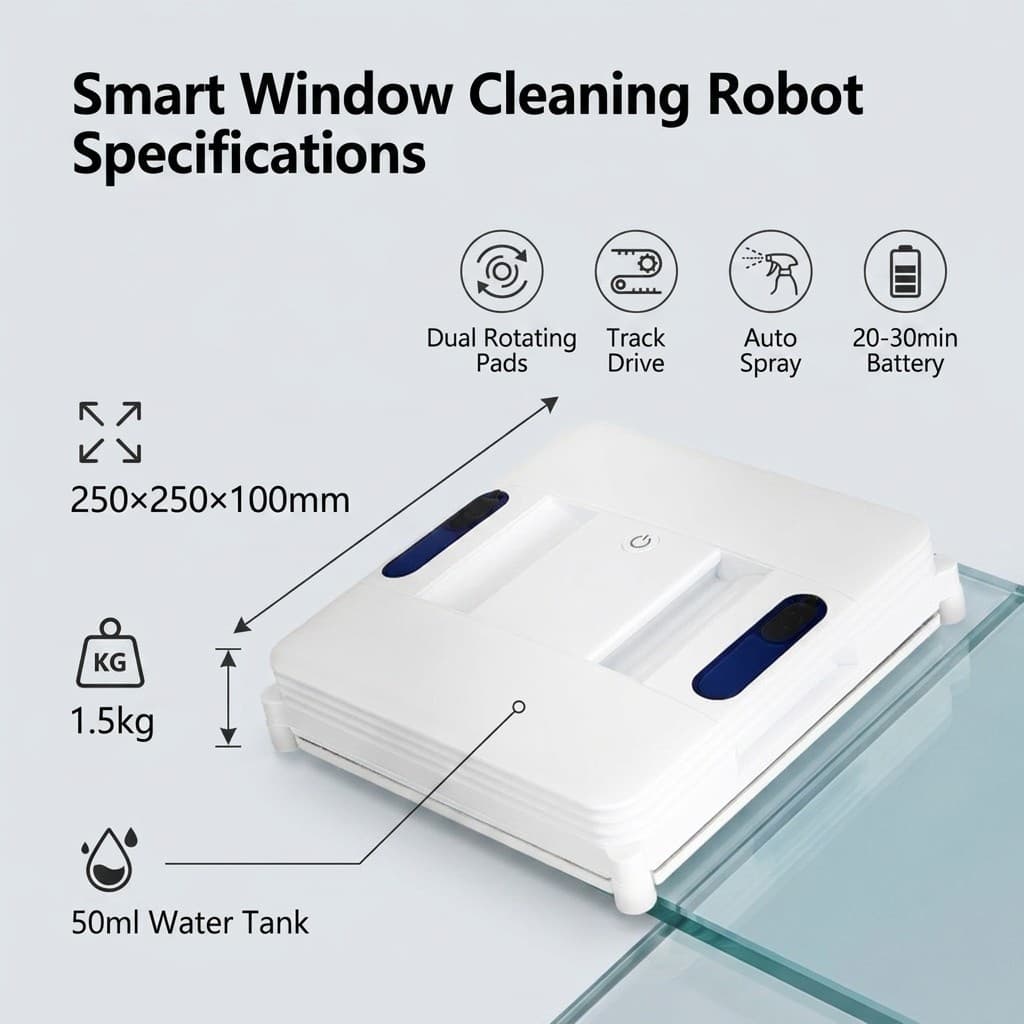
At 250 × 250 × 100 mm and 1.5 kg, the unit fits a standard window pane and can be carried between floors by one person. A 50 ml tank feeds the spray nozzles, and the whole cycle — wetting, scrubbing, wiping and returning to the start point — runs without a second operator holding a squeegee. That autonomy is what separates this window cleaning robot from a pole-and-squeegee kit on a facade contract.
Key specifications
| Colour | White / Black (customizable) |
| Plug type | EU / UK / US / JP / KR (selected per order) |
| Voltage | AC 100–240 V |
| SKU | W45D |
| Product type | Smart robotic window cleaner |
| Cleaning method | Dual rotating pads + auto water spray |
| Drive system | Track / crawler drive |
| Power source | Built-in rechargeable battery + AC adapter |
| Control method | 2.4G remote control / mobile app (iOS, Android) / voice control |
| Navigation | Smart path planning (Z / N pattern) + edge detection |
| Anti-fall system | UPS backup power + safety rope + edge detection |
| Water tank | 50 ml refillable |
| Battery capacity | 2000–3000 mAh Li-ion |
| Runtime | Approx. 20–30 min per charge |
| Cleaning speed | Approx. 2–3 min/m² |
| Noise level | ≤ 65 dB |
| Glass thickness | 3 mm and above |
| Material | ABS + PC engineering plastic |
| Dimensions | 250 × 250 × 100 mm |
| Net weight | 1.5 kg |
| Suitable surfaces | Glass, tile, mirror, smooth wall |
| Certification | CE / RoHS / FCC |
| MOQ | 1 unit for sample evaluation; bulk OEM supported |
What Is a Robotic Window Cleaner?
A robotic window cleaner is a compact machine that attaches to vertical glass, drives itself across the pane and cleans as it moves, instead of the operator reaching out with a pole or a squeegee. Three parts do the work: a vacuum or track system that holds the body against the glass, a cleaning head that scrubs the surface, and a route planner that decides where the machine travels next.
The difference from a hand tool shows up on the surfaces that cause the accidents — exterior glazing on upper floors, tall lobby panes, sealed curtain walls. The operator sets the unit on the glass from inside, starts the cycle, and the machine works the pane while staying tethered. Buyers arrive at this category through several names — robot window cleaner, glass cleaning robot, automatic window cleaning robot — and the specification that decides the purchase is the same in each case: adhesion, water control and fall protection.
Dual Rotating Pads and Auto Water Spray
Two high-speed rotating microfibre pads scrub and polish in the same pass, so the dirt is lifted and the surface is wiped directly behind it rather than being pushed around. The dual-pad head also covers more glass per pass than a single-disc design — the difference between a two-pad glass cleaning robot and a single-disc one is most obvious on wide curtain-wall panels, where the cycle count drops.
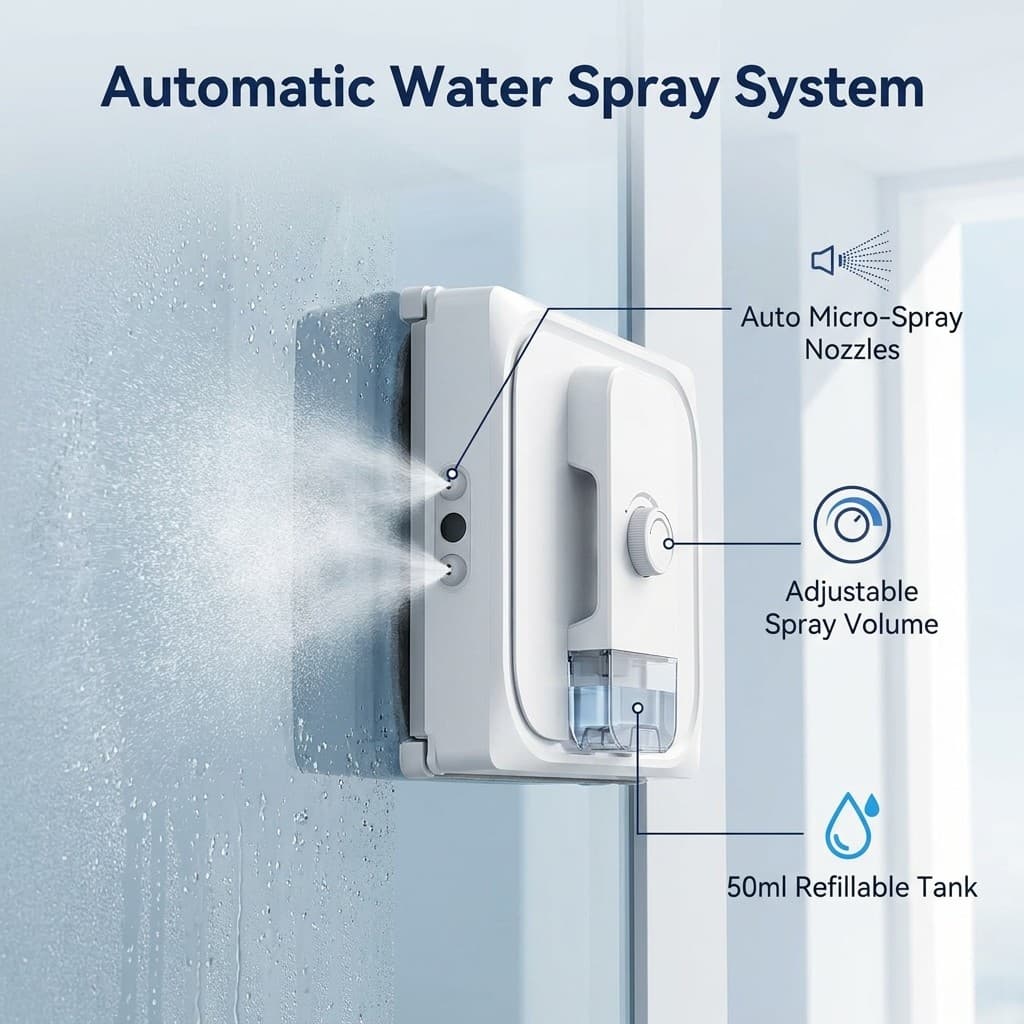
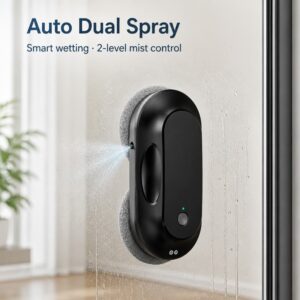
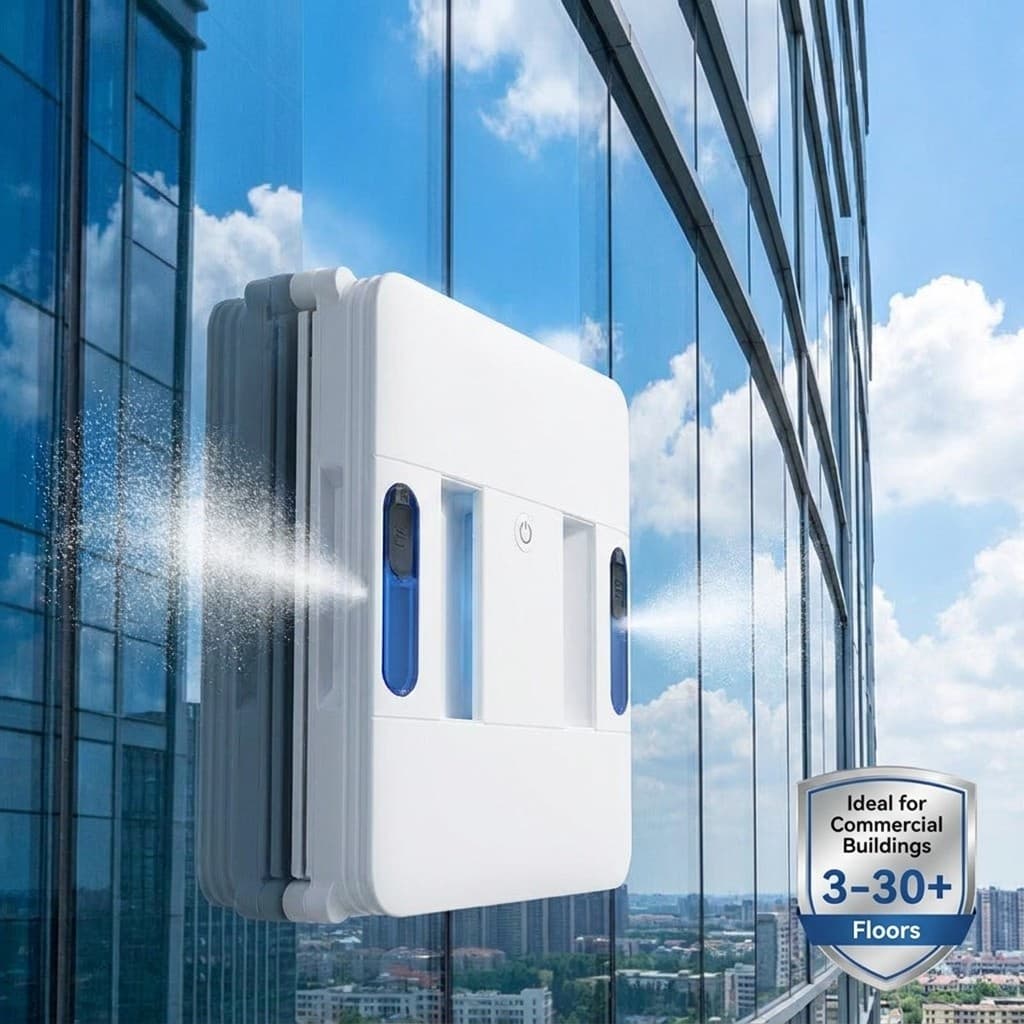
Water is applied by built-in micro-spray nozzles before the pads reach the glass, with an adjustable spray volume so the operator can wet a dusty exterior pane more heavily and use a lighter mist on interior partitions. Nothing needs to be pre-wetted by hand, and no spray bottle has to be carried up a ladder — the machine wets the surface itself as it travels. Wetting on the move is also what separates a glass cleaning robot wet enough to lift road film from a dry pad that only smears dust across the pane.
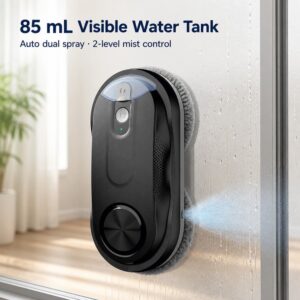
50 ml Tank: One Fill Covers 15–20 m²
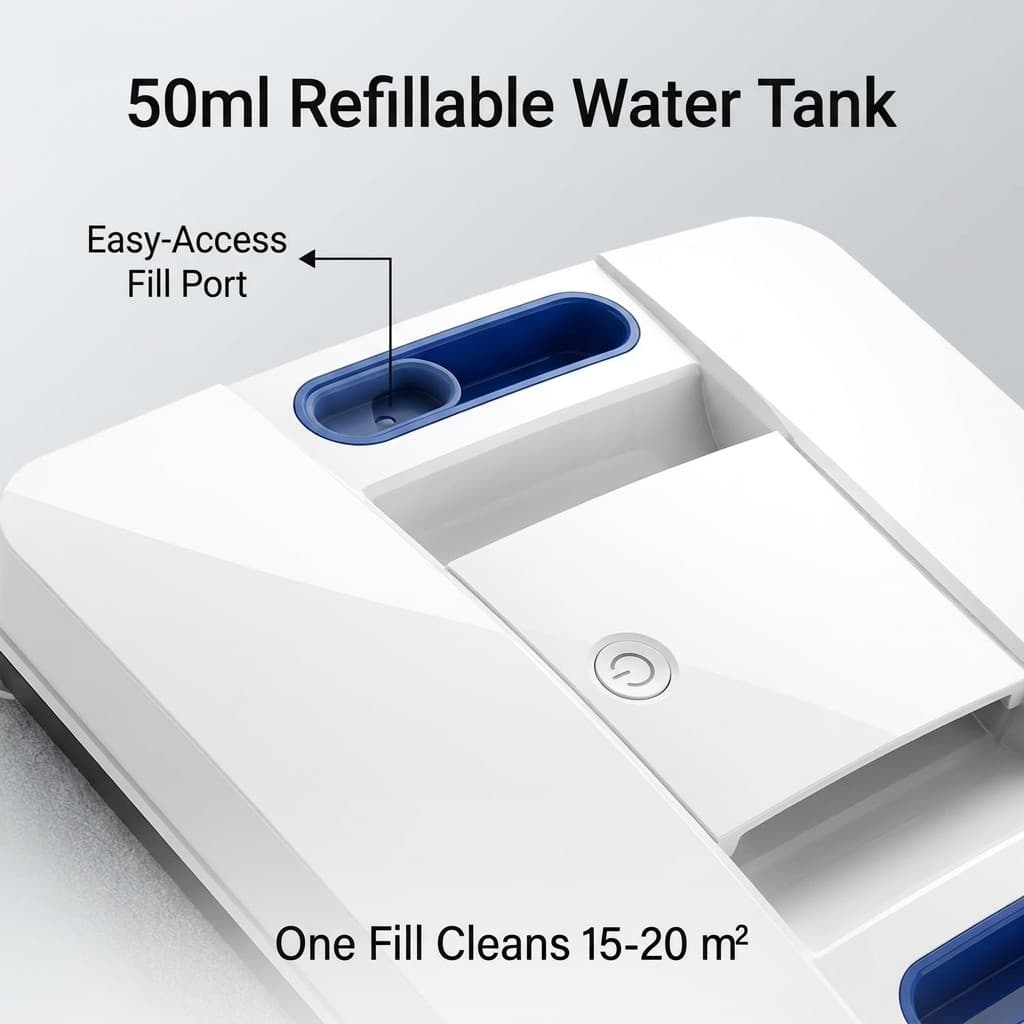
The refillable tank holds 50 ml and fills through an easy-access port on the top of the body. According to the supplier’s coverage artwork, one fill is rated for roughly 15–20 m² of glass, which is about four to six average residential windows or a single large curtain-wall panel section.
Track Drive That Holds the Body on Vertical Glass
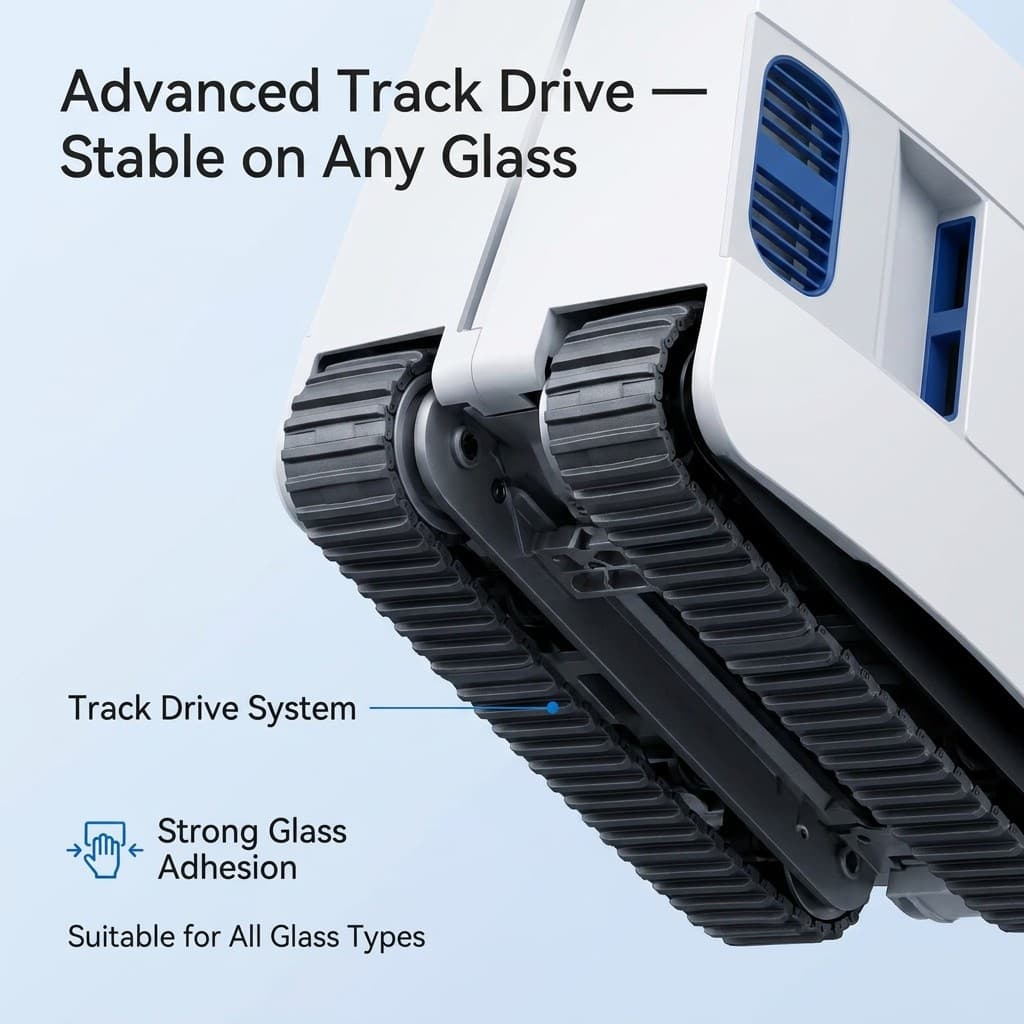
A crawler track, rather than wheels, carries the unit across the pane. The track spreads contact over a longer footprint, which is what keeps the machine stable when the glass is wet and the pads are dragging against the surface. The same design lets the glass cleaning robot climb and turn without losing adhesion mid-pass. On a wet pane that grip is the whole job: a machine that slips loses the pass, and the pads have to start the section again.
Path Planning, Edge Detection and Auto Return
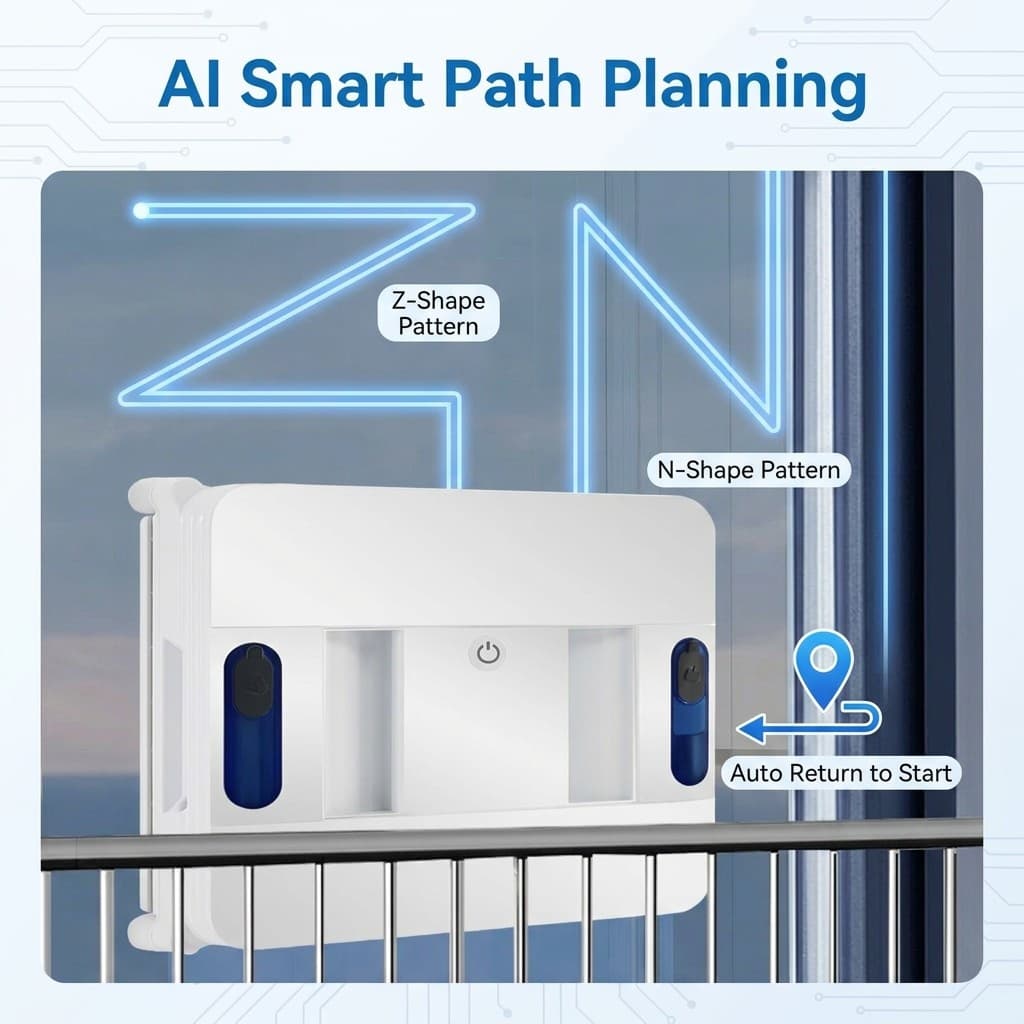
The navigation layer plans the route before the pads move: a Z-shaped pattern for tall rectangular panes, an N-shaped pattern where the geometry calls for it. Edge detection sensors watch for the frame line and stop the unit before it reaches unframed glass, and when the cycle finishes the machine returns to the point where it started, so the operator reaches for the same spot instead of hunting for the robot.
Anti-Fall Protection: UPS Backup and Safety Rope
Three layers sit behind the machine while it is on the glass. A UPS keeps the motor running for 20+ minutes after a power loss so the unit stays attached instead of releasing. A safety rope anchors the body to an indoor fixture as the physical backup. Edge detection handles the routine case — the pane ending sooner than expected — by stopping travel at the frame line.
For a commercial window cleaning robot programme, that combination is the part buyers test first, because it decides whether the machine can be used above occupied space at all.
Three Control Methods: Remote, App and Voice
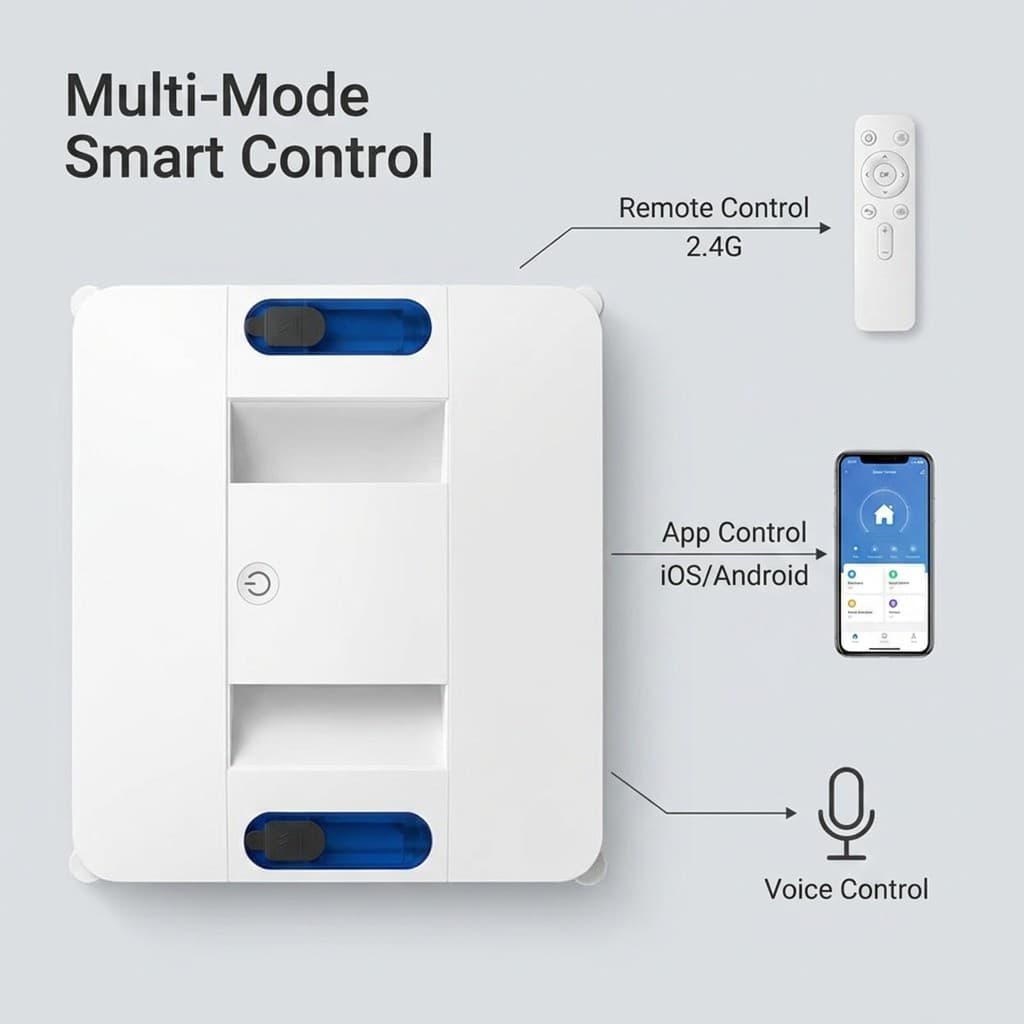
The unit ships with a 2.4G remote control and also pairs with a phone app for iOS and Android, where cleaning mode, spray volume and progress can be adjusted without standing at the window. Voice control covers the hands-busy case. Property teams running several units use the app to monitor cycles across a floor rather than walking between windows.
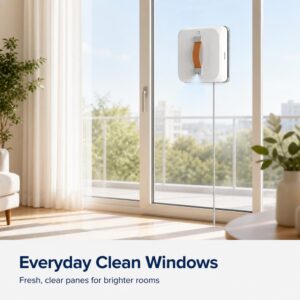
Built for High-Rise and Commercial Glazing
As a high rise window cleaning robot, the unit is specified for the jobs where rope access is slowest and most expensive. The range is positioned for commercial buildings from 3 to 30+ floors, which covers the two buyers who order in volume: facade maintenance contractors replacing rope access on routine washes, and property management teams bringing exterior glass in-house. Hotels, office towers, showrooms and residential towers with full-height glazing all use the same machine on the same cycle, which is why most commercial window cleaning robot enquiries start with a single sample unit and a trial floor.
Streak-Free Results on Dirty Exterior Glass
Exterior glass collects a film of dust, exhaust and rain residue that a dry wipe smears rather than removes. Wetted first by the spray and then scrubbed by the rotating pads, the same pane comes back clear instead of streaked — the before-and-after comparison below is the standard test buyers run on a sample unit before placing a container order.

OEM, ODM and Private Label for Trade Buyers
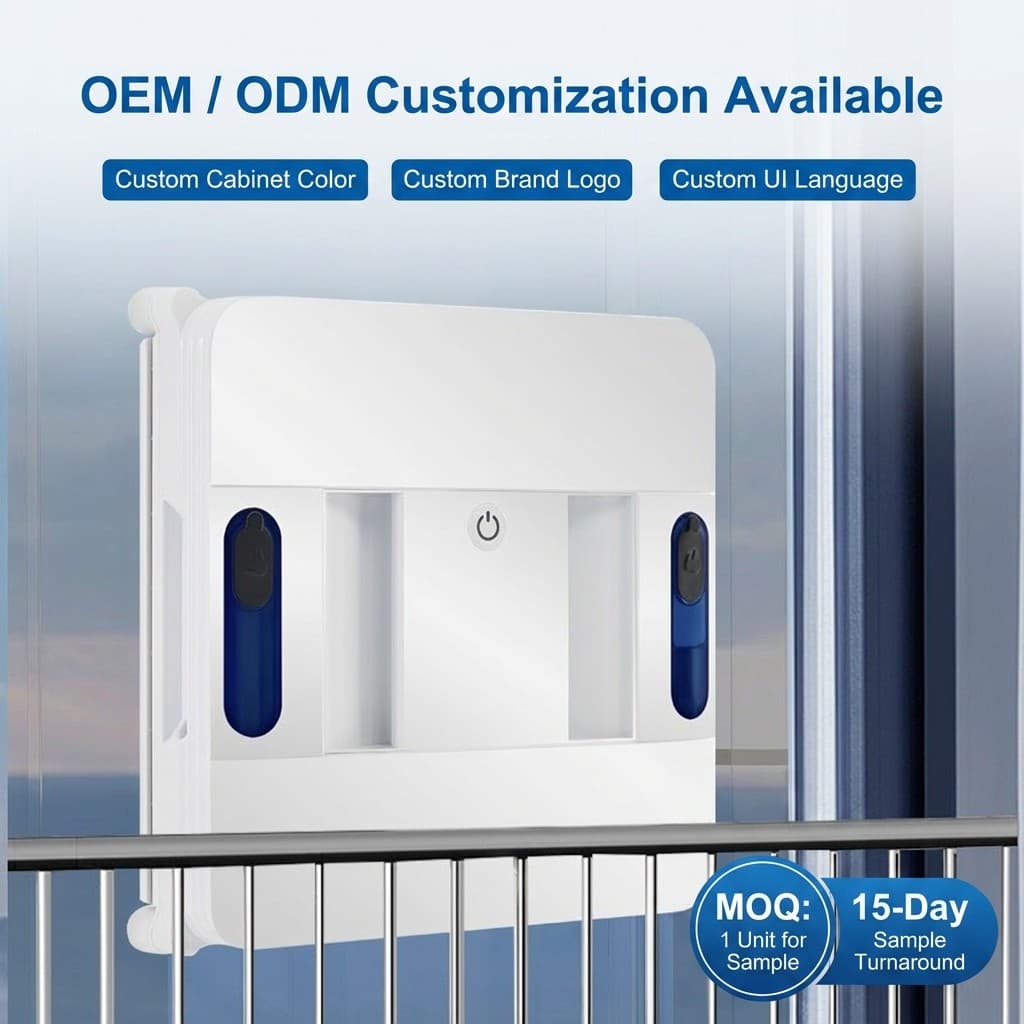
Custom cabinet colour, custom brand logo and custom UI language are all available, so an importer, a smart-home distributor or a facilities brand can ship the unit under its own label instead of a generic shell. A private label window cleaning robot programme starts from a single sample unit: MOQ is 1 unit for sample evaluation, sample preparation takes 15 days, and bulk orders run 25–35 days.
Every unit ships with spare cleaning pads, a remote control and a safety rope. CE, RoHS and FCC certification is stated for the range, with additional regional compliance available on request, and a 12-month warranty covers the machine with remote technical support.
What’s in the Box
- Robotic window cleaner body ×1
- Spare microfibre cleaning pads
- 2.4G remote control ×1
- Safety rope ×1
- AC adapter (plug type per order)
Frequently Asked Questions
What is a robotic window cleaner used for?
It cleans vertical glass automatically — exterior windows on high-rise buildings, glass curtain walls, balcony glazing and interior partitions. The machine attaches to the pane, drives itself across the surface with a track system and cleans with two rotating pads while a safety rope and UPS backup stay in place.
Do I need to wet the glass before cleaning?
No. Built-in micro-spray nozzles mist the glass automatically before the pads reach it, and the spray volume is adjustable. The 50 ml tank is refilled through an easy-access port on top of the body.
How much glass can one tank of water clean?
The 50 ml tank is rated for roughly 15–20 m² per fill according to the supplier’s coverage specification, which is about four to six average residential windows.
What stops the robot from falling off the glass?
Three layers: a UPS that keeps the motor running for 20+ minutes after power loss, a safety rope anchoring the body to an indoor fixture, and edge detection sensors that stop travel at the frame line before unframed glass ends.
Does it work on frameless windows?
Edge detection is designed for exactly that case — the sensors watch for the frame line and stop the unit at the edge instead of driving past it. The unit is rated for glass 3 mm and thicker.
How long does the battery last, and how fast does it clean?
Approximately 20–30 minutes per charge from a 2000–3000 mAh Li-ion pack, at a cleaning speed of roughly 2–3 min/m². The battery is rechargeable and the unit also runs from its AC adapter.
How is the robot controlled?
Three ways: the included 2.4G remote control, a mobile app for iOS and Android, or voice commands. Cleaning mode, spray volume and progress can all be adjusted remotely.
Which surfaces can it clean besides glass?
Glass, tile, mirror and smooth wall. Glass is the primary surface, and the same body and pads handle tiled bathroom walls and mirrored surfaces.
Is it loud?
Rated at 65 dB or below, which allows cleaning during working hours in an occupied office or hotel rather than only at night.
Can you supply it as OEM or private label, and what is the MOQ?
Yes. Custom cabinet colour, custom logo and custom UI language are available. MOQ is 1 unit for sample evaluation, sample preparation takes 15 days, and bulk orders run 25–35 days. CE, RoHS and FCC certification is stated for the range, with a 12-month warranty and remote technical support.
Request a Window Cleaning Robot Quotation
Send your destination market, the building type you are quoting for, estimated volume and any logo or packaging requirements. A specification sheet, product photos and a demonstration video are available for your listing, and OEM/ODM requirements can be reviewed against the standard configuration before production is scheduled.