| Attribute | Value |
|---|---|
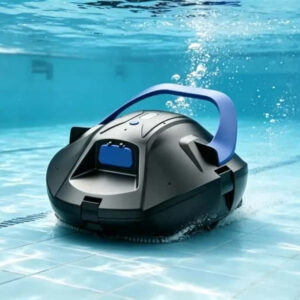
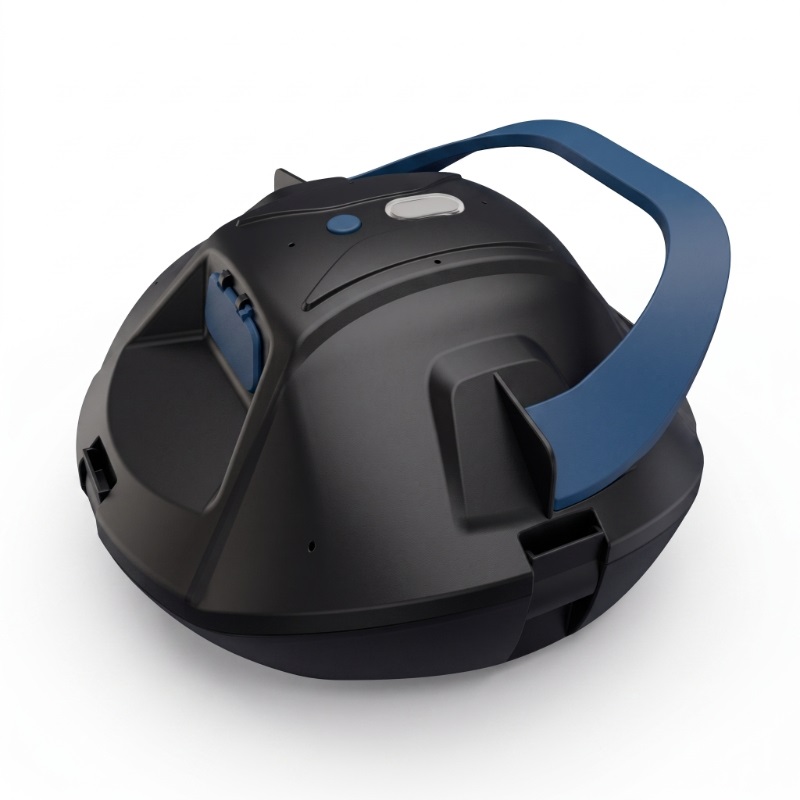
| Color | Dark grey body, blue handle |
| Charging voltage / current | 12.6 V / 1.8 A |
| Charging time | 2.5 hours |
| Model | ST-BQ1 |
| SKU | ST-BQ1 |
| Product type | Cordless robotic pool cleaner (in-ground pools) |
| Power system | Centrifugal pump |
| Brush system | Dual brush motors |
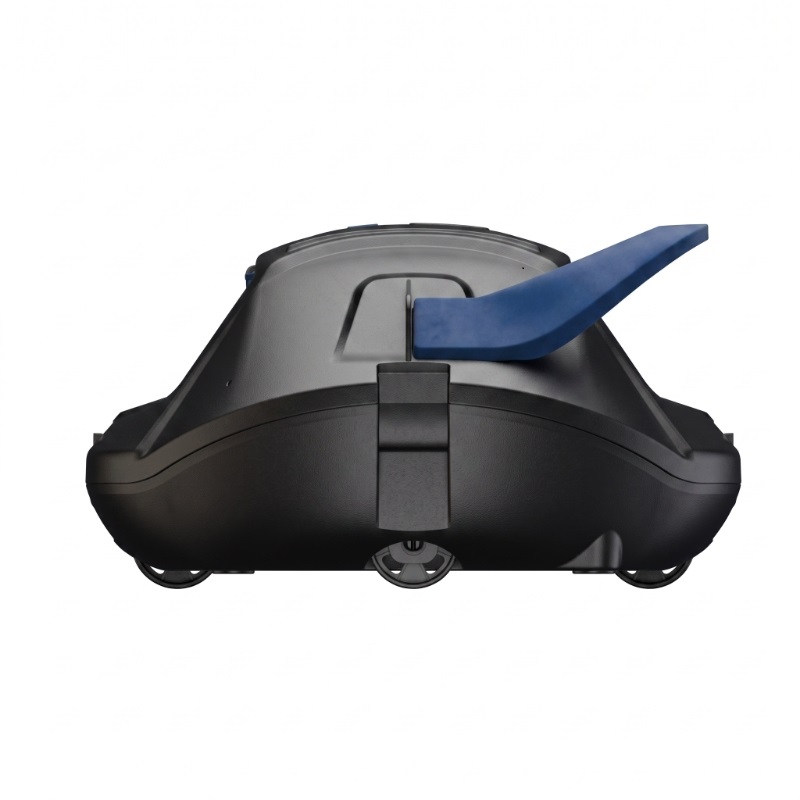
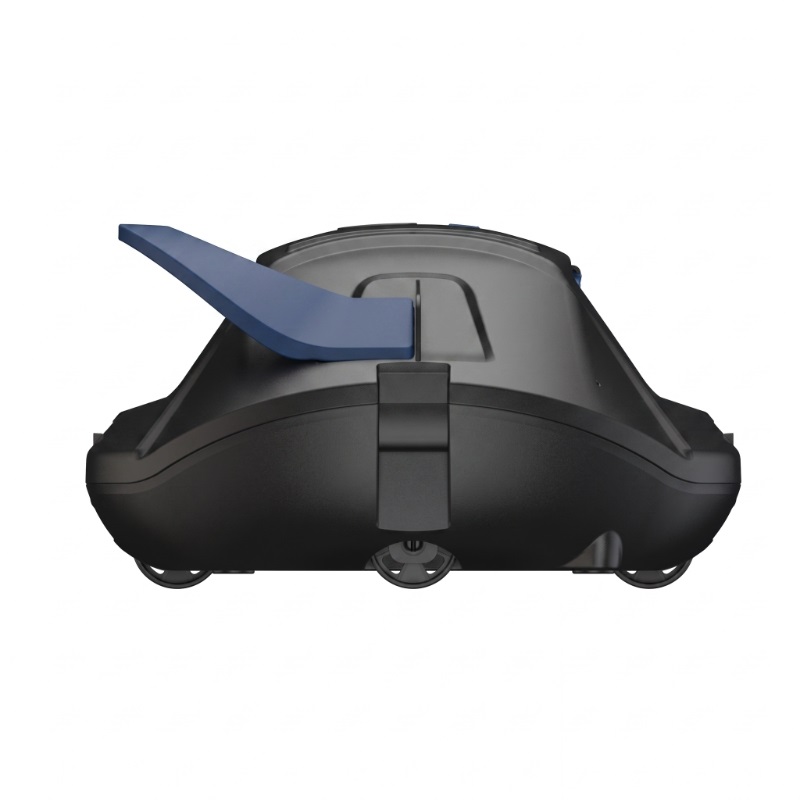
| Drive | Four driven wheels |
| Navigation | Random path |
| Safety detection | Wall collision and anti-jam detection |
| Low battery behaviour | Automatic return and parking |
| Total power | 30 W |
| Battery capacity | 4,500 mAh (3S1P, 21700 cells) |
| Runtime | Approx. 100–120 minutes |
| Travel speed | Approx. 18–24 m per minute |
| Water flow rate | 100–120 L per minute |
| Applicable water depth | 0.3 m – 3 m |
| Waterproof rating | IPX8 |
| Product dimensions | L330 × W330 × H219 mm |
| Net weight | 3.4 kg (7.5 lbs) |
What the ST-BQ1 Robotic In-Ground Pool Cleaner Is
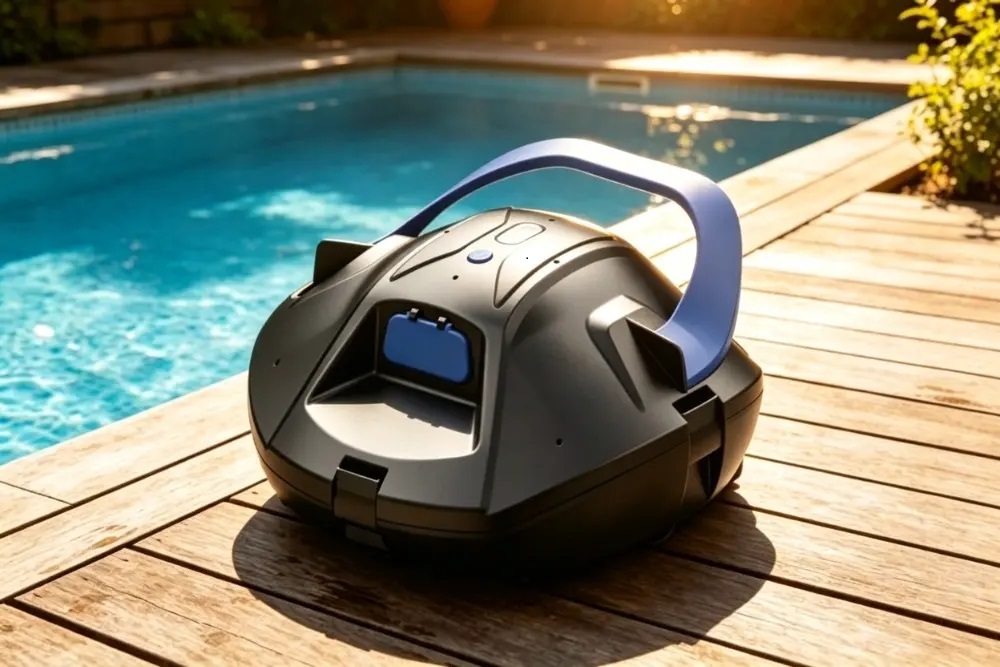
The ST-BQ1 is a cordless robotic inground pool cleaner: a 30 W centrifugal pump, a 4,500 mAh lithium battery built on 21700 cells, dual brush motors and four driven wheels, in a 3.4 kg body of 330 mm diameter and 219 mm height. No cable runs to the skimmer and no hose hangs off a pole, so the unit is placed on the pool floor and lifted out when the cycle ends.
The specification is deliberately narrow. Water depth is rated from 0.3 m to 3 m and the housing is IPX8. On a typical in-ground pool that covers the shallow end and the deep end; a floor deeper than 3 m falls outside the rating, and no setting on the machine changes that.
A buyer comparing this inground pool vacuum cleaner against a longer-running model should start with the floor depth rather than the battery. A 1.2 m to 2 m pool sits comfortably inside the range; a 4 m diving pool does not, however much runtime the other unit offers.
30 W Centrifugal Pump and 100–120 Litres per Minute
The pump is the part that decides how much debris leaves the floor per pass. The ST-BQ1 runs a centrifugal pump at 30 W total power and moves 100 to 120 litres of water per minute, with the dual brush motors loosening dirt and debris ahead of the intake. Flow rate and travel speed are separate numbers: a machine can drive quickly and still move little water, which is why 100–120 L per minute is the figure to compare on a specification sheet.
4,500 mAh on 21700 Cells, 100–120 Minutes of Runtime
The battery pack is 4,500 mAh in a 3S1P arrangement using 21700 cells, charged at 12.6 V / 1.8 A in about 2.5 hours. One charge returns approximately 100 to 120 minutes of cleaning, which on the rated travel speed of 18 to 24 metres per minute is the window a service round has to work with between lifts.
Cell format matters to a buyer holding stock. 21700 cells are the larger format in this class, and the 3S1P layout means one series string of three cells in parallel grouping rather than a multi-string pack — a simpler pack to specify, and the reason the runtime figure moves with load rather than staying flat.
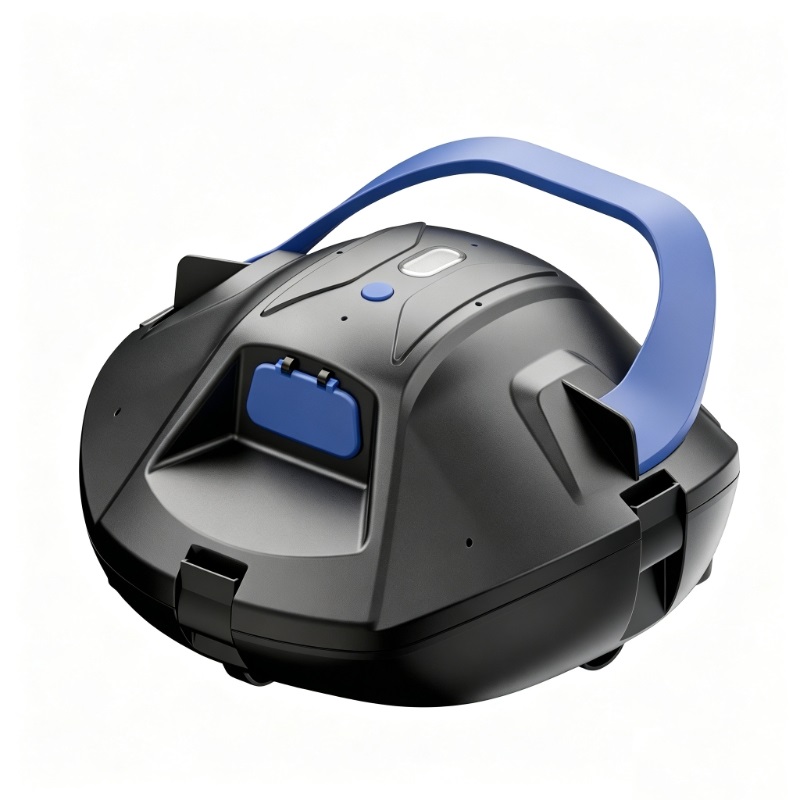
Random Path Navigation, Wall Collision and Anti-Jam Detection
Random path navigation is what an automatic pool cleaner for inground pools usually means in practice, and the ST-BQ1 does not map. The unit crosses the floor, meets the wall, and wall collision detection turns it back into open water; anti-jam detection keeps the cycle alive when a wheel or brush meets an obstruction. On a rectangular in-ground pool this produces overlapping passes rather than a fixed grid, and the practical consequence for a buyer is that a full cycle covers the floor rather than tracing a pattern.
The trade is honest: no mapping means no coverage report and no app-drawn route, and random path means the machine keeps working the floor for the whole runtime instead of stopping when a plan is complete.
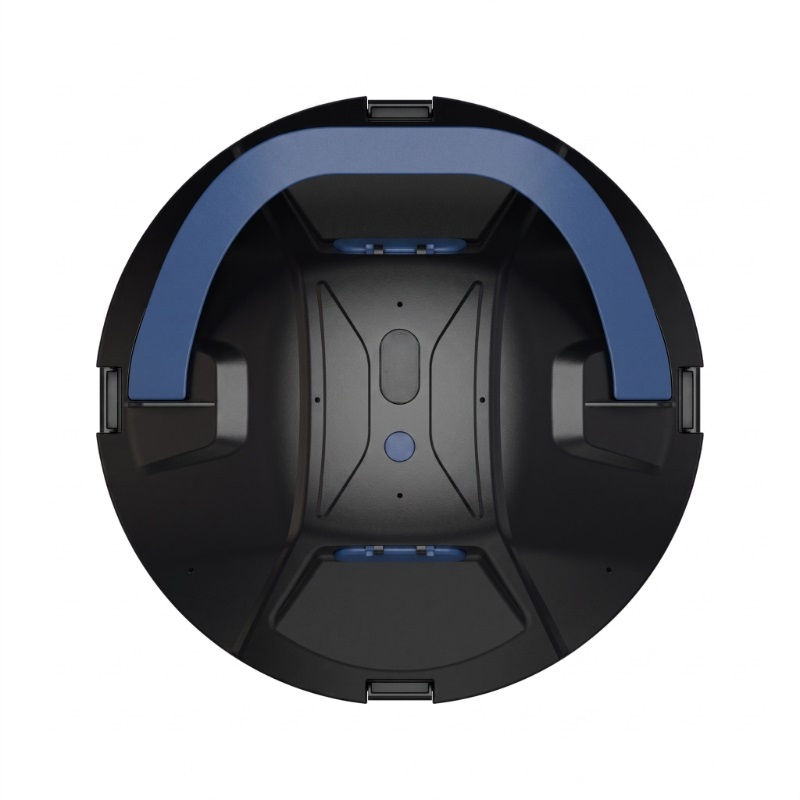
Four Driven Wheels and the Dual Brush Motor Design
Four driven wheels carry the body at a stable attitude across the floor, which matters more than it sounds: a machine that tilts loses suction at the intake edge and leaves a strip behind. On a sloped in-ground floor this is also what keeps a robotic in-ground pool cleaner tracking in a straight line instead of drifting. The dual brush motor design puts brush action on the floor ahead of the pump intake, loosening dirt and debris so the water flow can lift it rather than relying on suction alone.
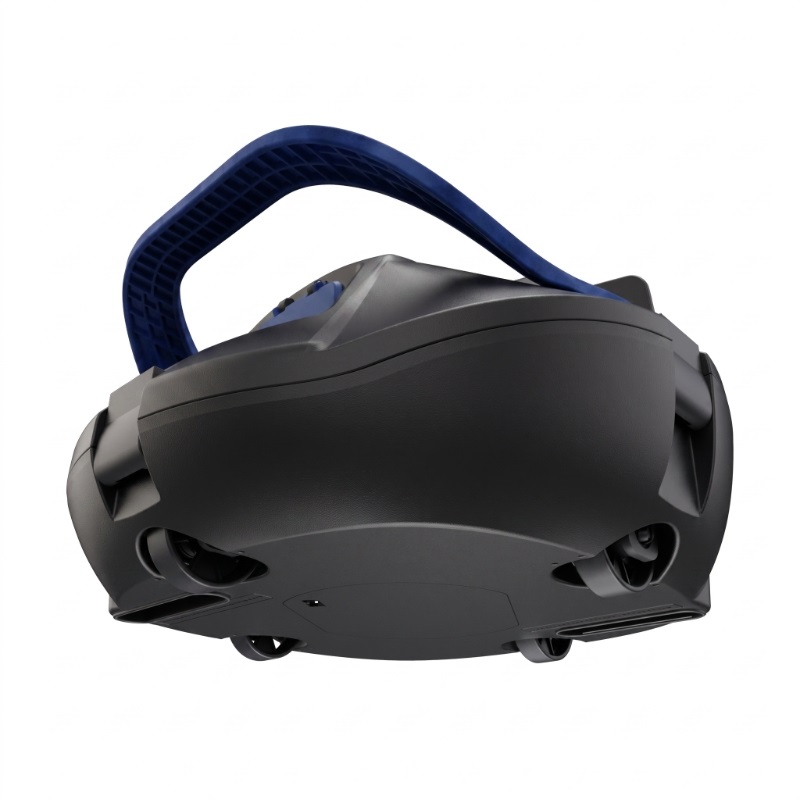
Automatic Return and Parking at Low Battery
When the battery runs low the machine returns and parks, so the lift-out does not depend on spotting it through the water. For a service company running several pools a day, that behaviour is what makes a cordless unit practical: the operator arrives, lifts, rinses the machine and puts it on charge for the next pool, without a recovery sweep.
IPX8 and 3.4 kg at 330 mm Diameter
The housing is rated IPX8 for continuous immersion, and the body weighs 3.4 kg (7.5 lbs) at L330 × W330 × H219 mm with the blue handle folded over the top. That handle is the lifting point on and off the pool deck, and the 219 mm height is the number to check against a step, a sun shelf or a tight equipment locker.
Charging: 12.6 V / 1.8 A in 2.5 Hours
Charging is 12.6 V / 1.8 A, about 2.5 hours from empty. In a commercial rotation the charge window sets the duty cycle: one unit per pool in sequence, or a spare battery strategy if the schedule does not allow a 2.5 hour gap. The supplied specification covers the charger voltage and current; the plug type for a given market is confirmed separately against the destination order, so a buyer should not assume a plug from the body specification alone.
Where This Robotic In-Ground Pool Cleaner Fits
The unit cleans the pool floor. It is not a wall and waterline machine, and the supplied material makes no claim about brushing walls, climbing, or filtering the full volume of the pool. What it does is run the floor unattended for 100 to 120 minutes at a rated depth of 0.3 m to 3 m, which is the job most in-ground pools need between filter cycles.
For an in-ground pool with a hopper deeper than 3 m, the honest answer is that this model is not rated for that floor. For a pool with a flat or gently sloped floor inside the range, the depth rating, the 100–120 L per minute flow and the 3.4 kg body are the three numbers that decide whether an inground pool vacuum cleaner suits the site.
Runtime and Charge Window in a Service Rotation
The arithmetic of a route is simple once the two figures are known: 100 to 120 minutes of cleaning per charge, then 2.5 hours on the charger. One unit therefore completes one cleaning cycle and returns to the water roughly every four hours, which is three pools in a nine-hour day if nothing else takes time out of the shift. Two units working in alternation double that, because one charges while the other runs.
That is the real cost of a cordless pool cleaner against a corded one, and it is a scheduling cost rather than a cleaning cost. On a single residential pool it never comes up: the machine runs, parks, gets lifted and charges overnight. On a commercial route it decides how many units go in the van, and it is the number to quote when a service company asks how many pools one machine covers.
What the Supplied Specification Does Not List
The specification covers the pump, the battery, the depth rating, the drive and the dimensions. It lists no app, no remote control, no schedule timer and no wall or waterline cleaning, so this page makes no claim about any of them. A buyer who needs scheduling or mapping should treat those as open questions to confirm in writing, not as features to assume from the category.
For most trade buyers that is the point: what is specified is testable at goods-in. Flow rate, runtime, depth rating, weight and dimensions can all be checked against a sample in twenty minutes, and everything outside that list should be settled on the quotation rather than on the product page.
Who Buys the ST-BQ1
This is a commercial-grade unit in the sense a trade buyer cares about a trade buyer cares about: bought to do a defined job on a route or a shelf, not as a lifestyle gadget. Five buyer types account for most orders:
- Pool shops and retailers adding a cordless robotic in-ground pool cleaner to a shelf that already carries chemicals and accessories.
- Pool service companies running fixed routes, where the automatic return and the 2.5 hour charge window set how many pools one unit can cover per day.
- Hotels, resorts and rental properties that need a floor clean between scheduled filter runs without a technician in the water.
- Importers and distributors sourcing a robotic inground pool cleaner to sit beside existing suction-side and pressure-side lines existing suction-side and pressure-side lines.
- Owners of larger in-ground pools comparing an inground pool vacuum cleaner with a corded unit, who want no cable run to the skimmer.
Specifying a Robotic In-Ground Pool Cleaner for Resale
Four numbers separate one unit from another on a quotation, and they are the four to put in writing before an order:
- Depth rating. 0.3 m to 3 m here. A pool with a 4 m hopper needs a different model, and a buyer who discovers that after delivery returns the unit.
- Flow, not just power. 30 W means little on its own; 100–120 L per minute is the working figure.
- Runtime against the route. 100–120 minutes of cleaning for 2.5 hours of charging sets the unit-to-pool ratio.
- What it does not do. Floor only. No wall climbing, no waterline brushing, no claim of full-pool filtration.
For a distributor selling this robotic in-ground pool cleaner, the same four lines answer most of the questions that come back after a container lands, and they are the reason this page states the depth limit and the floor-only scope rather than leaving them to the brochure.
Frequently Asked Questions
What is the ST-BQ1 robotic in-ground pool cleaner?
It is a cordless pool cleaner with a 30 W centrifugal pump, a 4,500 mAh lithium battery (3S1P, 21700 cells) and dual brush motors. It runs for approximately 100 to 120 minutes on one charge, is rated IPX8 and works in water from 0.3 m to 3 m deep.
How long does one charge last and how long does charging take?
Runtime is approximately 100 to 120 minutes. Charging takes about 2.5 hours at 12.6 V / 1.8 A from the supplied charger.
What pool depth does the machine cover?
The rating is 0.3 m to 3 m. A pool floor deeper than 3 m sits outside the specified range.
How much water does the pump move?
The centrifugal pump moves 100 to 120 litres per minute, which is the number that decides how much debris the unit can lift per pass rather than how fast it drives.
How does the cleaner move around the pool?
Random path navigation on four driven wheels, at approximately 18 to 24 metres per minute. Wall collision detection and anti-jam detection keep the cycle running when the unit meets the wall or an obstruction.
What happens when the battery runs low?
The machine returns automatically and parks, so it can be lifted out without searching the pool floor.
What do the dual brush motors do?
They loosen and collect dirt and debris from the pool floor before the pump lifts it into the machine.
What are the dimensions and weight?
L330 × W330 × H219 mm at 3.4 kg (7.5 lbs), with a blue handle on a dark grey body.
Is it safe to leave in the water?
The housing is rated IPX8 and the working depth is 0.3 m to 3 m. The supplied material gives no statement on storage or on exposure outside that depth range.
Which buyers is this model aimed at?
The unit is supplied for pool shops, pool service companies, hotels and resorts, and importers or distributors adding a cordless model to an existing pool equipment range.