Reading time: 11–13 min | For distributors, e-commerce sellers & private-label brand operators worldwide
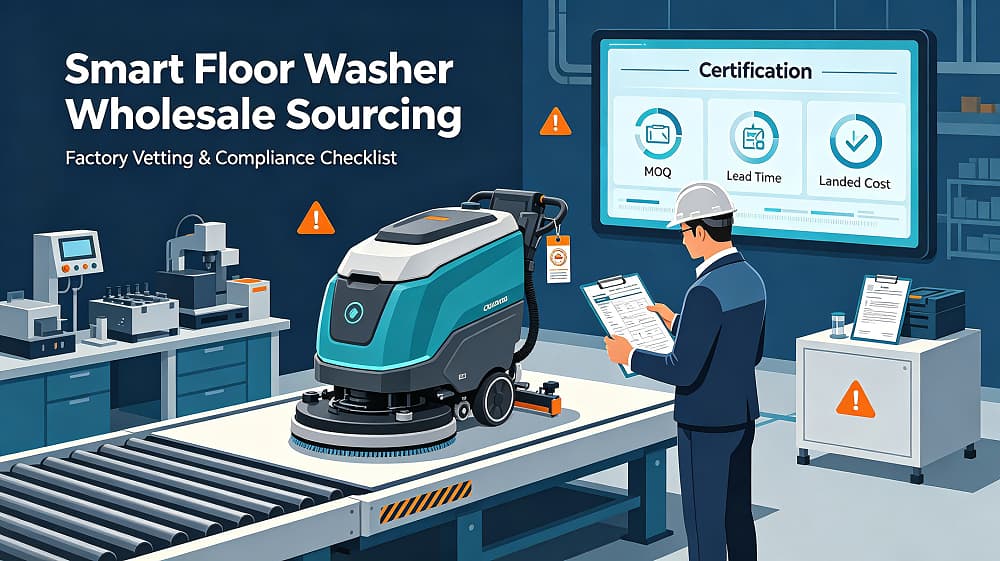
Sourcing smart floor washers in bulk looks straightforward on B2B marketplaces. But after 8+ years working alongside importers, distributors and private label brands across 30+ markets, I can tell you first-hand: most new buyers run into costly, avoidable issues on their first large order. I’ve seen teams lose 20–30% of their projected margin to hidden fees, delayed launch dates by months over certification gaps, and get stuck with inconsistent batch quality that tanks their store reviews.
Almost every one of these problems traces back to the same mistake: locking in a bulk PO based only on the lowest sticker price, and skipping basic pre-order due diligence.
The global household wet-dry cleaning appliance market continues its steady, high-growth trajectory. It’s projected to reach USD 8.24 billion in 2026, with a 14.85% compound annual growth rate through 2032. Residential consumers and light-commercial operators alike are ditching traditional mops for one-pass vacuum, scrub and dry solutions — creating stable, repeat resale demand for B2B sellers across Western Europe, North America and Australia.
This guide is built on real buyer feedback, actual shipping data and first-hand supply chain experience. I’ll walk you through how to define clear product specs, vet real manufacturers vs middlemen, calculate your true landed cost, and choose between stock bulk orders and custom OEM branding. For a full deep dive into MOQ tiers, pricing tables and compliance checklists for every major market, head over to our core pillar page: Smart Floor Washer Wholesale & OEM Sourcing Guide 2026.
1. Lock in clear product requirements before you contact any supplier
The single biggest mistake new wholesale buyers make is sending generic inquiry emails. Lines like “send me your best price for floor washers” will only get you generic mid-tier quotes, and waste weeks of back-and-forth communication. From what I’ve seen across EU and Australian retail channels, buyers that lock in specs upfront cut their sourcing timeline by 40% on average.
Clarify these five key points before any supplier outreach:
- Target sales market: Different regions have different safety standards, plug types and consumer preferences. Confirm your territory first to match product configurations and avoid import hold-ups. For example, EU buyers need CE-RED certification for wireless models, not just basic CE marking.
- End customer group: Budget home users, premium retail shoppers and commercial clients (hotels, offices, cafes) all need different feature sets and build grades. Selling the wrong tier to the wrong audience kills repeat orders.
- Core mandatory features: Prioritise functions that directly drive user satisfaction and resale value: self-cleaning rollers, fast drying, electrolytic sterilisation, edge-to-edge full coverage cleaning and long battery runtime. These are the features that show up in reviews and reduce return rates.
- Floor surface compatibility: Confirm the machine works safely on tile, hardwood, marble and vinyl floors. Low-quality models with poorly designed rollers can scratch polished hardwood and stone floors, leading to costly return rates for resellers.
- Order volume plan: Come prepared with your first order quantity and a rough 6-month reorder forecast. Manufacturers offer far more stable pricing and better service terms for buyers that demonstrate long-term cooperation potential.
2. Vet suppliers effectively: pick reliable manufacturers, not risky middlemen
B2B sourcing platforms are flooded with resellers, trading companies and middlemen all posing as direct factories. Working with inexperienced middlemen almost always leads to unstable batch quality, delayed shipments and no real after-sales support when problems arise. A slightly lower per-unit price is never worth the risk of a full batch failing inspection at customs.
Core supplier vetting standard from my experience: Look for stable sample support, adjustable production plans, consistent batch quality and transparent communication at every stage of the order.
When you reach out to suppliers, pay attention to how they answer detailed questions. Reliable manufacturers will clearly explain their testing processes, share certification documents for your exact model and support small-batch trial orders. If a supplier avoids specific questions, gives vague roundabout answers or refuses sample-only orders, treat that as a clear red flag.
3. Understand real sourcing trade-offs: MOQ, samples, cost and lead time
Most new buyers fixate only on the per-unit factory price, and that’s a classic sourcing pitfall. Sample fees, battery shipping surcharges, international freight, import duties and inspection fees can easily erase your entire profit margin if you haven’t budgeted for them.
For EU and US inbound shipments, landed costs typically add 18–35% on top of EXW factory pricing once you factor in all charges. Landed cost, not sticker price, is what determines your actual profit.
Standard in-stock smart floor washers are perfect for fast resale and market testing: they come with low MOQs, fast 7–14 day shipment and zero upfront tooling costs. Fully customised OEM orders let you build your own brand with exclusive colours, packaging and feature tuning, but require higher minimums and 30–45 day lead times after sample approval. Always match your order type to your business stage to avoid unnecessary risk.
For a full breakdown of MOQ tiers by order type, exact lead time windows and landed cost calculation formulas, reference our complete 2026 sourcing pillar guide.
4. Avoid common compliance and sales risks in your target market
Even high-quality products can get stuck at customs or get pulled from online marketplaces if they lack the right certification for your region. Smart floor washers contain lithium-ion batteries and high-speed motors, so safety documentation is non-negotiable for import into the EU, US and Australia.
Never rely on verbal promises about certification. Always verify that test reports match the exact model you are ordering, and that the certification is valid for your specific market. For example: – EU/EEA: CE + CE-RED for wireless models + RoHS – United States: FCC Part 15 + UN38.3 battery documentation – Australia/New Zealand: RCM + C-Tick for EMC
Formal product qualification materials and consistent batch quality are the foundation of long-term resale business. Cutting corners on compliance will cost you far more in the long run.
5. Choose your business model: stock bulk orders vs private-label OEM
There is no single “best” way to source. The right model depends on your business stage, order volume, brand strategy and target market.
Ready-made bulk stock products are ideal for new sellers or businesses with limited startup budget. They support fast market launch, flexible order quantities and let you compete steadily in the short term. This is also the right choice if you are testing a new market or running a trial sales campaign.
Private-label OEM customization is built for sellers that want to build independent brand equity and escape commodity price competition. You can customise exclusive colours, retail packaging, battery tuning and firmware to differentiate from generic marketplace listings. While customisation requires longer lead times and some upfront investment, it delivers higher profit margins and long-term brand value.
6. Costly bulk sourcing mistakes & how to avoid them
These are the four mistakes I see new buyers make over and over again, and every single one eats into your margin:
- Chasing the absolute lowest per-unit price without verifying battery quality and certification, leading to sky-high return rates and product liability risk.
- Placing a large bulk PO without first testing physical samples and confirming matching certification documents.
- Budgeting only on EXW factory price and ignoring freight, duties, inspection fees and battery shipping surcharges, leading to major cost overruns.
- Failing to define defect rate thresholds, warranty spare parts and quality inspection standards in the formal purchase agreement, leaving you with no recourse if quality drops.
Frequently Asked Questions for Wholesale Smart Floor Washer Buyers
Ready to explore bulk-order & OEM-capable smart floor washer models?
We carry a full lineup of entry-level, mid-tier and high-power flagship smart floor washers, built for wholesale distributors, e-commerce sellers and private-label brand owners worldwide. Every model supports sample evaluation, adjustable MOQ and full market-compliant documentation.
Further reading: Smart Floor Washer Wholesale & OEM Sourcing Guide 2026 (Core Pillar Page)